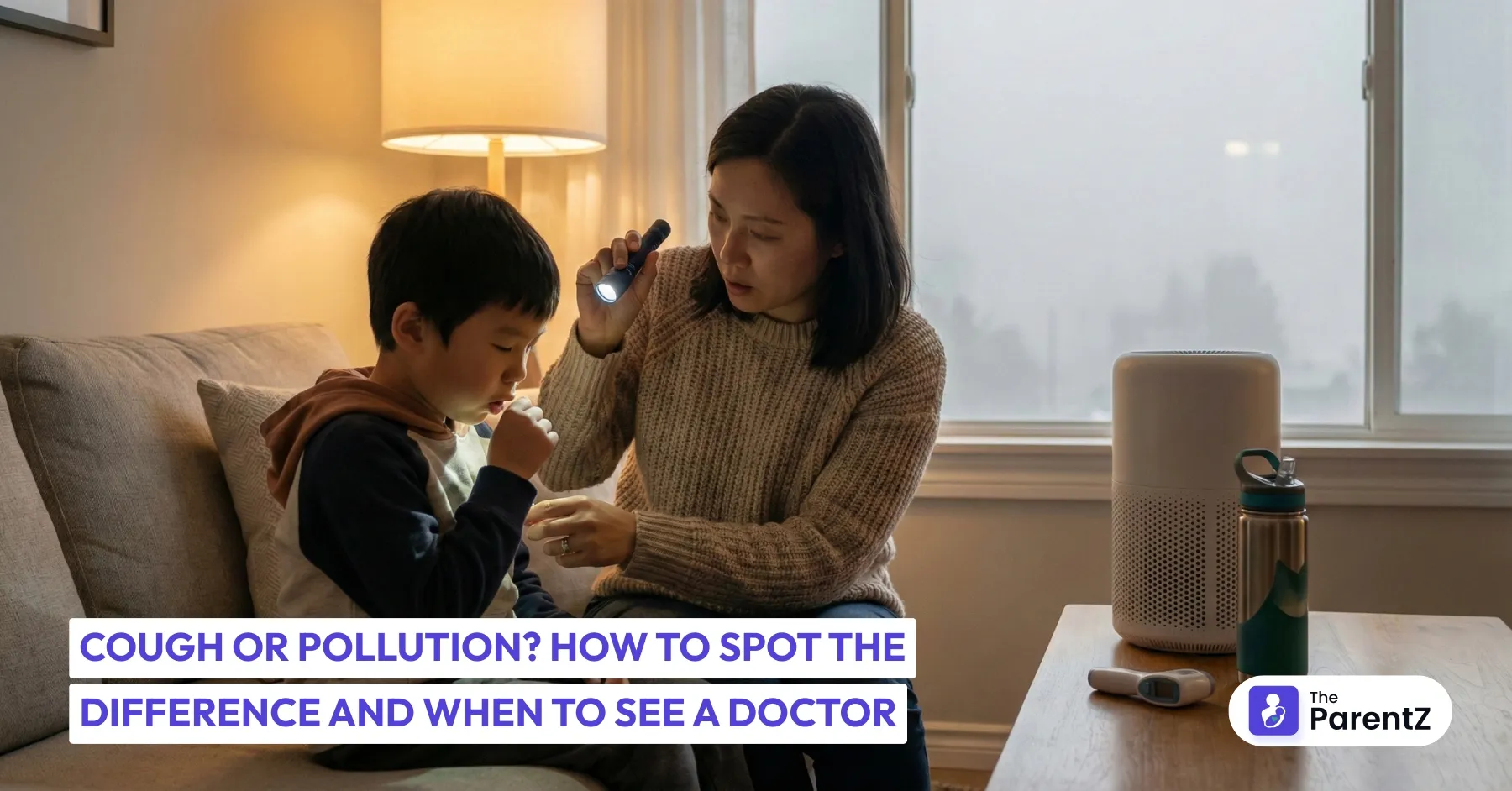
Cough or Pollution? How to Spot the Difference and When to See a Doctor

By Samira Reddy|5 - 6 mins read| December 01, 2025

You're up at 3 AM again. Your child's coughing, that same dry, persistent cough that's been going on for weeks now. You've given the honey, tried the humidifier, and you're wondering: is this just another cold, or is something else going on?

If you live in a city like Delhi, Mumbai, Kolkata, or Bangalore, this isn't just a passing worry. With air quality regularly hitting "severe" levels, and 2025 seeing some of the worst pollution days on record, the line between a regular infection and a pollution-related cough has become harder to spot.

What's Actually Happening Across India Right Now

Doctors report seeing three-year-olds struggling with a cough that never goes away.

Research shows that 2.2 million children in Delhi alone have irreversible lung damage due to poor air quality. But this isn't just Delhi's problem. Studies across Indian cities show children are breathing air that's permanently affecting their developing lungs.

A study comparing children in polluted Delhi with those in less polluted southern cities found dramatic differences. Over half of Delhi's children complained about coughing in the past three months, while more than 30% reported shortness of breath in the previous year.

How to Tell the Difference: Infection vs. Pollution Cough

Both can look similar at first. But some clues can help you figure out what's going on.

Infection-Related Cough Usually Has:
  • Fever (especially above 102°F)
  • Runny nose with thick, colored mucus
  • Sore throat
  • Body aches and fatigue
  • Gets worse over 3-5 days, then improves
  • Lasts about 1-2 weeks (though kids can cough for up to 3 weeks after a cold)
Pollution-Related Cough Tends to Show:
  • Dry cough at night without infection
  • No fever or very low-grade temperature
  • Throat irritation and scratchiness
  • Cough that gets worse on high pollution days (check your AQI app, you'll see the pattern)
  • Improves when the air quality is better
  • Keeps coming back without the typical cold symptoms
  • May include wheezing or breathlessness

Research shows the strongest association is for sleep disturbance due to breathing trouble and dry cough. If your child is waking up gasping or can't sleep because of breathing trouble, that's a red flag.

Kids often get back-to-back viral infections during pollution season. Their immune systems are already stressed from breathing toxic air, making them more vulnerable to infections. So you might be dealing with both at once.

When to Actually See a Doctor

Don't wait if you notice:

  1. Breathing trouble. If your child's nostrils are flaring, they're making grunting sounds, or using their belly muscles to breathe, head to the ER immediately.
  2. High fever lasting more than 3-4 days. This could signal a bacterial infection like pneumonia.
  3. Cough lasting more than 3-4 weeks. Even without a fever, this needs a check-up. It could be asthma, which pollution can trigger or worsen.
  4. Wheezing or whistling sounds when breathing out, especially if this is new.
  5. Fast breathing. More noticeable when they're sleeping.
  6. Bluish lips or skin. Emergency situation. Go now.
  7. Coughing so hard that they vomit and can't keep fluids down.
  8. Sleep disturbance due to breathing trouble. If they're waking up gasping or can't sleep lying flat.

What Actually Works at Home

Cough and cold medications should not be given to children below 2 years, and aren't generally recommended for those under 5. Most acute cough illnesses in children resolve without medication.

  • For Kids Over 1 Year: Give half to one teaspoon of plain honey as needed. Research shows it works better than cough syrups. Keep it simple; the fancy honey cough products cost more and don't work better.
  • Hydration Matters: Staying hydrated thins the mucus lining the airways, making it easier to cough. Warm fluids work even better; try warm apple juice or herbal tea for kids old enough.
  • Humidity Helps: Run a warm shower and sit with your child in the steamy bathroom for 15-20 minutes. Or use a cool-mist humidifier in their room, especially at night. Dry air makes coughs worse.
  • Elevate Their Head: Add an extra pillow so mucus drains instead of pooling in their throat overnight.
  • Skip the Cough Medicine: Those over-the-counter cough syrups? Not recommended for kids under 6. Save your money and skip the potential side effects.

The Pollution Protection Plan That's Actually Doable

You can't fix your city's air quality overnight, but you can reduce your child's exposure:

On Bad Air Days (AQI above 200):
  • Keep windows closed, especially early morning and late evening when pollution peaks.
  • Run air purifiers with HEPA filters in rooms where your child spends most of their time; the bedroom and living room are priorities.
  • Limit outdoor play; choose indoor activities instead.
  • If they must go out, use a properly fitted N95 or KN95/FFP2 mask (regular cloth masks don't filter PM2.5).
Daily Habits:
  • Check the AQI every morning. It's become as essential as checking the weather. Multiple apps like SAFAR, AQI India, or AirVisual show real-time data for your city.
  • Plan outdoor activities when the air quality is "moderate" or better.
  • Keep your home environment smoke-free (including incense and mosquito coils, as these add to indoor pollution).
  • Use saline nose drops or gel to keep nasal passages moist and help flush out particles.

The School Run: If possible, avoid peak traffic hours. Car exhaust is a major contributor to the pollution your child breathes. And yes, pollution levels inside cars stuck in traffic can be worse than outside.

Indoor Air Quality Basics:
  • Consider adding indoor plants like snake plant, money plant, or aloe vera (though air purifiers do the heavy lifting).
  • Keep your home clean; dust regularly to remove settled particles.
  • Ventilate your home during the afternoon when pollution is typically lower (if AQI permits).

Conclusion

Most childhood coughs are viral and will pass in a week or two with rest and supportive care. But if you're anywhere in India right now, you need to think about both the infection and the environment your child is breathing in.

Trust your gut. If the cough feels different, lasts longer than expected, seems to get worse on smoggy days, or if your child seems to struggle more when pollution spikes, get it checked. Pediatricians can listen to your lungs, check for asthma, and help you figure out whether this is a straightforward infection or whether pollution is playing a bigger role.


TheParentZ offers expert parenting tips & advice, along with tools for for tracking baby and child growth and development. Know more about Baby Growth and Development Tracker App.It serves as an online community for parents, providing valuable information on baby names, health, nutrition, activities, product reviews, childcare, child development and more

Disclaimer:

The views, thoughts, and opinions expressed in this article/blog are solely those of the author and do not necessarily reflect the views of The ParentZ. Any omissions, errors, or inaccuracies are the responsibility of the author. The ParentZ assumes no liability or responsibility for any content presented. Always consult a qualified professional for specific advice related to parenting, health, or child development.

Comments

Conversations (Comments) are opinions of our readers and are subject to our Community Guidelines.



Start the conversation
Send
Be the first one to comment on this story.
Top