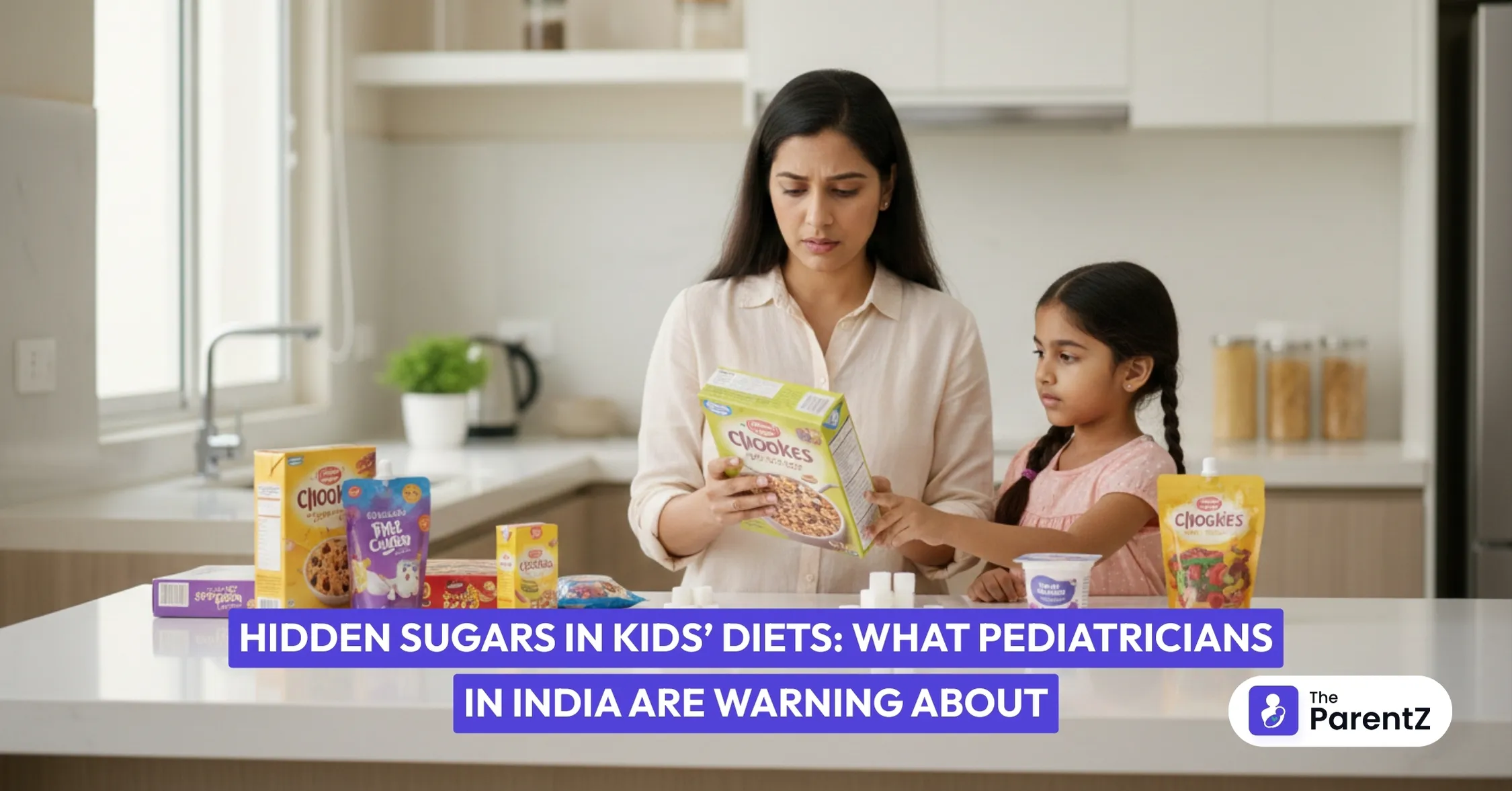
Pediatricians across India are seeing children being diagnosed with type 2 diabetes. Kids showing signs of fatty liver disease. Teenagers dealing with insulin resistance. Not because they're eating gulab jamuns for breakfast, but because of the "healthy" snacks sitting in their school bags.
This isn't about making you feel guilty. You're doing your best. But the truth is, food companies have made it incredibly hard for parents to make informed choices. And our kids are paying the price.
Where Is All This Sugar Coming From?
Remember when you thought giving your child biscuits with evening chai was harmless? Or when those "healthy" oats packets seemed like a smart breakfast choice? That's exactly what food companies are banking on, you not knowing.
Let's Talk About Everyday Snacks
- Biscuits: Four or five biscuits can contain a full teaspoon of sugar (about 4g) or more. Those "digestive" or "health" biscuits? Often the same story. Even the ones that don't taste particularly sweet can have 2-4g of sugar per biscuit, depending on the brand. Do the math on a daily basis, as it adds up.
- Namkeen and farsan: Wait, spicy snacks have sugar? Yes. That aloo bhujia, sev, or mixture you buy thinking it's savory? Sugar is added to "balance the flavors." Check the ingredient list. You'll find glucose, corn syrup, or maltodextrin quietly sitting there.
- Breakfast cereals and instant mixes: Those colorful corn flakes, chocolate cereals, or flavored oats? They're essentially candy with vitamins sprinkled in. Even the "multigrain" or "protein-rich" versions often contain shocking amounts of added sugar. And those instant poha or upma packets marketed as traditional and healthy? They contain maltodextrin and glucose syrup to improve taste and texture.
- Packaged bread and pav: The soft white pav used for pav bhaji, the sandwich bread in your fridge, they all contain added sugar. It makes them softer, helps them brown nicely, and extends shelf life. Even "brown bread" and "whole wheat" options aren't necessarily better, as many use caramel coloring and sugar to appear healthier.
- "Healthy" bars and energy snacks: Protein bars, granola bars, energy balls, all these are marketed to health-conscious parents. But many contain more sugar than a chocolate bar. Honey, dates syrup, brown rice syrup; they all sound natural and healthy, but they still spike blood sugar just like regular sugar.
- Fruit juices and smoothies: This one hurts because we genuinely think we're doing something good. But that packaged mango juice or mixed fruit drink? It can contain as much sugar as a cola. Even the ones claiming "100% natural" or "no added sugar" are loaded with concentrated fruit sugars.
- Ready-made Indian snacks: Even savory items like commercially prepared dhokla, idli mixes, or instant dosa batter often contain sugar. It improves fermentation, appearance, and taste. You won't taste it, but your child's body will process it.
What This Sugar Is Actually Doing to Our Kids
Here's what doctors are seeing in clinics across India right now, and it's not exaggeration:
- Type 2 diabetes in children: This used to be called "adult-onset diabetes" for a reason. Now pediatricians are diagnosing it in 10-year-olds. And it's more aggressive in children than adults, faster progression, earlier complications.
- Prediabetes becoming common: In some regions, more than 1 in 5 children are showing prediabetic markers. This is the stage where intervention can still reverse the condition, but most parents don't even know to check.
- Weight gain and obesity: Not just "chubbiness." We're talking about 17 million obese children projected in India by 2025. Kids are struggling to run, play, or even walk comfortably.
- Fatty liver disease: This used to happen to adults with alcohol problems. Now it's showing up in teenagers who've never touched alcohol. The culprit? Excess fructose being processed in the liver.
- Hormonal issues: Especially in girls, excess sugar consumption is linked to PCOS, irregular periods, and early puberty.
- Mental health impacts: The blood sugar rollercoaster affects mood, concentration, and behavior. That afternoon meltdown or difficulty focusing on homework? It might be connected to what they ate.
Indian children are particularly vulnerable because we have a genetic tendency toward insulin resistance. Even mild weight gain can push an Indian child into prediabetes faster than children of other ethnicities. This isn't fair, but it's our reality. And it means we need to be extra careful.
How Sugar Hides: Learning to Spot It
Food companies are legally required to list ingredients, but they've gotten clever about it.
Sugar doesn't always appear as "sugar." It might be listed as:
- Glucose, fructose, sucrose, dextrose, maltose
- Corn syrup, high fructose corn syrup
- Maltodextrin
- Cane juice, cane sugar
- Honey, jaggery
- Brown sugar, raw sugar
- Fruit concentrate
If any of these appear in the first three ingredients, that product is sugar-heavy. Period.
Also, watch out for misleading claims:
- "No added sugar" doesn't mean sugar-free; it might be packed with naturally occurring sugars or fruit concentrates
- "Low fat" often means high sugar (they remove fat, add sugar for taste)
- "Natural" or "organic" sugar is still sugar
- "Energy" usually means calories, often from sugar
- "Multigrain" or "wheat-based" doesn't automatically mean healthy
The nutrition label should list "total sugars" and sometimes "added sugars" per serving. Pay attention to the serving size too, as a small packet might contain 2-3 servings, tripling the sugar content you thought you were giving.
What You Can Actually Do About It
Now for the part that matters. Let’s talk about realistic, doable changes that won't make you feel like you're depriving your child or spending all day in the kitchen.
Food Swaps That Work
- Instead of packaged biscuits: Keep roasted makhana, roasted chana, or plain poha (the unsweetened kind). If your child initially resists, add a tiny bit of jaggery or honey yourself. It is still better than packaged versions.
- Instead of flavored yogurt: Plain dahi with a few pieces of fresh fruit. Let them mash it up themselves; kids often eat better when they're involved.
- Instead of packaged juice: Fresh fruit. Or if they need something to drink, nimbu pani with a tiny bit of honey, or coconut water, or even plain milk.
- Instead of instant breakfast mixes: Plain oats cooked with milk, topped with banana or a few dates. Takes 5 minutes, not hours.
- Instead of store-bought namkeen: Make small batches at home on weekends when you have time. Or buy from local vendors who make fresh namkeen daily, at least you can see what goes into it.
For the Truly Busy Days
Some days you barely have time to breathe, let alone cook.
Keep these genuinely quick options ready:
- Boiled eggs (can be made in advance)
- Fruit (apples, oranges, bananas) requires zero prep.
- Plain nuts (but watch portions, they're calorie-dense)
- Whole moong or chana chaat (boiled dal with some chopped onion, tomato, lemon)
- Leftover dal-chawal from lunch
- Plain idli or dosa (make batter once, use through the week)
The point isn't perfection. It's progress.
When to Worry and Get Help
- Excessive thirst or urination
- Unusual tiredness or lethargy
- Difficulty concentrating
- Frequent mood swings
- Weight gain despite an active lifestyle
- Dark patches on skin (especially neck, armpits)
- Family history of diabetes
If you notice any of these, please get your child checked. The Indian Academy of Pediatrics now recommends annual fasting blood sugar tests for all children above age 5.
Early detection of prediabetes or insulin resistance can be completely reversed with lifestyle changes. Once it progresses to diabetes, you're managing it for life.
Don't wait. Don't ignore. Don't assume "they'll grow out of it."
Conclusion
Start today. Pick one thing from this article to change. Just one. Maybe you check the sugar content of the breakfast cereal. Maybe you swap evening biscuits for roasted chana. Maybe you teach your child to read labels.
One change. Then another. Then another. Over time, these small changes add up to transformed health for your child.
And when you slip up, because you will, don't beat yourself up. Just start again the next meal. This is not your fault. Food companies spend billions making unhealthy food appealing and disguising it as healthy. But knowledge is power. Once you know where the sugar is hiding, you can make different choices.
Your child's health is worth the effort. Worth reading labels. Worth cooking more often. Worth standing firm when they complain that "everyone else gets that snack."
You don't have to do it perfectly. You just have to do it consistently. Your child is lucky to have a parent who cares enough to make changes. That caring is already half the battle won. Now let's win the other half, together.



Be the first one to comment on this story.