
Most Moms Report Slower Recovery After a Second Birth
Jul 19, 2026By Dr. Akanksha Priya
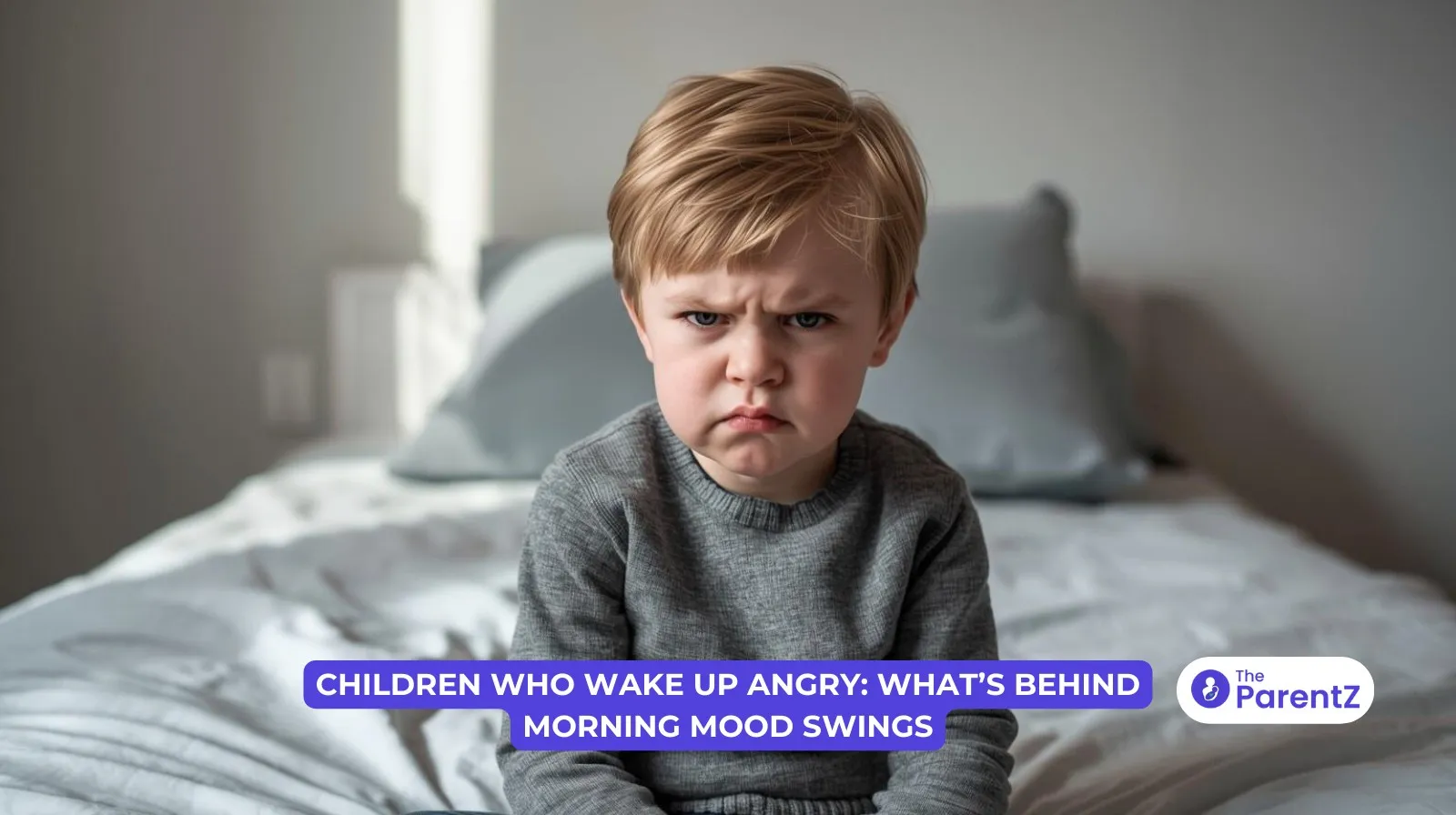
Your child opens their eyes and immediately starts crying. Or yelling. Or throwing things. Before they've even had breakfast, World War III has started in your home.
You're exhausted. You're confused. And you're probably thinking: "What did I do wrong?"
The answer? Probably nothing.
Morning anger in children is real, common, and almost always has a reason.
It's not just crankiness. We're talking about:
And the worst part? It often disappears by mid-morning, leaving you wondering if you imagined the whole thing.
You didn't. And your child isn't a "bad kid."
When adults wake up groggy, we grab chai and give ourselves time. Children don't have that self-awareness.
Their prefrontal cortex, the part of the brain that controls emotions and reactions, is slower to fully engage right after waking. So they feel things intensely but can't regulate them. Every small frustration feels like a crisis.
Their emotions are at 100%, but their ability to control those emotions is at 20%. That gap? That's the anger you're seeing.
Your child hasn't eaten for 10-12 hours. Their blood sugar is low. And low blood sugar directly affects mood, especially in children.
They might not feel "hungry" in the traditional sense. But their body is running on empty, and that makes everything harder. Their patience is zero. Their tolerance is zero.
This is why some children transform after breakfast. It's not magic; it's glucose reaching their brain.
Your child slept for 8 hours, so they should be fine, right?
Not if those 8 hours were restless. If they:
They wake up tired. And tired children don't have sad energy; they have angry energy.
We expect anxious children to be quiet or clingy. But in many children, especially younger ones, anxiety looks like anger.
Your child wakes up and immediately starts thinking:
Their body fills with stress hormones. They don't know how to say "I'm anxious." So it comes out as "I hate these clothes!" or "I don't want to go to school!" or just screaming.
Some children are highly sensitive to:
For these children, waking up is genuinely uncomfortable. Their nervous system is already overwhelmed before the day even begins. And when they're overwhelmed, they get angry.
Not all morning anger is the same. Watch for patterns over one week:
The pattern tells you what to fix.
No sudden lights or loud voices. Try:
Before they even get out of bed, offer:
Something quick that raises blood sugar. You'll be shocked at how much this helps.
If they wake up angry, this is NOT the time to:
Keep it simple. Decisions can wait. Let them wake up first.
You're not rewarding bad behavior. You're helping their brain regulate.
When they're calm (evening is best), ask: "I noticed mornings are hard for you. What do you feel when you wake up?"
They might not have words for it. That's okay. Even asking shows you're trying to understand, not punish.
Better sleep = better mornings.
If your child's anger:
Talk to a counselor or pediatrician. Sometimes, morning anger is the first sign of depression, anxiety disorders, or other issues that need proper support.
Your child doesn't want to wake up angry. They're not doing this to you; they're going through something they don't understand themselves.
When you respond with curiosity instead of frustration, everything shifts. You stop taking it personally. You start solving the actual problem.
And slowly, mornings become less about surviving and more about starting the day together.
TheParentZ offers expert parenting tips & advice, along with tools for for tracking baby and child growth and development. Know more about Baby Growth and Development Tracker App.It serves as an online community for parents, providing valuable information on baby names, health, nutrition, activities, product reviews, childcare, child development and more
Disclaimer:
The views, thoughts, and opinions expressed in this article/blog are solely those of the author and do not necessarily reflect the views of The ParentZ. Any omissions, errors, or inaccuracies are the responsibility of the author. The ParentZ assumes no liability or responsibility for any content presented. Always consult a qualified professional for specific advice related to parenting, health, or child development.
Conversations (Comments) are opinions of our readers and are subject to our Community Guidelines.


Be the first one to comment on this story.