
Most Moms Report Slower Recovery After a Second Birth
Jul 19, 2026By Dr. Akanksha Priya
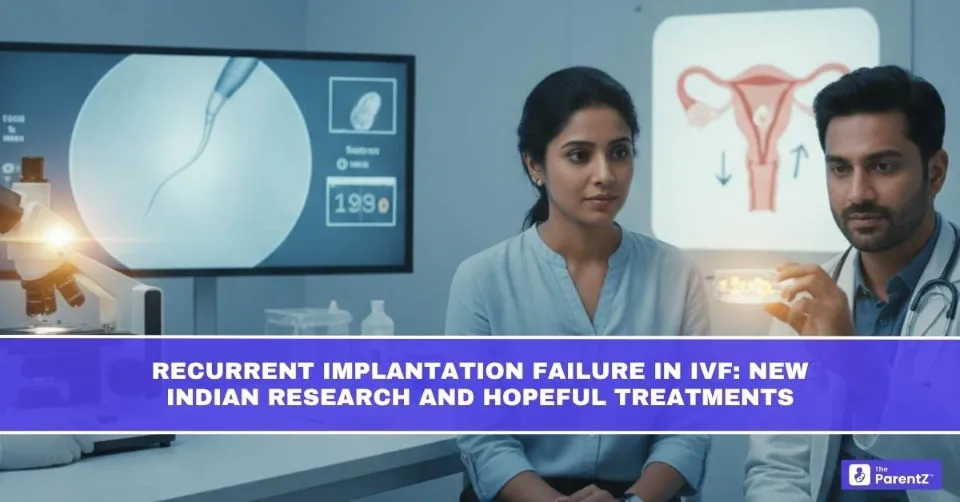
IVF is often the final and most hopeful step for couples facing infertility. However, if there is no success even after multiple attempts of IVF with good-quality embryos, it can be very disheartening and demoralizing for these couples. This is now termed recurrent implantation failure, or RIF for short, and remains an important challenge for both patients and clinicians.
Recurrent implantation failure in IVF in India is increasingly being reported in India, driven by factors such as delayed childbearing, lifestyle influences, and other complex reproductive health issues. The positive shift is progress in emerging research from within the country, better testing protocols, and personalized treatment plans that are changing how RIF is being managed today. It is estimated that 10-25% of women undergoing IVF experience recurrent implantation failure, depending on how it is defined. Thus, it has emerged as one of the biggest and most misunderstood fertility challenges. With the right evaluation and embryo implantation success tips, many couples are now finding answers where once there were only uncertainties.
Recurrent implantation failure occurs when embryos have not been able to implant in the uterus after various IVF treatments. Although there is a slight difference in the definitions given by many fertility experts, RIF can be referred to when the
Clinical data indicate that recurrent implantation failure affects about 15% of patients who undergo IVF when strict criteria are applied. Of all the stages in the IVF process, implantation is certainly the most complex and least understood. For this to occur, even if fertilization and in vitro embryo development are successful, it requires perfect synchrony between the embryo and the uterine lining. Any disruption in this process can result in failure.
With rising IVF usage, recurrent implantation failure IVF in India is being diagnosed more frequently. Several India-specific factors contribute to this trend:
Importantly, RIF is often underdiagnosed because couples may undergo repeated IVF cycles without deeper evaluation. Today, specialists emphasize finding the cause before repeating treatment.
RIF is rarely caused by a single factor. In most cases, it results from a combination of embryo, uterine, hormonal, and immune factors.
It must be noted that the underlying causes of immune dysfunction are still in controversy among researchers, and immune testing or treatment may not be required by all patients
Instead of cycling through IVF repeatedly without thought, contemporary fertility management is based on individual analysis.
ERA aims to identify the best timing for embryo transfer. While helpful for some women with unexplained RIF, large studies show mixed results, and it should be used selectively, not routinely.
An honest fertility specialist would inform them which treatments have been proven successful and which areas are still developing.
Research in reproductive medicine is fast-evolving, and many advanced but cautious approaches have been adopted in India.
Crucially, experts emphasize that no single treatment works for everyone. Individualized care is the cornerstone of success in recurrent implantation failure IVF in India.
Most importantly, one should note that there is no universal treatment that works for everyone. This is why personalized treatment is the backbone of a successful IVF treatment for recurrent implantation failure in India.
Although medical care plays the main role, lifestyle maximization helps improve implantation. These embryo implantation success tips are recommended by fertility specialists:
These steps alone would not or could not ‘cure’ the RIF but would instead help the body during the treatment process. Follow-up findings show that at least 40% of the affected females would achieve conception within the first year if the treatment plan is tailored and the problems are corrected
A second opinion may be helpful when:
It may be helpful to consult a specialist who has experience in RIF procedures. This is particularly important in complicated situations.
Repeated IVF failures can be emotionally and physically exhausting, but recurrent implantation failure is no longer viewed as an unsolvable diagnosis. Improved diagnostic assessment capabilities, combined with personalized therapy for patients, have greatly contributed to the development of better patient outcomes.
Once the underlying cause is accurately identified, several couples go on to achieve successful pregnancies with appropriate medical care and timely intervention. With expert guidance, realistic embryo implantation success tips, and sustained emotional support, couples dealing with recurrent implantation failure IVF in India can move forward with informed confidence and renewed hope.
Visit TheParentZ.com for IVF support. Download TheParentZ App for cycle tracking, pregnancy monitoring, and emotional resources.
References:
TheParentZ offers expert parenting tips & advice, along with tools for for tracking baby and child growth and development. Know more about Baby Growth and Development Tracker App.It serves as an online community for parents, providing valuable information on baby names, health, nutrition, activities, product reviews, childcare, child development and more
Dr. Shreya Karan is a dedicated oral and maxillofacial surgeon who brings over ten years of experience to her practice, combining surgical expertise with genuine care for her patients.
Disclaimer:
The views, thoughts, and opinions expressed in this article/blog are solely those of the author and do not necessarily reflect the views of The ParentZ. Any omissions, errors, or inaccuracies are the responsibility of the author. The ParentZ assumes no liability or responsibility for any content presented. Always consult a qualified professional for specific advice related to parenting, health, or child development.
Conversations (Comments) are opinions of our readers and are subject to our Community Guidelines.



Be the first one to comment on this story.