
Most Moms Report Slower Recovery After a Second Birth
Jul 19, 2026By Dr. Akanksha Priya
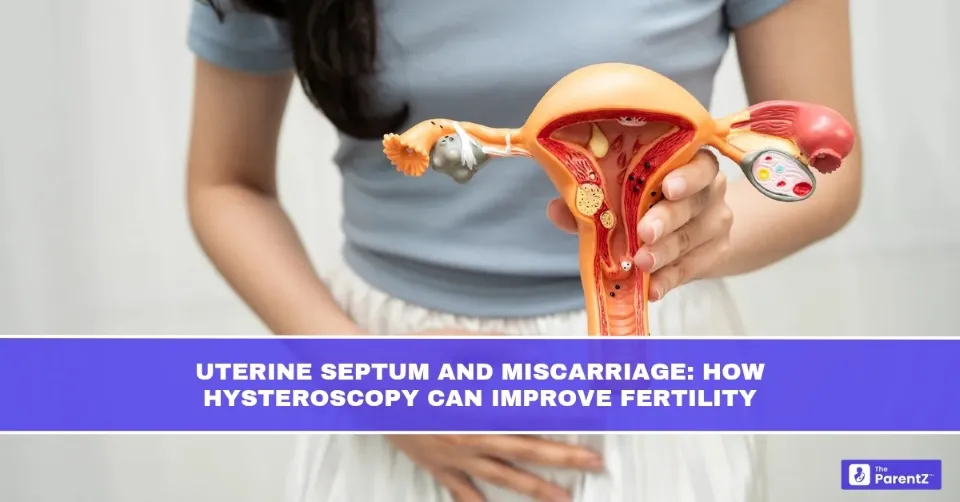
Indian couples experiencing miscarriages or issues with fertility might not necessarily be related to hormonal or lifestyle issues. In these situations, the problem could be that the woman has septa in the uterus, a congenital problem where a wall made out of tissues separates the uterus. Uterine septum fertility in India impacts thousands of couples on a yearly basis. Women are not always conscious about the problem until fertility issues arise in these situations.
This guide helps families understand uterine septum fertility in a clear and supportive way. It provides information on symptoms, diagnosis, and treatment strategies, such as hysteroscopic correction of the septum, a minimally invasive technique proven to increase the chances of live births to rates ranging from 67-86%. With proper treatment, couples suffering from miscarriages can go on to have a successful pregnancy
Uterine septum refers to a congenital abnormality that involves a wall of tissue, creating two unequal parts within the uterus, almost like a divider that decreases the area required for growing embryos during a pregnancy. This congenital defect occurs in 1 to 4% of women across the globe, although it is relatively more prevalent among women who are fertility-challenged.
When it comes to fertility in India and uterine septum, research indicates that it can be prevalent in 15 to 20% among women experiencing recurrent miscarriages or IVF failures.
A uterine septum has a poor blood supply, which makes it difficult for an embryo to implant and grow. This often leads to miscarriage before 12 weeks. The risk posed by partial septa is moderate. The risk is higher in complete septums. Among IVF cases in India, many failures are linked to untreated uterine septa.
Women often go through repeated cycles, believing it is just a matter of bad luck, without realizing this is a treatable condition that can greatly improve their chances of success.
The stigma of infertility in their country could result in late diagnosis, and routine scans might overlook small septa in the uterus. The troubles are compounded by dietary limitations, stress factors, and limited access to early scans. Unwanted pregnancies provide little time for analysis. Unlike conditions that can be prevented with supplements, septum problems require diagnosis before treatment.
| Issue | Untreated Risk | Post-Correction Improvement |
| Miscarriage Rate | 60-70% | Drops to 10-20% |
| Live Birth Rate | Under 30% | Rises to 67-86% |
| IVF Success Rate | 20-30% | Improves to 50-80% |
Hysteroscopic septum correction is a minimally invasive procedure wherein a camera and special tools are employed to remove tissue separating the uterus. The procedure is a surgical modification of the uterus wherein incisions are not needed in the body, and there is no need for prolonged hospitalization. It is a far safer and more successful method than older techniques involving the abdomen, with a success rate of 80% of women becoming pregnant after the surgery.
During hysteroscopic septum correction, no external cuts are made. A thin hysteroscope about 5 mm wide is gently passed through the vagina into the uterus. Saline fluid is used to expand the uterus for a clear view, and the septum is carefully removed layer by layer. This procedure always takes about 30 to 45 minutes, and the patient usually suffers only slight spasms of pain, like menstrual pain.
Top facilities in India, such as Apollo, charge between ₹50,000 and ₹1.5 lakh, which is 70% less than in the US, making it affordable for middle-class couples.
If risks like infections and fluid buildup are less than 2%, recovery is finished without any issues. Return to regular activities in one to two days, sexual activity in two weeks, and IVF in one to three cycles. Contrary to a myth about a hysterectomy procedure, there is no impact on subsequent births.
Key Benefits for Indian Parents
By removing the tissue barrier, hysteroscopic septum correction augments space within the uterus and increases blood flow. This assists in the development of a healthier endometrial lining that enables positive implantation of the embryo. Clinical trials have shown considerable improvements in pregnancy rates following the treatment.
In an infertility study involving 26 women, 86% became pregnant, while 67% delivered live babies after septum resection procedures, contrary to almost 0% earlier. In the 2022 data analysis, women going for septum resection were shown to have 2.5 times the odds of having a baby. The recently collected IVF statistics for 2024/2025 reinforce the 50 to 80% success rates for septum resection, with partially transverse septums having an 89% success rate.
Nova IVF and Cloudnine report 70% take-home babies post-procedure, even after 3+ failures. Desi women conceive in 6-9 months naturally or via IVF, with preterm risks halved. For PCOS or advanced age cases common in India, it's a game-changer.
| Metric | Pre-Correction | Post-Correction |
| Pregnancy Rate | 25-40% | 75-89% |
| Miscarriage Rate | 65% | 15% |
| Time to Conception | 12+ months | 6-9 months |
Your desire to become a parent need not be hindered by a uterine septum. Hysteroscopic septum correction provides a safe, minimally invasive method to restore the uterus and increase the likelihood of a successful pregnancy for many Indian couples dealing with recurrent miscarriages or IVF difficulties. Early diagnosis and treatment are now easier than ever in India, thanks to access to highly qualified specialists and advanced facilities. One should refer to a gynecologist first for the right scans and advice. Early treatment can bring hope out of uncertainty and ensure healthy pregnancies.
Visit TheParentZ.com, your one-stop shop for fertility answers and parenting tips. Download TheParentZ app for baby growth, ovulation, and scan tracking.
Q. Does hysteroscopic septum correction guarantee pregnancy?
A. It cannot guarantee pregnancy, but hysteroscopic septum correction can improve success rates by two to three times by restoring normal uterine structure.
Q. When should couples check for uterine septum fertility issues?
A. It is recommended that an evaluation be done if there have been repeated miscarriages, failed IVF, or chronic pelvic pain because an early diagnosis can be made by imaging studies.
Q. What happens if a uterine septum is left untreated?
A. In uterine septum fertility in India, miscarriage risk can remain as high as 70%, leading to repeated pregnancy loss and difficulty in conceiving.
Q. What is the recovery time after hysteroscopic septum correction?
A. Most women require one or two days of rest, are able to resume their routine activities in a week, and can plan their pregnancy in three months.
Q. Why do couples choose India for uterine septum treatment?
A. India has world-class medical expertise, and the medical standards in the country are comparable to international standards, but the cost of medical treatment in India is much lower.
References:
TheParentZ offers expert parenting tips & advice, along with tools for for tracking baby and child growth and development. Know more about Baby Growth and Development Tracker App.It serves as an online community for parents, providing valuable information on baby names, health, nutrition, activities, product reviews, childcare, child development and more
Dr. Shreya Karan is a dedicated oral and maxillofacial surgeon who brings over ten years of experience to her practice, combining surgical expertise with genuine care for her patients.
Disclaimer:
The views, thoughts, and opinions expressed in this article/blog are solely those of the author and do not necessarily reflect the views of The ParentZ. Any omissions, errors, or inaccuracies are the responsibility of the author. The ParentZ assumes no liability or responsibility for any content presented. Always consult a qualified professional for specific advice related to parenting, health, or child development.
Conversations (Comments) are opinions of our readers and are subject to our Community Guidelines.



Be the first one to comment on this story.