Screen Time and Infant Vision: What Every Parent Needs to Know
Jul 19, 2026By Indira Varma
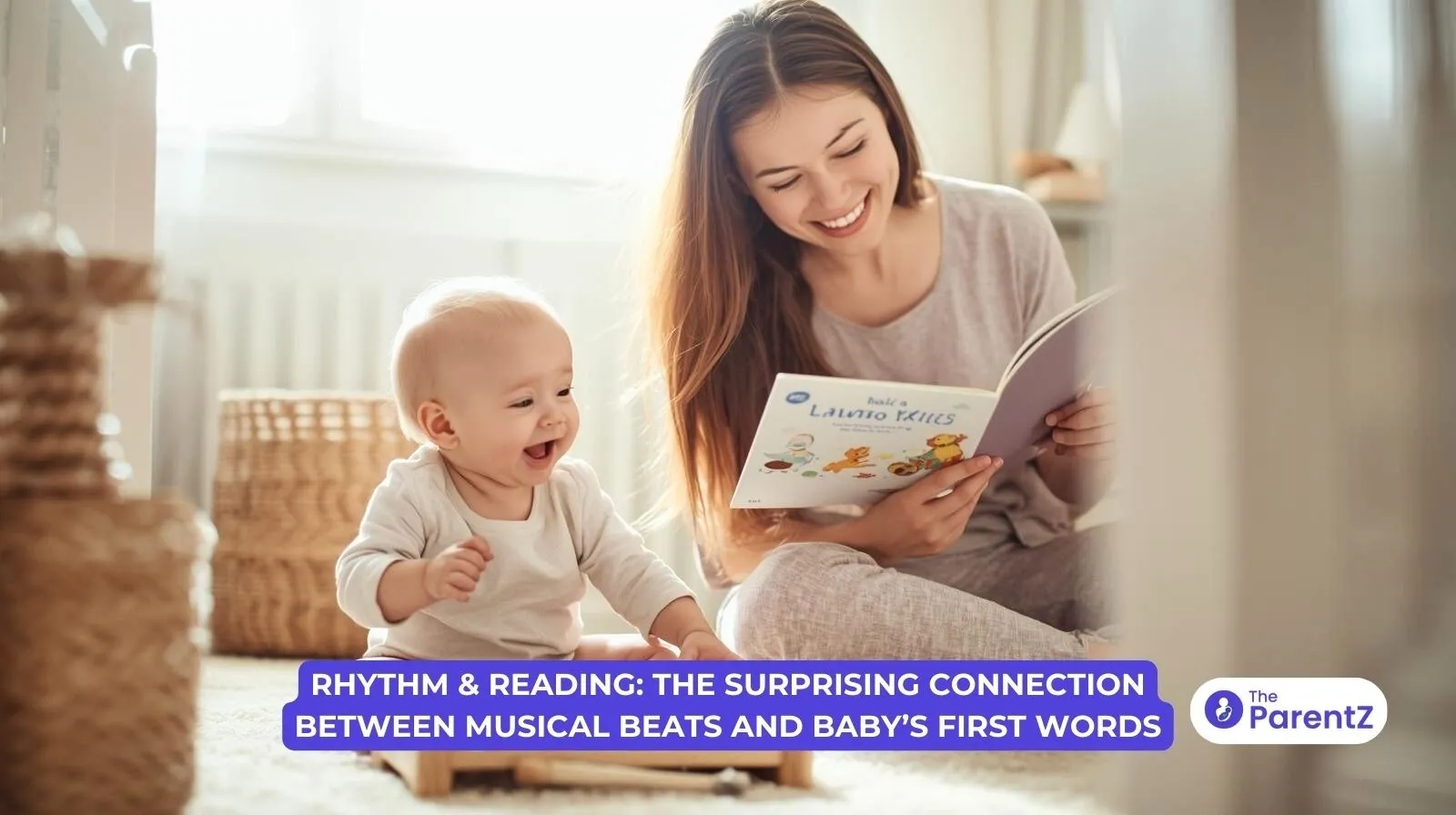
You're bouncing your baby on your knee, humming an old lullaby your nani used to sing. Your baby's eyes go wide. They start moving their little hands. Maybe they even try to make a sound back at you.
This moment is not just adorable. Something real is happening inside your baby's brain.
Science has found that rhythm and language use overlapping brain networks. Which means when your baby responds to a dhol beat at a wedding or calms down when you sing Chanda Mama, they're strengthening the timing and sound-pattern systems that support later speech and language development.
Speech isn't just words. It's patterns. It rises and falls. It has stress and pause. When you say "pa-PA-ya" or "MA-ma," you're using rhythm.
Research found that babies who have better rhythm-tracking abilities tend to develop stronger language skills later on. The researchers found that the brain areas that process musical beat and speech sounds partially overlap.
In simple terms, a baby who can follow a beat is training the same neural pathways that will help them understand and produce words.
Another study showed that babies who attended music-based play sessions showed stronger brain responses to both music and speech sounds compared to babies who didn't. This wasn't singing lessons. It was just playful, rhythmic interaction.
Your baby's brain is absorbing patterns from birth. Every time you clap in a rhythm, every time you sing a line of a song, every time you bounce them to a beat, you're helping their brain learn to detect patterns in sound.
That pattern detection is the foundation of language. Before a baby can say "dada," they have to hear that "da" is a sound unit that appears separately from other sounds. They have to hear where one word ends and another begins. Rhythm helps them do exactly that.
You don't need fancy toys or expensive music classes. Here's what works and what you can realistically do:
Putting on a YouTube video and stepping away doesn't count. Screen-based music without your interaction doesn't carry the same benefit for infants under two. The magic ingredient is you. Your face, your voice, your response. Your baby is reading you while they listen.
You don't need to become a music teacher. You don't need instruments. You need about five minutes a day of intentional singing, clapping, or rhythmic talking; things most Indian parents are already halfway doing.
The research is clear. Rhythmic interaction supports language-related brain development. And you, with your lullabies and your lap-bouncing and your everyday songs, are already giving your baby one of the best early language gifts there is.
Keep singing. Even if you're off-key. Your baby doesn't care, and their brain is quietly thanking you.
TheParentZ offers expert parenting tips & advice, along with tools for for tracking baby and child growth and development. Know more about Baby Growth and Development Tracker App.It serves as an online community for parents, providing valuable information on baby names, health, nutrition, activities, product reviews, childcare, child development and more
Disclaimer:
The views, thoughts, and opinions expressed in this article/blog are solely those of the author and do not necessarily reflect the views of The ParentZ. Any omissions, errors, or inaccuracies are the responsibility of the author. The ParentZ assumes no liability or responsibility for any content presented. Always consult a qualified professional for specific advice related to parenting, health, or child development.
Conversations (Comments) are opinions of our readers and are subject to our Community Guidelines.



Be the first one to comment on this story.