Most Moms Report Slower Recovery After a Second Birth
Jul 19, 2026By Dr. Akanksha Priya
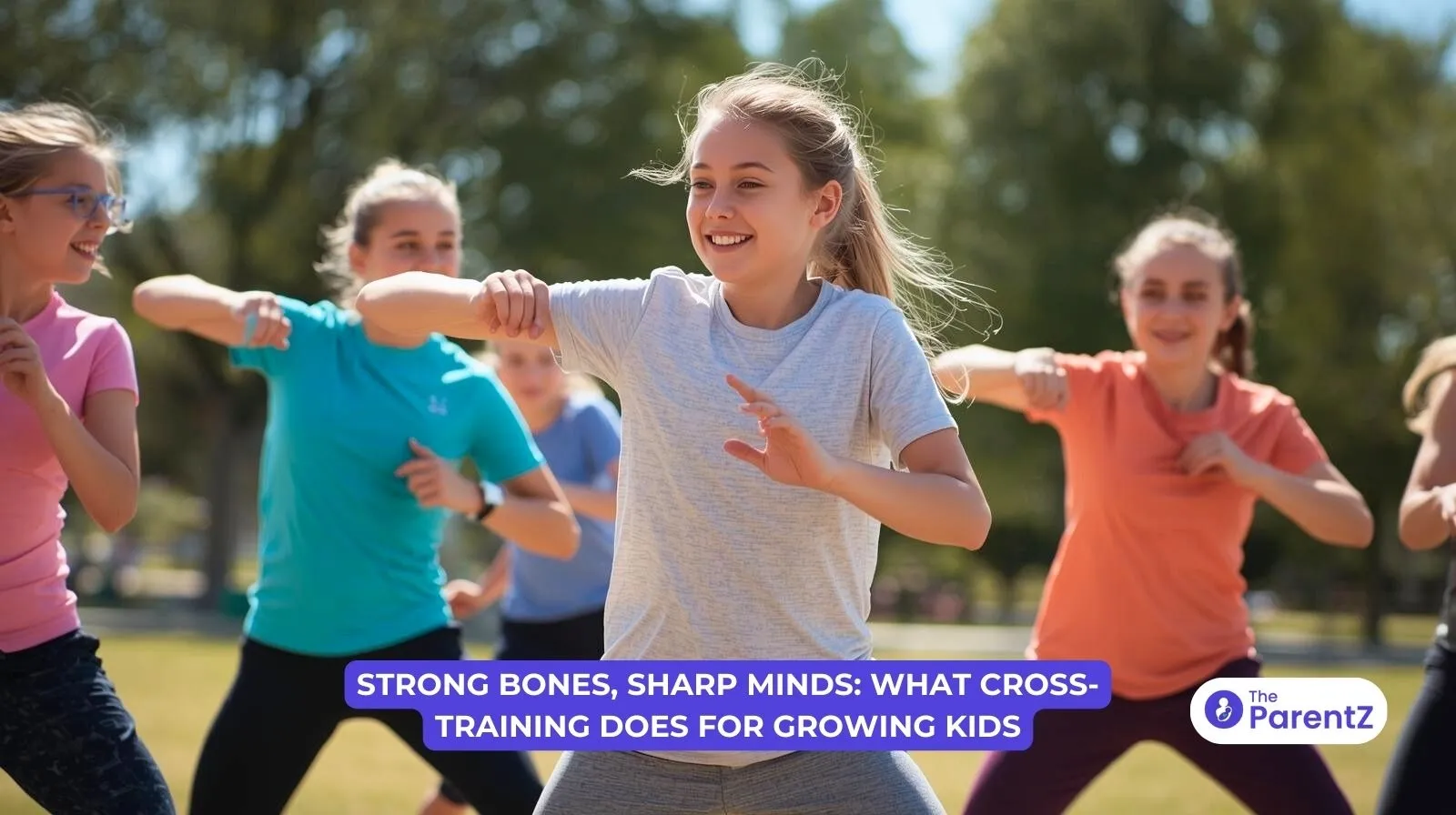
If your child is into soccer, they're probably doing soccer drills five days a week. If they swim, it's laps every morning. We push them to specialize early because we think that's how you get good. But did you know that doing just one activity repeatedly without adequate recovery or variety can be one of the fastest ways to get your growing kid hurt, and it may limit how strong their bones, muscles, and even their brain can get compared to more varied approaches.
Cross-training isn't some elite athlete term. It just means mixing different types of movement into your child's week, and the reason why it matters for kids is rock solid.
Kids' bones are not small adult bones. They're still forming. Between ages 6 and 18, children go through windows of rapid bone development, and what they do physically during those years literally shapes how dense and strong their skeleton will be for life.
Research from the American Academy of Pediatrics and related studies confirms that varied physical activity during childhood often builds greater bone density than single-sport specialization alone, though balanced single-sport training can still provide benefits. When kids use their bodies in different ways like jumping, running, tumbling, swimming, and stretching, they stimulate bone growth from multiple directions. That creates a stronger structural foundation.
When a child does only one type of movement repeatedly, the bones and tendons in those specific areas get overloaded. This is how stress fractures, shin splints, and growth plate injuries happen in kids as young as 8 or 9. These aren't rare. Pediatric sports medicine clinics report that overuse injuries now account for nearly half of all sports injuries in children.
Think of your child's weekly movement like a three-legged stool. Remove one leg, and the whole thing falls.
Aerobic movement: Running around outside, swimming, dancing, and cycling trains the heart and lungs and helps kids maintain a healthy weight. It also promotes better sleep, which directly supports bone and muscle repair.
Strength-based movement: Gymnastics, climbing, bodyweight play like monkey bars, and wrestling around build the muscles that protect joints. Strong muscles mean bones don't absorb as much impact during activity. Even unstructured rough-and-tumble play counts here.
Flexibility and coordination: Stretching after activity, martial arts, yoga, or even dance, keeps muscles long and pliable, reduces injury risk, and builds the body awareness kids need to move safely and efficiently in any sport.
You don't need a gym membership or a structured program for any of this. A child who swims twice a week, rides their bike on weekends, and does a stretch routine before bed is already cross-training.
The benefits aren't just physical. There's strong evidence that varied movement shapes the brain in ways that single-sport training doesn't.
Studies show correlations where children who engage in multiple types of physical activity often have better attention spans, stronger working memory, and lower rates of anxiety than those in single-sport programs, though other factors like family support and overall lifestyle also contribute. Different activities require different kinds of focus. For instance, spatial thinking in gymnastics, rhythm in dance, and strategy in team sports. Therefore, switching between these activities builds cognitive flexibility that directly supports academic performance.
There's also the burnout factor. Sports psychologists have documented that early single-sport specialization is one of the biggest drivers of dropout. Kids who cross-train stay in sports longer, report higher enjoyment, and are more likely to be physically active into adulthood. That alone makes a powerful case for variety.
You don't need to restructure your entire week. A few realistic shifts make a big difference.
If your child has one main sport, add one completely different activity once a week. A soccer player who swims on Saturdays. A dancer who goes for a bike ride on Sunday mornings. Even an hour a week of something different gives the overworked muscles a break and activates the ones being ignored.
Build unstructured outdoor play back into the week wherever you can. This is not extra. This is essential. Kids who play freely outdoors naturally jump, run, climb, crawl, and stretch. Their bodies figure out movement variety instinctively. Forty-five minutes of free outdoor play three times a week is genuinely enough to supplement a structured sport.
Make stretching a family habit, not a solo chore. Five to ten minutes of gentle stretching after dinner is something even a tired parent can do alongside their kid. It's more likely to stick when it's shared, and it signals to children that recovery is part of the process, not an afterthought.
Talk to your child's coach. Many coaches at the youth level are open to hearing that a child is feeling tired or sore in a specific area. A good coach will adjust. If yours doesn't, that's worth knowing.
Pro Tip: Monitor total activity volume to avoid exceeding your child's age in hours per week, as recommended by experts, and consult a pediatrician if signs of fatigue appear.
Your child doesn't need to be a multisport athlete competing in three leagues. Cross-training is not about doing more. It's about doing different. One swim session. One bike ride. One evening of just running around in the backyard. These small shifts in how kids move are backed by decades of research on bone health, injury prevention, brain development, and long-term athletic performance. But always tailor to your child's unique needs and consult professionals for personalized guidance.
The goal is a kid who loves movement, stays healthy, and keeps growing strong, not just this season, but for life.
TheParentZ offers expert parenting tips & advice, along with tools for for tracking baby and child growth and development. Know more about Baby Growth and Development Tracker App.It serves as an online community for parents, providing valuable information on baby names, health, nutrition, activities, product reviews, childcare, child development and more
Disclaimer:
The views, thoughts, and opinions expressed in this article/blog are solely those of the author and do not necessarily reflect the views of The ParentZ. Any omissions, errors, or inaccuracies are the responsibility of the author. The ParentZ assumes no liability or responsibility for any content presented. Always consult a qualified professional for specific advice related to parenting, health, or child development.
Conversations (Comments) are opinions of our readers and are subject to our Community Guidelines.

Be the first one to comment on this story.