
Most Moms Report Slower Recovery After a Second Birth
Jul 19, 2026By Dr. Akanksha Priya
If you’ve ever stood in a grocery store aisle while your child asked for biscuits, chips, or a chocolate drink, you’re not alone.
Most parents try to make balanced choices. But honestly, it isn’t easy. Food packets look bright. Words like “energy,” “immunity,” or “fortified” catch our eye. The nutrition table at the back? It’s small and confusing.
Now, something important has happened that could change this.
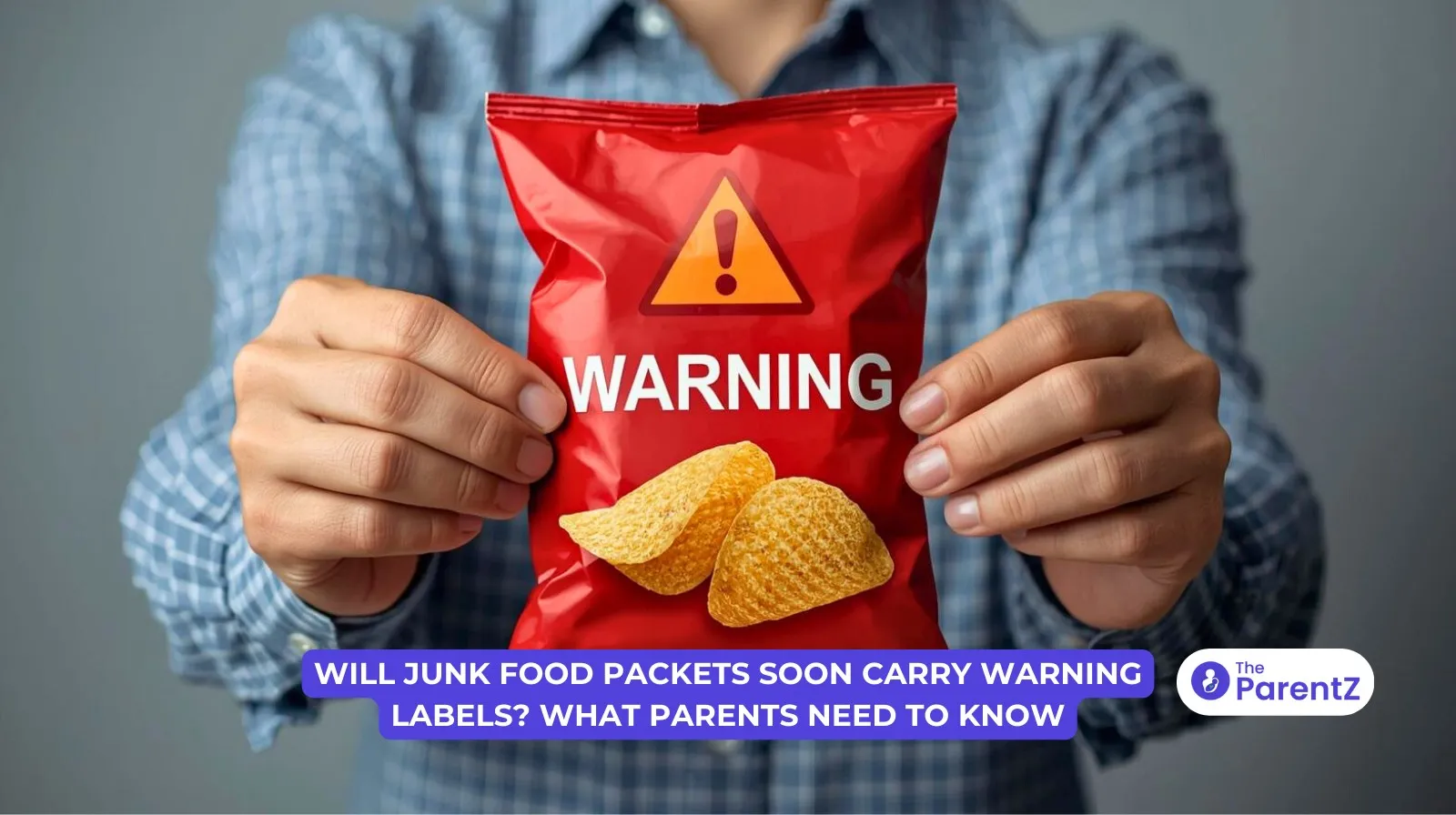
Recently, the Supreme Court of India once again reminded the Food Safety and Standards Authority of India (FSSAI) that it’s not enough for nutrition details to be stuck at the back. The Court has urged FSSAI to finalise concrete plans for mandatory front-of-pack warning labels that clearly show when a product has high sugar, salt, or saturated fat content.
Instead of tiny numbers and confusing tables at the back, the Court is pushing for easy, bold warnings on the front of the pack. These would help you see at a glance if a product contains too much of something unhealthy.
Think of it like the big red warning signs you see on cigarette packs: simple, clear, and impossible to miss. The Court has given FSSAI four weeks to respond with a clear roadmap for how and when these new labels might be introduced. If FSSAI delays again, the Court has hinted it could step in with even stronger orders.
This is not a ban on snacks; it’s about better information so families can choose wisely.
This isn’t the first time the Supreme Court has spoken on this issue. Back in 2025, the Court had set deadlines and asked an expert committee to review how front-of-pack labels could work. That process has taken longer than expected, with FSSAI holding consultations, studying thousands of public comments, and running surveys. Still, as of early 2026, there’s no final regulation in place yet. The Court has made it clear that it expects faster action now, because child health and public awareness are at stake.
Right now, most packaged foods in India have:
Many parents don’t have the time (or patience) to read all of it.
Front-of-package labelling (often called FOPL) would mean:
Many countries already use such systems. The idea is simple: help families make informed choices quickly
In 2022, FSSAI proposed something called the Indian Nutritional Rating (INR) system.
This system would give packaged foods a rating from 0.5 to 5 stars. More stars would mean a “healthier” product overall.
The government argued that this system considers both:
But the petitioners argued that star ratings may confuse parents. A product high in sugar might still get stars because it contains added vitamins.
They said parents need something clearer, a direct warning if sugar, salt, or saturated fat is high.
That debate is still ongoing.
Children today are exposed to:
And many of these look “healthy” because of marketing.
India is already seeing increasing cases of childhood obesity and early-onset diabetes. Doctors have been raising concerns for years.
As parents, you may be wondering:
Clear labels could make that decision easier.
No. This is not about banning biscuits, chips, or chocolates. This is about transparency.
The Court has not banned any food. It has only asked FSSAI to seriously consider clearer warning labels.
If implemented, companies may:
But your choices as a parent will remain yours.
There is no need to panic. Nothing changes immediately.
However, this is a good time to reflect gently:
Small changes matter more than extreme rules.
If front-of-package warning labels become mandatory, you might start seeing:
This may also push companies to reduce unhealthy ingredients. But the final decision will depend on FSSAI’s review and recommendations.
While policymakers debate, here are practical steps:
You don’t need to become a nutrition expert. Just becoming more aware is enough.
This case highlights that our food choices today are not just about taste. They are about long-term health.
The Court has recognized that clearer information is part of protecting citizens’ right to health.
As parents, your biggest strength is awareness and not fear. You don’t need to eliminate every biscuit. You don’t need to feel guilty. But if clearer labels come in the future, they may simply help you decide better. And sometimes, that small clarity makes a big difference in your child’s health journey.

TheParentZ offers expert parenting tips & advice, along with tools for for tracking baby and child growth and development. Know more about Baby Growth and Development Tracker App.It serves as an online community for parents, providing valuable information on baby names, health, nutrition, activities, product reviews, childcare, child development and more
Disclaimer:
The views, thoughts, and opinions expressed in this article/blog are solely those of the author and do not necessarily reflect the views of The ParentZ. Any omissions, errors, or inaccuracies are the responsibility of the author. The ParentZ assumes no liability or responsibility for any content presented. Always consult a qualified professional for specific advice related to parenting, health, or child development.
Conversations (Comments) are opinions of our readers and are subject to our Community Guidelines.



Be the first one to comment on this story.