
Most Moms Report Slower Recovery After a Second Birth
Jul 19, 2026By Dr. Akanksha Priya
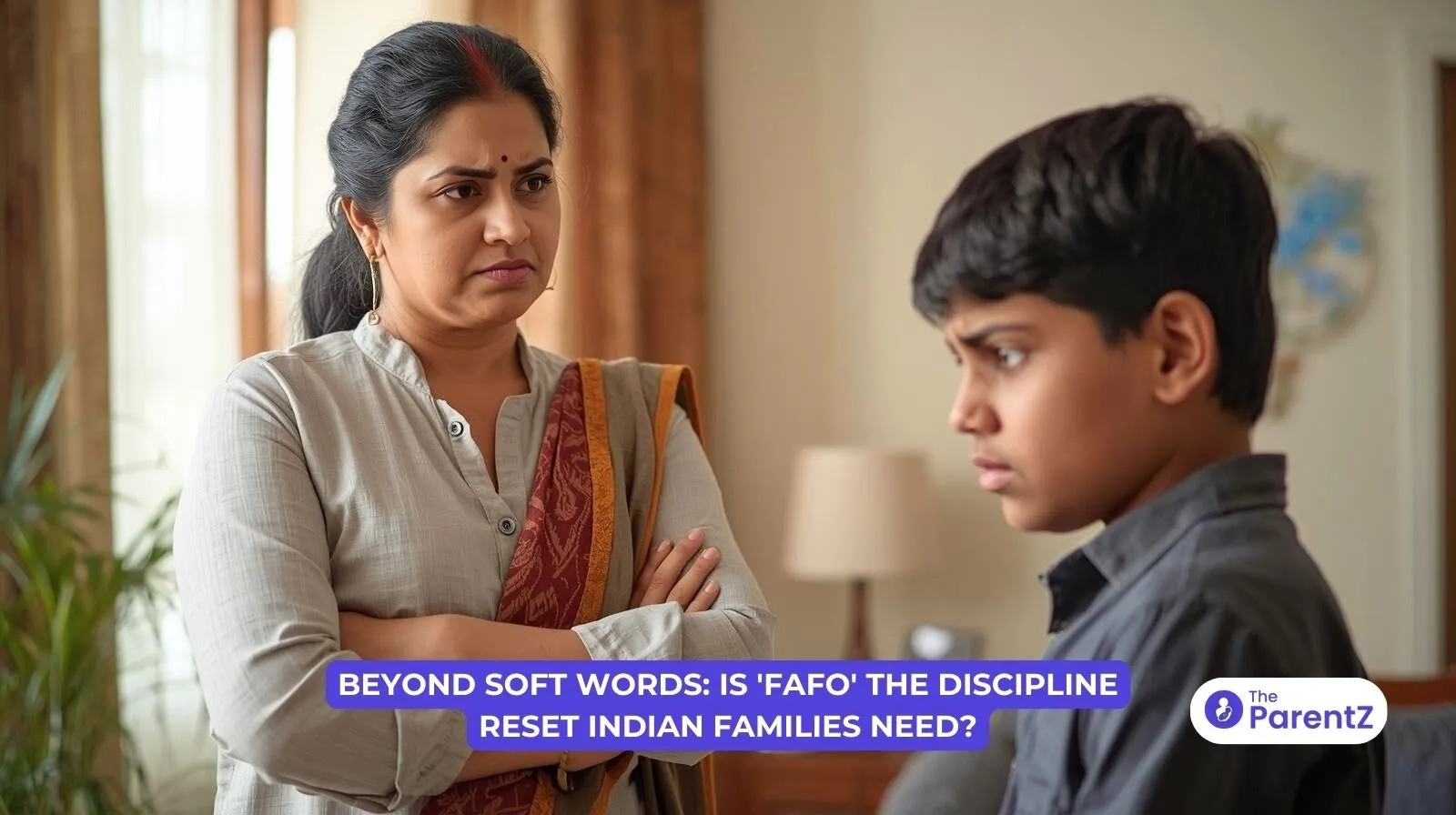
You've explained, reasoned, negotiated, stayed calm when you wanted to scream, and still, your child did exactly what they wanted to do anyway.
Welcome to the quiet burnout that a lot of Indian parents are sitting with right now.
For a few years, gentle parenting ruled every parenting group and Instagram reel. It came from a good place. Many of us grew up in homes where "because I said so" was the only explanation we ever got, and we didn't want that for our kids. So we swung hard the other way, which includes more conversations, more validation, and more patience. But somewhere along the way, it became exhausting.
Now there's a new phrase going around. FAFO parenting. It stands for "F*** Around and Find Out." Or if you prefer keeping it clean: "Fool Around and Find Out." Either way, the idea is the same: warn your child, give them the information, and then step back and let consequences do the teaching.
No long lectures. No begging. No negotiating for twenty minutes over a jacket.
Indian parenting has always lived in an interesting tension. On one side, there's the old-school authoritarian parent, the one who never explained anything and expected full obedience. On the other hand, there's the social-media-influenced parent trying to validate every feeling and never raise their voice.
Neither extreme actually works long-term. And Indian parents, who are also managing jobs, joint families, academic pressure, and the chaos of raising Gen Alpha kids glued to screens, don't have the bandwidth to hold up either end perfectly.
FAFO isn't about abandoning your kid to struggle alone. It's not about being cold or checked out. Done right, it looks surprisingly calm.
You explain once. You warn once. And then you let reality be the teacher.
Your child refuses to eat dinner? Okay. They'll feel hungry by bedtime. You don't make a second meal. Your tween keeps delaying their homework until 11 pm and then panics? You stop reminding at 7 pm. The next morning's scramble teaches what your reminders never could. Your kid refuses to carry a water bottle on a hot day? Fine. Thirst is a pretty effective lesson.
The key difference between FAFO and just giving up is that you stay present emotionally. You don't gloat. You don't say "I told you so." When the consequence lands, you're right there with: "That was tough, huh? What do you think you'll do differently next time?"
That's it. That's the whole thing.
FAFO isn't a blank cheque to disengage. And it doesn't work the same way across all ages.
With children under 6, natural consequences need to be very small and very safe. You're not letting a 4-year-old "find out" what happens if they don't sleep; that just results in a miserable day for everyone. With this age, you guide more than you step back.
With tweens and early teens (the 10-15 bracket), FAFO is genuinely powerful. This is exactly the age where kids are pushing for autonomy but still need guardrails. Letting them feel the real weight of small choices, like a bad grade, a missed event, a friendship snag, builds the kind of judgment that no amount of parental lecturing ever does.
Also, consequences must be safe and proportionate. FAFO is not for situations involving health, physical danger, or serious emotional risk. There's a clear line between a child who forgot their lunch box and a child who needs your intervention, and you know that line. Trust it.
FAFO parenting isn't a harsh parenting style. It's not a return to the authoritarian household many of us grew up in. It's actually closer to something our nani or dadi practiced without a fancy name for it. Natural consequences, less coddling, and more trust in a child's ability to learn.
The reset Indian families may need isn't harsher parenting or softer parenting. It's clearer parenting. One where your word actually means something, where children understand that actions have real outcomes, and where you're present. Not as a shield against every discomfort, but as a steady presence when they're learning to handle

TheParentZ offers expert parenting tips & advice, along with tools for for tracking baby and child growth and development. Know more about Baby Growth and Development Tracker App.It serves as an online community for parents, providing valuable information on baby names, health, nutrition, activities, product reviews, childcare, child development and more
Disclaimer:
The views, thoughts, and opinions expressed in this article/blog are solely those of the author and do not necessarily reflect the views of The ParentZ. Any omissions, errors, or inaccuracies are the responsibility of the author. The ParentZ assumes no liability or responsibility for any content presented. Always consult a qualified professional for specific advice related to parenting, health, or child development.
Conversations (Comments) are opinions of our readers and are subject to our Community Guidelines.



Be the first one to comment on this story.