
Most Moms Report Slower Recovery After a Second Birth
Jul 19, 2026By Dr. Akanksha Priya
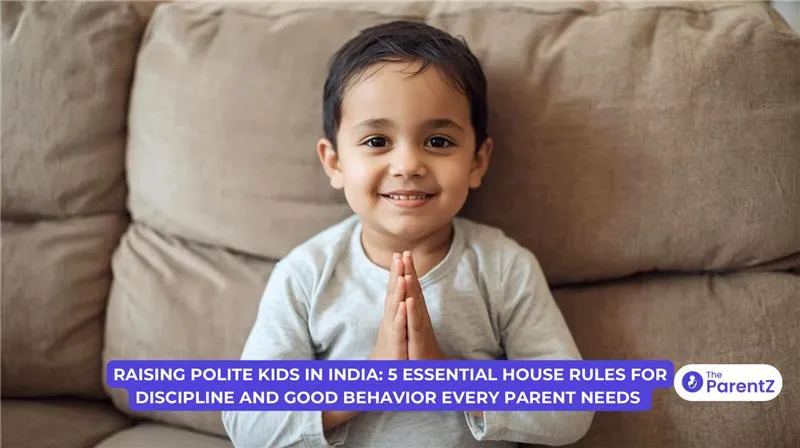
You're managing a full-time job (or a full-time home), school drop-offs, homework battles, extended family opinions, and somewhere in between all of that, you're also supposed to raise a child who says "please," doesn't talk back, respects elders, and doesn't embarrass you at a family function.
No pressure, right?
Kids today are growing up in a very different world from the one most of us grew up in. They have access to YouTube, Instagram Reels, and a constant stream of content that shapes how they speak, behave, and think, often before we even realize it. They're also growing up in homes where both parents may be working, joint family setups are evolving, and the old "because I said so" approach just doesn't stick anymore.
That doesn't mean kids are becoming worse. It means parenting needs a small, quiet upgrade, and that upgrade doesn't have to be complicated.
Kids, especially between ages 4 and 14, feel safe when they know what's expected of them. Clear, consistent boundaries don't stress children out. Unpredictable, mood-dependent discipline does.
When children know the rules of the house, they don't have to test every boundary every single day. That's less exhausting for them and for parents too.
Most Indian parents instinctively tell kids to touch the feet of every relative who walks in. But when a child is yanked by the arm toward an unfamiliar face, it doesn't teach respect; it teaches discomfort.
The Rule: Everyone who enters our home gets acknowledged, either with a smile, a namaste, or a hello.
Let the child choose the gesture. When kids feel like they have some say, they're far more willing to participate. Over time, this small habit builds genuine warmth and social confidence, not just performance for guests.
Pro Tip: Follow it yourself. If children see parents greet the domestic help, the neighbour, or the delivery person with basic courtesy, they absorb that without being told.
This one is a non-negotiable in homes that want kids to actually communicate. In India, mealtimes have always been a moment of family connection, and that's worth protecting.
The Rule: No phones or tablets during meals. Everyone at the table, everyone present.
This isn't about being strict. It's about giving children a daily window where they practice conversation, listen to others, and feel heard. Children who feel connected at home are generally better behaved outside it too. Research consistently backs this up.
Pro Tip: Start with just dinner. Not every meal. Just one. That's manageable.
Many Indian parents grew up in homes where answering back was simply not acceptable. And while that maintained a certain order, it also meant a lot of children never learned how to express themselves healthily.
Kids today will push back. They will argue. And that's actually okay.
The Rule: You can disagree, but you cannot be rude. No yelling, no name-calling, no door-slamming.
Teach children to say "I don't like this" instead of throwing a tantrum. When a child is heard calmly, they rarely need to escalate. This builds emotional intelligence, which is something that will serve them far better in adult life than blind obedience ever could.
Discipline isn't only about what children can't do. It's also about giving them ownership of something.
The Rule: Everyone in the house has a job.
For a 5-year-old, that might be putting their shoes away. For a 10-year-old, it could be setting the table or folding their own clothes. It doesn't have to be elaborate.
Children who contribute to the household grow up feeling capable and considerate. These two qualities naturally lead to good behavior. It also quietly teaches them that respect for a home (and for people in it) is a shared responsibility.
In many Indian households, these words get lost because elders rarely say them to children, and then expect children to say them freely.
The Rule: Gratitude and accountability go both ways.
When parents apologize to a child after losing their temper, it doesn't weaken authority; it builds immense trust. And children who see adults use these words naturally, use them too. Without being reminded.
Raising a polite child doesn't mean raising a perfect one. It means raising a child who is kind, aware, and knows how to be in the world with other people.
That's not built through pressure or punishment. It's built through consistency, warmth, and rules that feel fair, even to a seven-year-old.
TheParentZ offers expert parenting tips & advice, along with tools for for tracking baby and child growth and development. Know more about Baby Growth and Development Tracker App.It serves as an online community for parents, providing valuable information on baby names, health, nutrition, activities, product reviews, childcare, child development and more
Disclaimer:
The views, thoughts, and opinions expressed in this article/blog are solely those of the author and do not necessarily reflect the views of The ParentZ. Any omissions, errors, or inaccuracies are the responsibility of the author. The ParentZ assumes no liability or responsibility for any content presented. Always consult a qualified professional for specific advice related to parenting, health, or child development.
Conversations (Comments) are opinions of our readers and are subject to our Community Guidelines.


Be the first one to comment on this story.