
Most Moms Report Slower Recovery After a Second Birth
Jul 19, 2026By Dr. Akanksha Priya
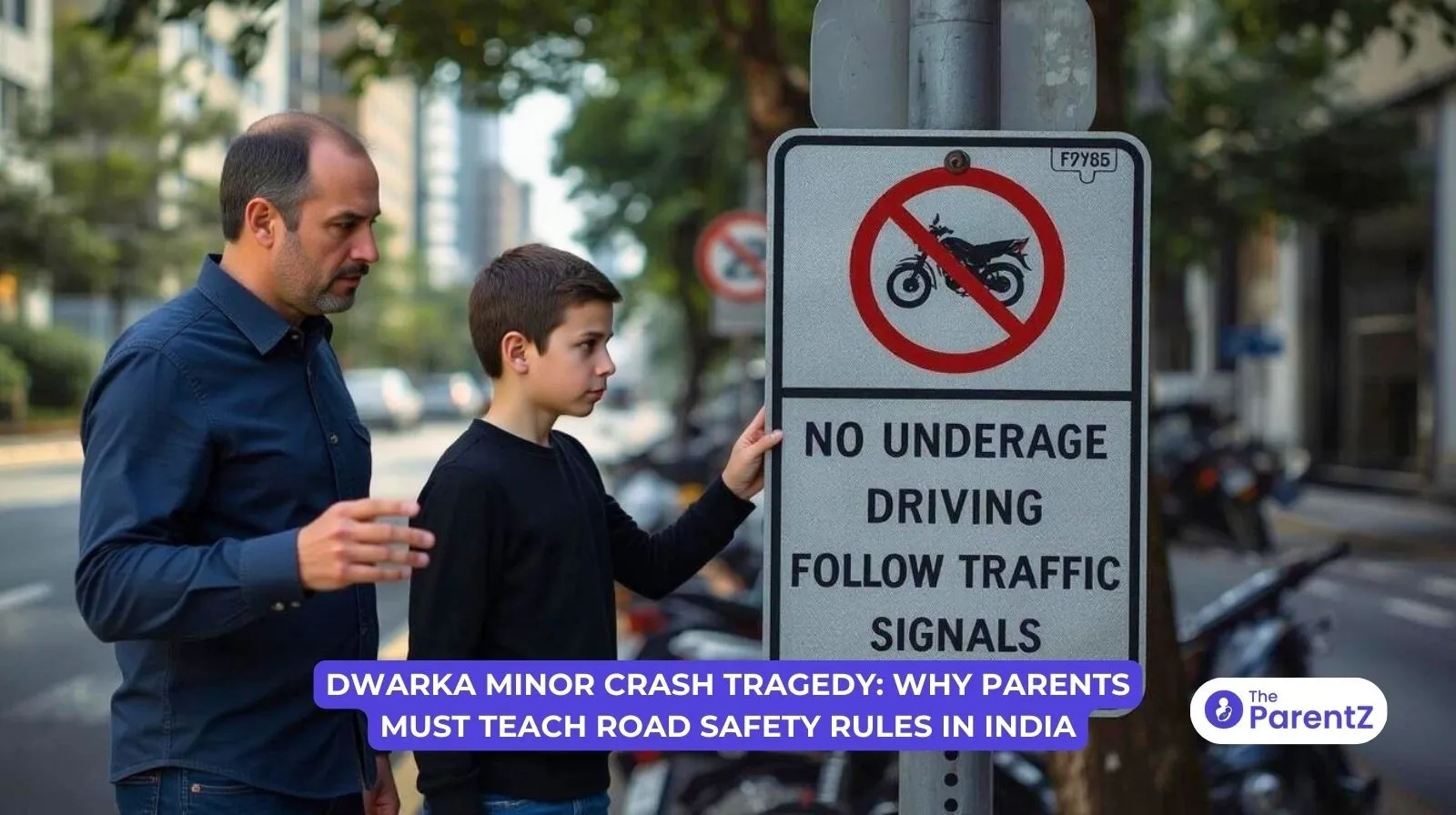
On a regular February morning in Dwarka, a young life was lost in a crash that has shaken many families across Delhi. A 23-year-old BBA student, Sahil Dhaneshra, died after his motorcycle collided with an SUV allegedly driven by a 17-year-old minor near Lal Bahadur Shastri College. The SUV reportedly hit multiple vehicles. Police registered an FIR at Dwarka South police station after receiving a PCR call around 11:57 am. Investigations later revealed the vehicle had several prior challans, mostly for overspeeding.
Behind every headline like this, there are families. Sahil was raised by a single mother who had spent years nurturing his dreams. He had secured admission to a university in Manchester and was preparing for a new chapter abroad. At the same time, there is also a teenager whose choices, and perhaps the environment around him, led to irreversible consequences.
This is not about blaming one family. It is about understanding that when it comes to underage driving and reckless behaviour, parents cannot afford to be casual.
In India, the legal driving age is 18 for private vehicles. Yet, many parents quietly allow teenagers to “practice” on empty roads, drive within colonies, or take the car out for short errands. Sometimes it feels harmless. Sometimes it feels convenient.
But convenience can become carelessness.
Teenagers today grow up in a culture where speed looks exciting. Social media is full of reels showing stunts, drifting cars, and risky overtakes. Validation comes in the form of likes and shares. In the Dwarka case, allegations suggest the minor may have been making “fun reels” before the crash. Whether that detail stands in court or not, it reflects a larger reality. Risky driving is often glorified online.
Adolescents are still developing impulse control and risk assessment. The part of the brain responsible for long-term consequences is not fully mature. Add peer pressure and digital applause, and poor decisions become more likely.
This is where parenting matters a lot.
Many parents do not see themselves as irresponsible. They simply trust their child. “He drives well.” “It’s just nearby.” “Everyone in the neighbourhood does it.”
But a child behind the wheel without a licence is not just breaking a rule. It is a legal offence under Indian law. If a minor causes an accident, parents or guardians can face serious legal consequences, including fines and imprisonment under the Motor Vehicles Act.
More importantly, it teaches a dangerous lesson: rules are flexible if confidence is high enough.
Children watch more than they listen. If they see adults jumping red lights, skipping helmets for short rides, or negotiating traffic fines casually, they learn that rules are optional. Road safety becomes a suggestion, not a responsibility.
The Dwarka tragedy shows how quickly things spiral. A few seconds of speed. A missed brake. A life gone.
Road safety education should not begin at 18. It should begin much earlier.
Road safety should not feel like an extra burden for already busy parents.
Also, monitor vehicle access. Car keys should not be casually accessible. Clear communication within the family helps avoid situations where one adult unknowingly allows what another forbids.
The Dwarka case also highlights that prior overspeeding challans were reportedly issued against the SUV. Repeated violations without strict correction send a silent message that fines are manageable and rules are negotiable.
Parents must treat traffic violations seriously, even if committed by adults in the house. Paying a fine should come with reflection and behavioural change, not jokes at the dinner table.
Beyond legal consequences lies emotional trauma. A moment of thrill can lead to years of guilt, court cases, and social stigma. For victims’ families, the loss is permanent. Sahil’s home now holds medals and notes that represent dreams that will never unfold.
Children need to understand that driving is not entertainment. It is a responsibility toward strangers on the road.
The Dwarka minor crash is not just one family’s tragedy. It is a reminder for urban India, where cars are status symbols, and speed feels normal. Parenting must adapt to this landscape.
Underage driving is not a small favour to a child. It is a risk to society.
Teaching road safety does not require grand gestures. It requires everyday discipline, honest conversations, and firm boundaries delivered with care.
Children learn what they live. If responsibility is lived at home, it is more likely to be carried onto the road.
TheParentZ offers expert parenting tips & advice, along with tools for for tracking baby and child growth and development. Know more about Baby Growth and Development Tracker App.It serves as an online community for parents, providing valuable information on baby names, health, nutrition, activities, product reviews, childcare, child development and more
Disclaimer:
The views, thoughts, and opinions expressed in this article/blog are solely those of the author and do not necessarily reflect the views of The ParentZ. Any omissions, errors, or inaccuracies are the responsibility of the author. The ParentZ assumes no liability or responsibility for any content presented. Always consult a qualified professional for specific advice related to parenting, health, or child development.
Conversations (Comments) are opinions of our readers and are subject to our Community Guidelines.


Be the first one to comment on this story.