
Most Moms Report Slower Recovery After a Second Birth
Jul 19, 2026By Dr. Akanksha Priya
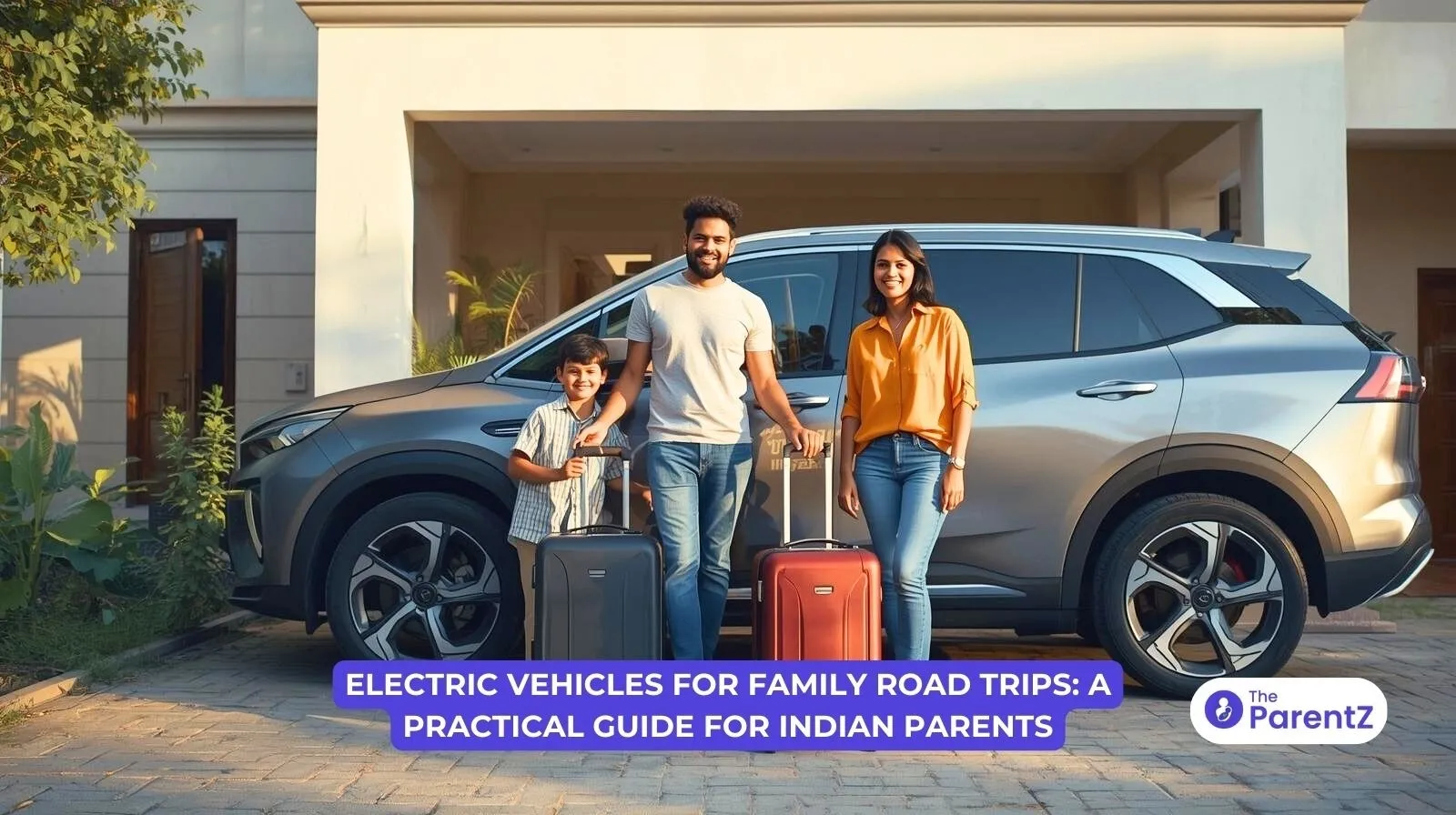
You're standing at the showroom, the EV looks gorgeous, the salesperson is talking about how you'll never visit a petrol pump again, and somewhere in the back of your mind, a tiny voice says, "But what about Diwali? We drive 600 kilometres to my mother-in-law's house."
That voice is completely valid. And this blog is for you, the parent with kids, school bags, a dicky full of luggage, a mother-in-law's pickle jar, and a genuine need to cover serious distance on a holiday weekend.
So let's get into it.
India is not Norway. We have scorching summers where temperatures cross 45°C in Rajasthan, humid monsoons in Kerala, and cold winters in the hills. All of this affects how an EV performs.
Here's what you need to know:
The good news is that the charging infrastructure in India has grown significantly, with over 29,000 public chargers operational nationwide as of early 2026 (including around 8,900 fast chargers). Tata Power, ChargeZone, Ather Grid, Statiq, and BPCL have set up fast chargers on major highways, including Mumbai-Pune Expressway, NH48 (Delhi-Jaipur), NH44 (Delhi-Bengaluru), and more. It is not yet everywhere, but the main routes are becoming reliable.
Yes. But you need to plan it differently than a petrol car trip.
Let’s understand what a realistic 600 km trip looks like in an EV with 460-490 km of range (like the Tata Nexon EV Max or MG ZS EV):
You leave home with a full charge. You drive 200–250 km, roughly 2.5 to 3 hours. You stop at a fast charger. In 25–35 minutes, you've added another 150–200 km of range. You grab chai, use the toilet, feed the kids something, and let them run around for 10 minutes. Then you drive the remaining stretch.
That's it. One stop. One break. Done.
You were going to stop anyway. No family with children drives 600 km non-stop. Your kids need a bathroom. Someone's going to say they're hungry. You want chai. The EV just turns that break into a charging opportunity instead of something you're squeezing around.
Note: These speeds depend on using a 60kW DC charger or higher.
Families are regularly doing these routes in EVs today:
Longer routes like Delhi to Chandigarh or Mumbai to Goa are possible but require more planning and comfort with charging logistics.
If you frequently travel to remote areas, like small towns in UP, rural Odisha, and interior Maharashtra, fast charging infrastructure is sparse. An EV may not be your best choice as a sole family vehicle if these are regular trips.
If you travel more than 600–700 km in a single day regularly, the multiple stops required will genuinely add time. For occasional trips, it's fine. For frequent marathon drives, weigh it carefully.
Also, apartment dwellers without home charging access need to depend entirely on public charging, which works, but requires more planning than plugging in overnight at home.
If your road trips are mostly on major national highways, if you're comfortable with one planned break every 250–300 km, and if you can charge at home, yes, an EV works well for your family.
The shift is really a mindset one. You're not losing anything. You're just stopping with intention rather than scrambling for a petrol bunk. And honestly, your kids might enjoy the breaks more than the driving.
Pack the snacks, charge overnight, and hit the road.
TheParentZ offers expert parenting tips & advice, along with tools for for tracking baby and child growth and development. Know more about Baby Growth and Development Tracker App.It serves as an online community for parents, providing valuable information on baby names, health, nutrition, activities, product reviews, childcare, child development and more
Disclaimer:
The views, thoughts, and opinions expressed in this article/blog are solely those of the author and do not necessarily reflect the views of The ParentZ. Any omissions, errors, or inaccuracies are the responsibility of the author. The ParentZ assumes no liability or responsibility for any content presented. Always consult a qualified professional for specific advice related to parenting, health, or child development.
Conversations (Comments) are opinions of our readers and are subject to our Community Guidelines.



Be the first one to comment on this story.