
Most Moms Report Slower Recovery After a Second Birth
Jul 19, 2026By Dr. Akanksha Priya
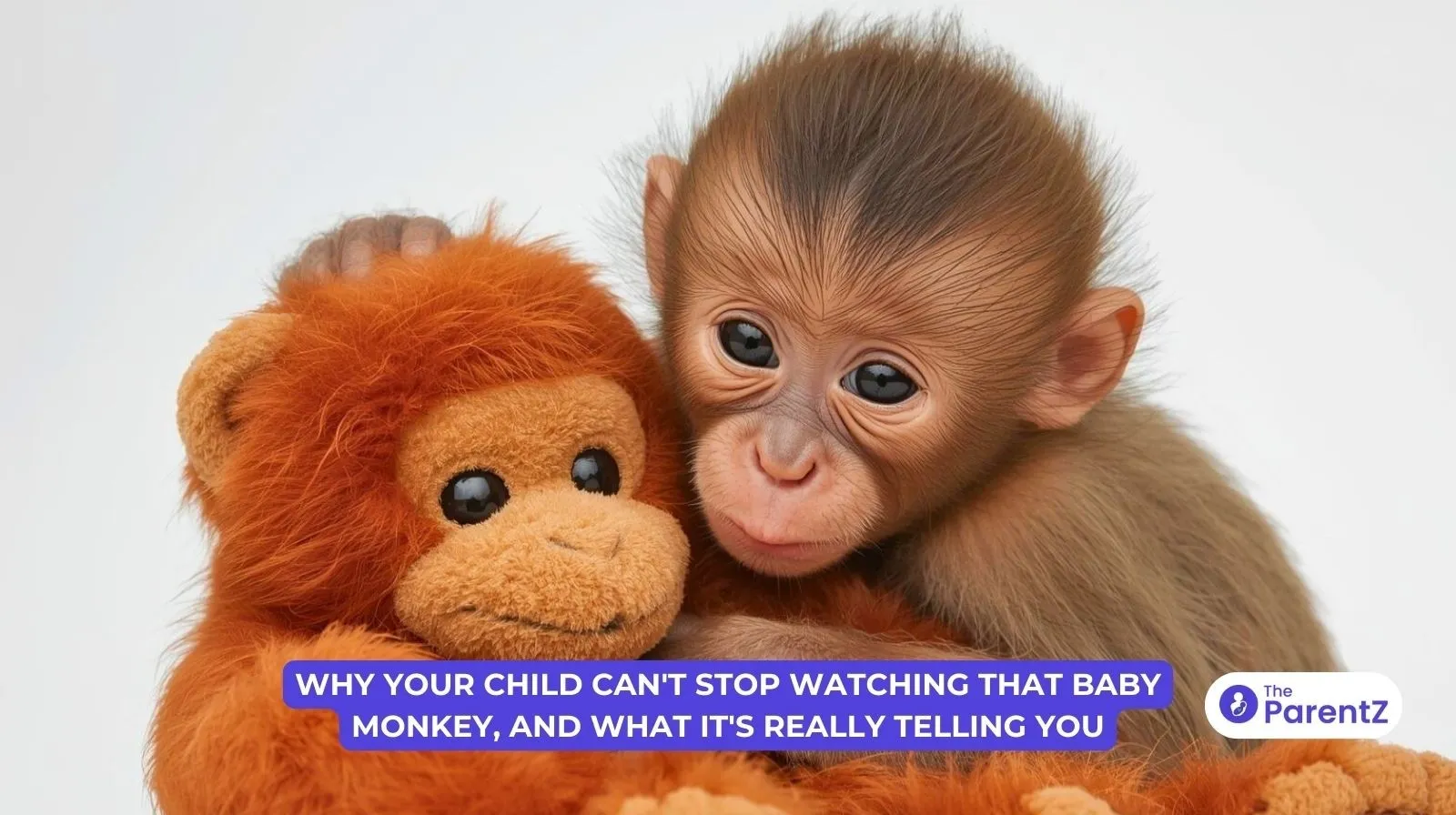
If you've been on the internet lately, you've seen him. A tiny baby snow monkey named Punch, clutching a stuffed orangutan toy twice his size, wandering through a group of monkeys who don't quite want him around. And something about that image, that small, determined, slightly lost little face, has made millions of people stop scrolling.
Reels. Memes. TikToks. Podcasts. Opinion pieces. Entire comment sections full of strangers saying things like "I am Punch," or "I can't explain why I'm crying," or "We're all Punch's family now."
And your child might be one of those people.
They might be watching his clips on a loop. Saving pictures of him. Feeling something they can't quite name. And if you're wondering why, this blog is for you.
Punch is a baby Japanese macaque, a snow monkey, born in July 2025 at the Ichikawa City Zoo in Japan. His mother abandoned him shortly after birth. Zoo caretakers hand-raised him, bottle-fed him, and eventually introduced him to a group of other monkeys. He struggled. He showed signs of anxiety. He was pushed away, left out, trying to find his place.
To help him cope, the zoo gave him a large stuffed orangutan toy from IKEA, a soft, huggable thing he could hold on to. People on the internet called the toy "Oran-Mama."
That image of a motherless baby clinging to a stuffed toy for warmth and safety went quietly, then loudly, then completely viral.
Punch is not just a cute animal video. He's a mirror.
When people, especially kids and teens, watch him, they're not just watching a monkey. They're seeing something that looks exactly like a feeling they've had but never been able to explain. That feeling of being on the outside of a group and not knowing why. Of looking for comfort in something that can't actually talk back, but somehow still helps. Of being "mentally strong" on the outside while quietly struggling on the inside.
That's not a small thing. That's actually a really big thing.
Not every child connects to Punch for the same reason. And that's exactly the point.
Today's kids are not being dramatic. They are growing up in a world that would exhaust anyone.
Academic pressure that starts almost in kindergarten. The constant comparison engine of social media. A future that genuinely feels uncertain, like jobs, climate, safety, and money. Real violence and real danger that kids are aware of in ways previous generations weren't. Some children live in poverty. Some live in homes where nothing is stable. Many live in homes that look fine from the outside but feel lonely from the inside.
And yet we still sometimes look at our kids finding comfort in a baby monkey video and think, "That's a bit much."
It's not. It's actually a very reasonable response to a very difficult world.
If your child is obsessed with Punch, please don't make fun of it, don't dismiss it, and don't turn it into a joke.
Instead, get curious about it.
Not in an interrogating way. Just maybe: "I saw that video too. What do you like about him?" And then just listen. Without fixing. Without advising.
Because what your child might tell you, if they feel safe enough, is something much more important than a viral video. They might tell you they feel like Punch sometimes. That they don't always feel like they fit in. That watching someone small get cared for makes something in them relax.
That's not oversharing. That's trust. And it's one of the most valuable things a child can offer a parent.
Punch made it. Recently, he's seen playing with other monkeys. He's eating on his own. He's doing okay.
He didn't make it because he was never hurt. He made it because someone cared enough to notice what he needed, and gave it to him, even if it was just a stuffed toy to hold on to while he figured out the rest.
Your child is figuring out the rest too. And you get to be that steady presence while they do.
That's not a small thing either. That might actually be everything.
If you want to understand your child better, visit theparentz.com, a space built for exactly these moments, where expert guidance meets real, relatable parenting conversations. Start the conversation that could change everything.
TheParentZ offers expert parenting tips & advice, along with tools for for tracking baby and child growth and development. Know more about Baby Growth and Development Tracker App.It serves as an online community for parents, providing valuable information on baby names, health, nutrition, activities, product reviews, childcare, child development and more
Disclaimer:
The views, thoughts, and opinions expressed in this article/blog are solely those of the author and do not necessarily reflect the views of The ParentZ. Any omissions, errors, or inaccuracies are the responsibility of the author. The ParentZ assumes no liability or responsibility for any content presented. Always consult a qualified professional for specific advice related to parenting, health, or child development.
Conversations (Comments) are opinions of our readers and are subject to our Community Guidelines.


Be the first one to comment on this story.