Most Moms Report Slower Recovery After a Second Birth
Jul 19, 2026By Dr. Akanksha Priya
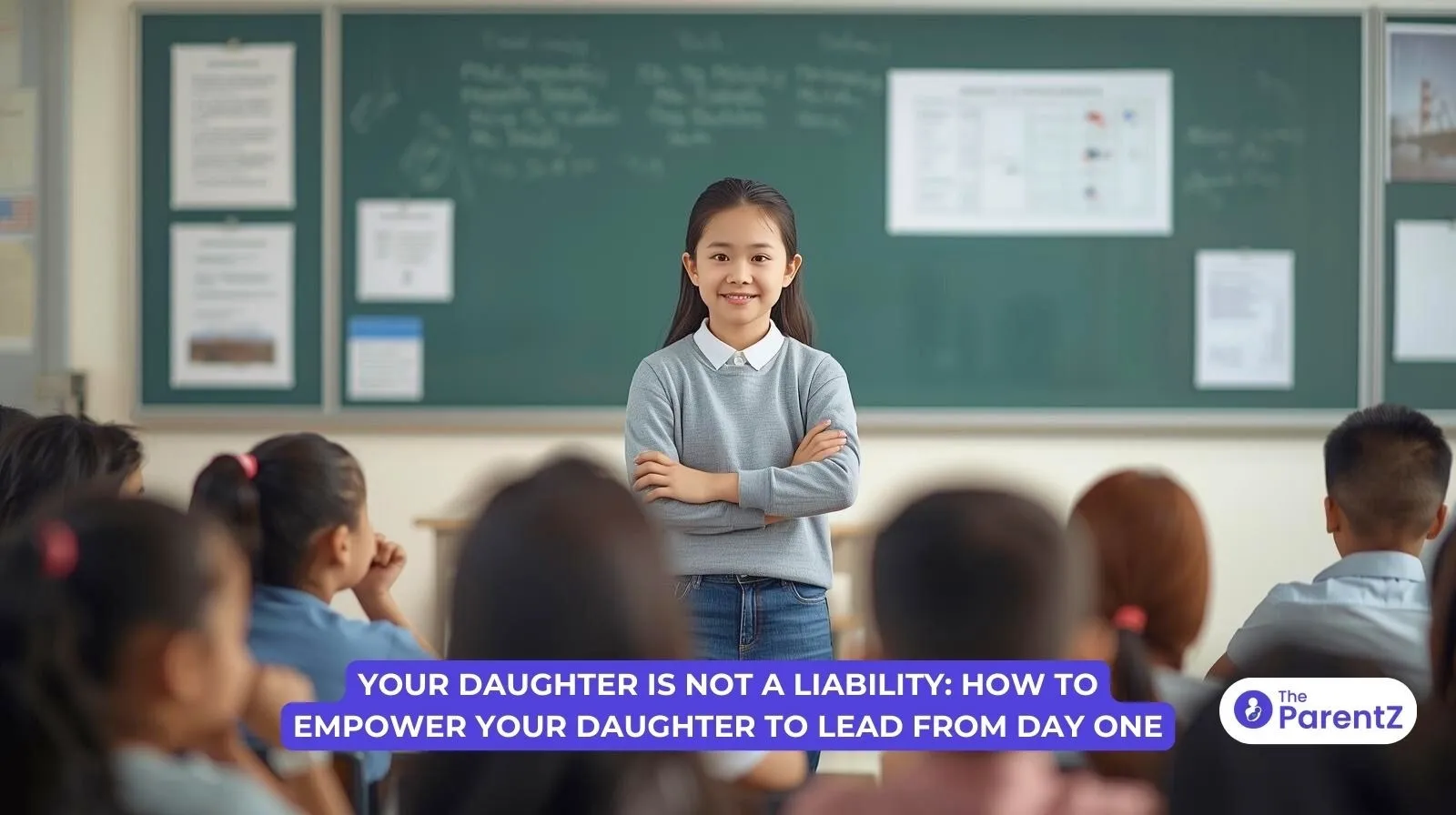
India ranked 131 out of 148 countries in the Global Gender Gap Report 2025, slipping from its 2024 position. And the area where the gap is widest? Leadership and political empowerment. Women make up only 13.8% of India's Parliament, lower than the global average of 26.5%.
These aren't just numbers. These are daughters who were never told they could lead.
And that story begins at home, much earlier than anyone thinks.
There's a lot of love in Indian families. No doubt about that. But love and conditioning can exist in the same breath. And for decades, that conditioning has quietly told girls to be softer, quieter, more adjustable, less demanding. To not take up too much space.
It starts small. A boy is asked what he wants to be. A girl is asked which city her future husband might live in. A brother is encouraged to argue and debate; a sister is told not to answer back. The boy is allowed to be messy, loud, and wrong. The girl is expected to be neat, gentle, and right, or at the very least, silent.
Nobody calls it toxic. It's wrapped in affection, in tradition, in "this is just how things are."
But this is also how things stay.
The good news? There's also been real, measurable progress. Female enrollment in higher education has consistently surpassed male enrollment since 2017-18. The number of women-led startups recognized by the government grew over 800% between 2017 and 2024. These are daughters who had at least one person at home, in school, or elsewhere who said, "You can."
The question is: are you going to be that person?
It doesn't mean raising an aggressive child who doesn't respect boundaries.
It doesn't mean turning her against culture or family.
It means raising a girl who knows her opinion matters. Who doesn't automatically shrink when she walks into a room. Who can say no without apologizing for it. Who asks questions instead of just following instructions. Who sees herself as capable, and not just likable.
Leadership isn't a personality type. It's a set of habits and beliefs that are built over time. Research consistently shows that children with leadership skills grow into more confident, emotionally intelligent, and resilient adults, who are better equipped to handle failure and build real relationships.
And these habits start being formed before she can even read.
This one sounds almost too simple, but it's foundational. Every time you let her choose, even between two shirts, two snacks, or which game to play after school, you're telling her brain that “your choices matter.”
Don't override her picks unless safety is involved. If she wants to wear mismatched colors to the park, let her. Confidence is built through tiny moments of autonomy, not big dramatic ones.
Start with, "You decide." And then actually let her.
When she's stuck on something, for instance, a puzzle, a fight with a friend, or figuring out how to carry her bag, resist the urge to fix it immediately. Pause. Ask, "What do you think you should do?"
This isn't being harsh. This is teaching her that she has the ability to figure things out. Every small problem she solves on her own is a brick in the foundation of her self-belief.
Leaders are problem-solvers. And problem-solving is a habit, not a talent.
This might be the hardest one, especially in Indian homes where respecting elders is deeply ingrained, and rightly so. Respect and voicing an opinion are not opposites.
When she says "But I don't think that's fair," don't shut it down. Ask her why she thinks so. Let her build an argument. Engage with it. And if she makes a good point, tell her so.
A girl who is allowed to respectfully disagree at home will grow up to do the same in the boardroom, in her marriage, in the doctor's office when she needs to advocate for herself.
There's a difference between asking her to wash dishes (which is important, as all children should help at home, regardless of gender) and giving her something to own.
Let her plan the family outing one Sunday. Let her manage the grocery list for a week. Let her be in charge of organising her younger sibling's birthday. Give her something with actual stakes and let her lead it.
When she succeeds, acknowledge her leadership, and not just her effort. When she makes a mistake, let her correct it.
This one is subtle but powerful. If every compliment she receives is about how she looks, how quiet she is, or how well-behaved she's been, that's what she'll learn to perform.
Start praising her for her thinking. Her boldness. Her ideas. Her courage when she tries something new. "That was such a clever solution." "I love how you stood up for your friend today." "You asked a really smart question."
The language we use with children shapes the identity they build for themselves.
Stories matter. Role models matter. But they don't have to be famous.
It could be her teacher who runs a school committee. Her aunt, who started her own business. A neighbor who speaks up at colony meetings. Point these out. Talk about them. Let her grow up surrounded by the ordinary, everyday version of leadership.
When she sees leadership as something real women do and not just something from a motivational poster, it stops feeling impossible.
Many of us are passing down what was passed down to us. It was never malicious. It was survival. It was culture. It was love, just shaped differently.
But today is a different world. The daughters being raised today will enter a workforce that is changing fast, a world that needs them to have a voice, and a life that will ask them to make decisions, big ones, without always having someone to check with first.
Empowering her now isn't about rejecting where you came from. It's about making sure she has tools you might not have been given.
And that is the most loving thing a parent can do.
Want more honest, practical parenting guidance built for Indian families? Visit TheParentz.com, your go-to space for parenting content that actually makes sense in the life you're living.
TheParentZ offers expert parenting tips & advice, along with tools for for tracking baby and child growth and development. Know more about Baby Growth and Development Tracker App.It serves as an online community for parents, providing valuable information on baby names, health, nutrition, activities, product reviews, childcare, child development and more
Disclaimer:
The views, thoughts, and opinions expressed in this article/blog are solely those of the author and do not necessarily reflect the views of The ParentZ. Any omissions, errors, or inaccuracies are the responsibility of the author. The ParentZ assumes no liability or responsibility for any content presented. Always consult a qualified professional for specific advice related to parenting, health, or child development.
Conversations (Comments) are opinions of our readers and are subject to our Community Guidelines.


Be the first one to comment on this story.