
Most Moms Report Slower Recovery After a Second Birth
Jul 19, 2026By Dr. Akanksha Priya
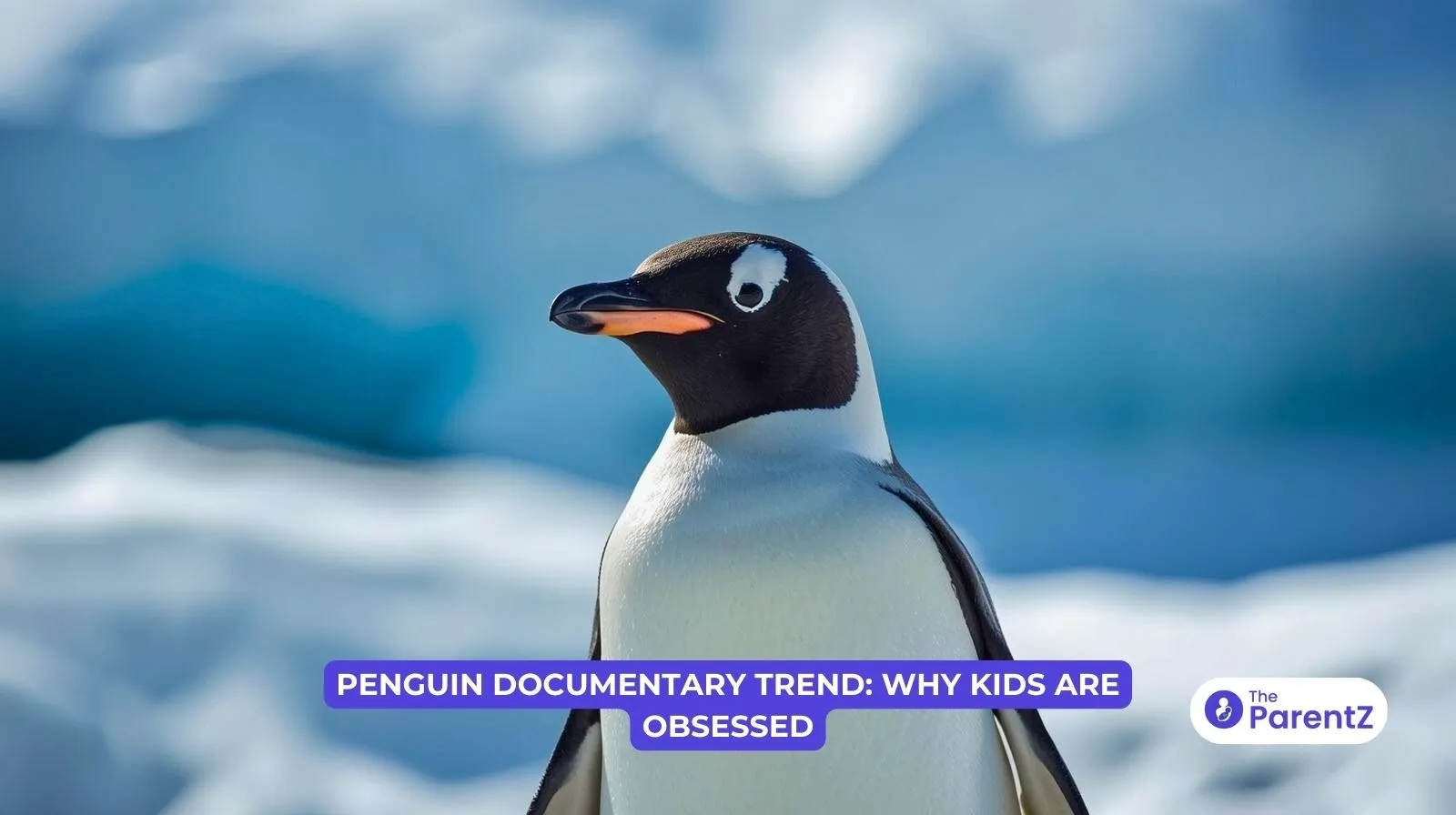
You've probably seen it. A small penguin. Antarctica. Nothing but miles of white silence ahead. And this little bird just keeps walking. Away from its colony. Away from the sea. Away from everything that was supposed to keep it alive.
The internet lost its mind over it. Reels, memes, podcasts, long threads, tearful voice notes, all over one bird from a 2007 documentary by Werner Herzog called Encounters at the End of the World. The penguin was an Adelie penguin who, for reasons nobody fully understood, turned away from its group and walked inland, toward mountains, toward nothing, toward certain death. Scientists who studied it said that even when someone tried to turn it around, it would simply turn back and keep going.
And kids today? They saw themselves in it immediately.
If you're a parent trying to figure out why your child has watched this clip seventeen times and sent it to every person they know, this blog is for you. Not to judge your kid. Not to alarm you. Just to help you see what they might be feeling, but haven't found the words for yet.
When your kid watches that clip, they're not having a biology lesson. They're having a feeling. A very specific, very personal one.
The penguin became a mirror. And what your child sees in that mirror depends entirely on what they're carrying inside right now.
Some kids see a creature that is exhausted. Not lazy. Not dramatic. Just genuinely, deeply tired of doing what everyone expects, of following the crowd, of pretending everything is fine when it isn't. The colony represents noise, pressure, comparison, and performance. And the mountains? The mountains are silence. Peace. The idea that maybe it's okay to stop pretending.
Some kids see something else, someone who loved deeply and lost that love, and now has nowhere to go with all that grief. The penguin's march, some say, began after losing its mate. Whether or not that's scientifically proven doesn't matter as much as what it means emotionally. Your child might be carrying a loss too. Maybe a friendship that fell apart, a version of themselves they used to be, or something they wanted badly that didn't happen. That grief doesn't always look like crying. Sometimes it looks like a kid staring at a penguin walking into the snow.
And then there are kids who see something almost hopeful in it. A rebellion. An act of courage. One small creature refusing to live on someone else's terms, even if those terms were safer. In a world where kids are told what to study, what to achieve, what their future should look like, watching something simply choose its own path, even a hard one, feels like breathing.
Our kids are born into a world that is genuinely confusing and heavy. The competition starts early and doesn't stop. Getting good grades isn't enough. Having hobbies isn't enough. Building a "portfolio" before you're 16 is now a thing. The job market feels uncertain. Climate anxiety is real. Social media shows them everyone's highlight reel while they sit alone with their mess.
Some of them are growing up in financial stress that they aren't supposed to talk about, but can feel in every conversation. Some are navigating homes where love is complicated, where safety isn't guaranteed. Some live in cities where danger is not hypothetical; it's outside the door.
And through all of this, they're expected to show up smiling. To be motivated. To have goals. To answer "what do you want to be when you grow up" with something impressive.
So when they see a penguin that simply stopped performing, that turned away from all of it and walked somewhere that made sense only to him, something in them exhales.
It's not that they want to die. Please hear that clearly. Most kids sharing this clip are not in that place. They want to feel understood. They want someone to acknowledge that the weight is real. The penguin is saying what they don't know how to say: I need to go somewhere quieter. I need to stop pretending this is working.
Your child's connection to this penguin is personal. Two kids in the same classroom can watch the same clip and feel completely different things. One might see freedom. Another might see loneliness that looks familiar. Another might laugh because the absurdity of it matches exactly how pointless school feels on a Tuesday morning. Another might cry without knowing why.
Don't assume you know which one your kid is without asking. And when you ask, don't ask in a way that sounds like an interrogation.
Try: "I've been seeing that penguin clip everywhere. What do you think about it?"
And then, just listen. Don't fix. Don't explain. Don't immediately say "but your life isn't that bad." Let them tell you what that penguin means to them. Because what they tell you will say more about their inner world than months of "how was school today?"
If your kid is obsessed with this clip, they might be trying to tell you something.
They might be overwhelmed and need someone to acknowledge it without minimizing it. They might be lonely in a way that's hard to explain, surrounded by people but still feeling completely unseen. They might be questioning whether the path they're on is actually theirs, or just the one that was laid out for them. They might be grieving something quietly. They might simply need to know that feeling lost is not the same as being a failure.
The penguin didn't survive his walk. But he became a symbol that outlasted him by nearly two decades. And the reason your child can't stop thinking about him is because that little bird did something most humans are too afraid to do. He was honest about where he was, even if he couldn't explain it.
Your kid is watching that and thinking: someone finally gets it.
Be the person who gets it.
You don't have to have all the answers. You just have to be willing to ask the right questions and stay in the room when the answers are uncomfortable.
TheParentZ offers expert parenting tips & advice, along with tools for for tracking baby and child growth and development. Know more about Baby Growth and Development Tracker App.It serves as an online community for parents, providing valuable information on baby names, health, nutrition, activities, product reviews, childcare, child development and more
Disclaimer:
The views, thoughts, and opinions expressed in this article/blog are solely those of the author and do not necessarily reflect the views of The ParentZ. Any omissions, errors, or inaccuracies are the responsibility of the author. The ParentZ assumes no liability or responsibility for any content presented. Always consult a qualified professional for specific advice related to parenting, health, or child development.
Conversations (Comments) are opinions of our readers and are subject to our Community Guidelines.



Be the first one to comment on this story.