
Most Moms Report Slower Recovery After a Second Birth
Jul 19, 2026By Dr. Akanksha Priya
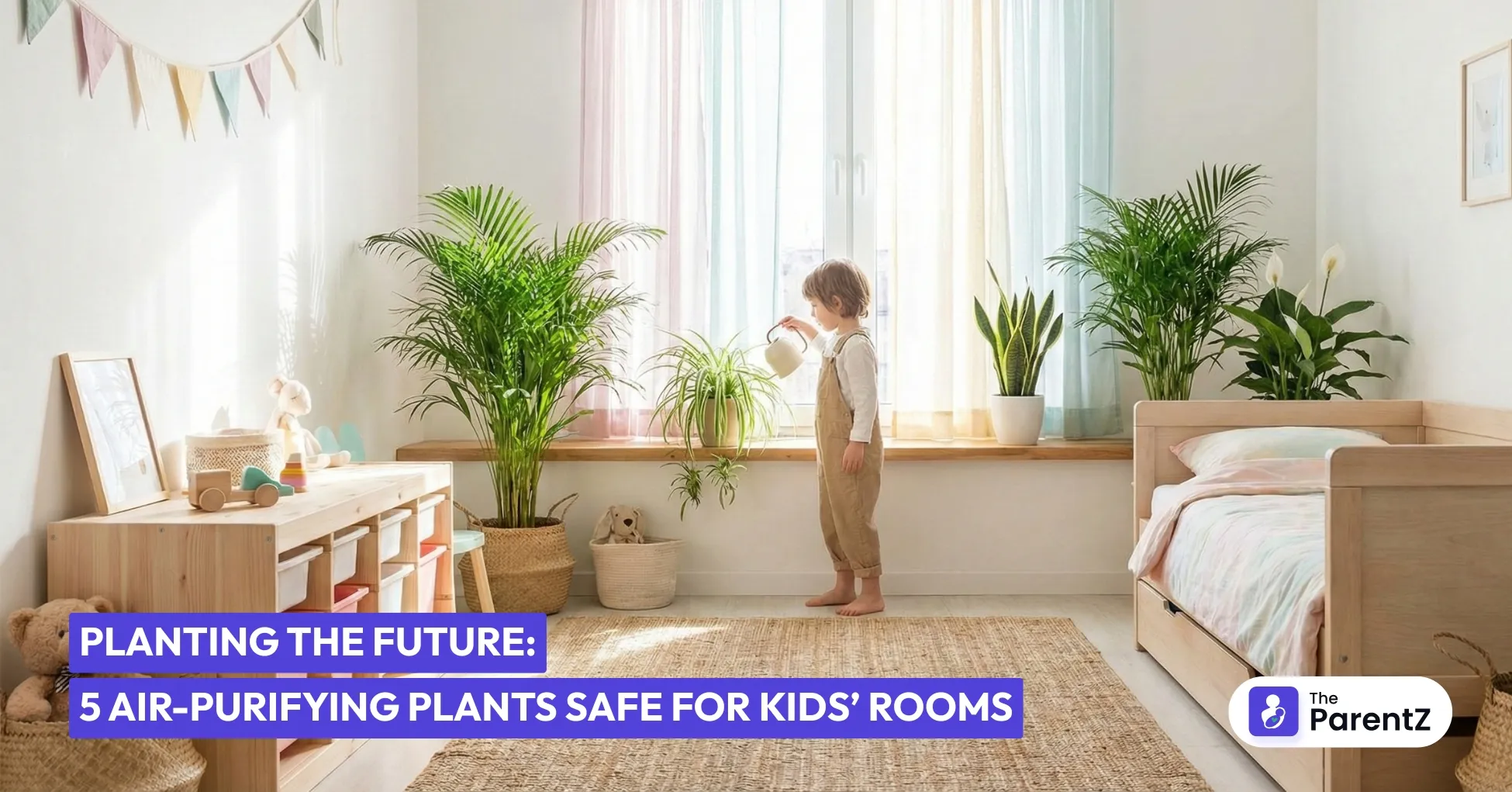
When you set up a child’s room, you think about comfort, safety, softness, and calm. One thing many parents forget is how much a simple plant can change a space. A small, kid-safe plant can make a room feel fresher, a little more alive, and even more relaxing. These plants don’t work like machines, but they do help the room feel lighter and less stuffy by adding moisture, reducing dryness, and supporting a calmer environment.
Here are five plants that fit beautifully into a child’s room without giving you extra stress.
This is probably the easiest plant you'll ever own. It survives almost anything.
Why is it good?
Spider plants remove formaldehyde, which comes from furniture and fabrics in your kid's room.
Is it safe?
Yes. The ASPCA says it's non-toxic to pets, and it's safe for kids too. Even if your toddler grabs a leaf, they'll be fine.
How to take care of it?
Put it anywhere; bright light, low light, whatever. Water it when the soil feels dry, maybe once a week. If you forget for a few days, it'll survive. You can find these at any nursery.
Where to put it?
On a shelf or hanging up works best. Kids like the little baby plants that grow on the stems, so keep them where they can see but not constantly pull at them.
This looks fancy but isn't difficult to care for. You'll find it in most plant shops.
Why is it good?
It removes formaldehyde and benzene and adds humidity to the air. That's helpful if you run the AC a lot or if someone gets a stuffy nose easily.
Is it safe?
Yes, completely safe for kids and pets according to the ASPCA.
How to take care of it?
Keep it near a window, out of direct sunlight. Water when the top inch of soil is dry; maybe twice a week in summer, once in cooler months. It likes being misted, but won't die if you forget.
Where to put it?
In a corner away from where kids play roughly. The leaves are soft, but you don't want the whole pot knocked over.
These have beautiful feathery leaves, and they're good at their job.
Why is it good?
Boston ferns remove formaldehyde and add moisture to dry air. Great for air-conditioned rooms where kids wake up with dry throats.
Is it safe?
Yes, the ASPCA says they're non-toxic. The leaves are soft and won't hurt if you touch them.
How to take care of it?
This one needs more attention. It likes humidity and regular watering; 2-3 times a week, depending on your climate. If you live somewhere humid, it's easier. If it's dry where you are, you'll need to mist it every few days.
Where to put it?
Hang it or put it up high. They look nice cascading down. If you know you'll forget to mist it, skip this one and go with something easier.
Another palm, but smaller and simpler than the Areca.
Why is it good?
It's compact, doesn't take up much space, and still removes toxins from the air.
Is it safe?
Yes, the ASPCA confirms it's safe for pets and children. It has soft leaves, no sharp edges.
How to take care of it?
Easy. Medium light is best, but it tolerates lower light too. Water once a week or when the soil feels dry an inch down.
Where to put it?
Works great in smaller rooms or corners. You can keep it on a low table without worrying, as it doesn't grow wild.
Kids find this one fascinating because it moves.
Why is it good?
It purifies the air and has gorgeous, patterned leaves that fold up at night and open in the morning. It's like the plant sleeps and wakes up with your child.
Is it safe?
Yes, non-toxic to pets and children.
How to take care of it?
It likes medium light and regular watering, usually twice a week. Water when the top half-inch of soil is dry. Mist it occasionally if you're in a dry area.
Where to put it?
Somewhere, your child can watch it from their bed. The folding leaves can become part of a bedtime routine. Kids genuinely enjoy this plant.
Will five plants make your kid's room completely toxin-free? No. Will they make the air a bit better and create a nicer space? Yes.
The bigger benefit isn't just air cleaning; it's about making the room feel calmer. Being around plants can reduce stress and improve mood. For kids, it's comforting.
Pick plants you can actually handle. Always forgetting to water? Get spider plants or parlor palms. Want something more involved? Try the Boston fern or prayer plant. Want humidity and size? Go with the Areca palm.
Start with just one plant. See how it goes. If that works, add another.
TheParentZ offers expert parenting tips & advice, along with tools for for tracking baby and child growth and development. Know more about Baby Growth and Development Tracker App.It serves as an online community for parents, providing valuable information on baby names, health, nutrition, activities, product reviews, childcare, child development and more
Disclaimer:
The views, thoughts, and opinions expressed in this article/blog are solely those of the author and do not necessarily reflect the views of The ParentZ. Any omissions, errors, or inaccuracies are the responsibility of the author. The ParentZ assumes no liability or responsibility for any content presented. Always consult a qualified professional for specific advice related to parenting, health, or child development.
Conversations (Comments) are opinions of our readers and are subject to our Community Guidelines.



Be the first one to comment on this story.