
Most Moms Report Slower Recovery After a Second Birth
Jul 19, 2026By Dr. Akanksha Priya
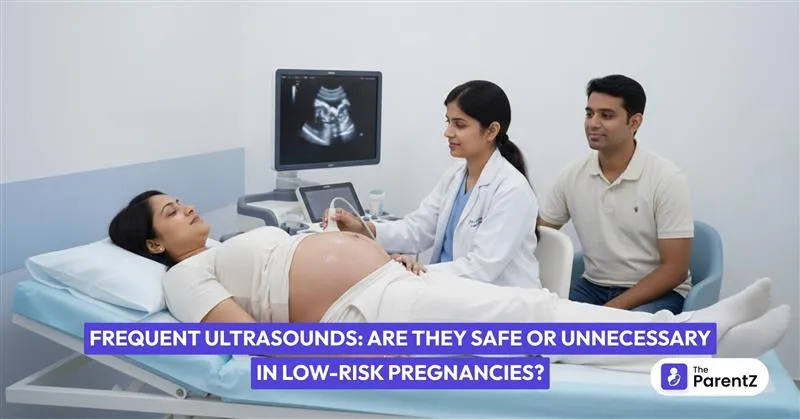
Pregnancy is a life-changing season, and this is especially true for first-time parents who are experiencing the excitement and uncertainty that comes with bringing a new life into the world. With each milestone, there is a new question. One of the questions that may arise is the safety of ultrasounds in low-risk pregnancies. If everything looks like it is going well, is there any reason to be concerned?
It is also common to wonder during routine visits whether frequent pregnancy ultrasounds are necessary or not. Are they mainly for reassurance, or might they go beyond what is medically necessary?
In this blog, we will take a closer look at how ultrasounds work, when they are typically recommended, and what current research suggests about their safety and value in uncomplicated pregnancies.
An ultrasound scan uses sound waves that are very high in frequency to make pictures of your baby and the uterus. The machine sends sound waves into the body; these waves bounce off internal structures, and a computer converts the echoes into a picture on the screen. There is no use of X‑rays or ionising radiation, which is why ultrasound has become the preferred imaging method during pregnancy.
In simple terms, think of ultrasound as “echoes turned into pictures”. Ultrasound is thought to be much safer than CT scans or regular X-rays during pregnancy because it uses sound waves instead of radiation. This basic technology underpins the high level of ultrasound safety in low-risk pregnancy when scans are done correctly, for the right reasons, and by trained professionals.
In most uncomplicated pregnancies, the common types of scans are:
For a low-risk pregnancy, routine care usually only includes standard 2D scans. People usually only use 3D, 4D, and Doppler for medical reasons, not for fun.
Doctors order ultrasounds in pregnancy to:
These scans are a valuable part of prenatal care and help ensure both mother and baby are healthy.
In a low-risk pregnancy, you usually need only a few routine scans unless your doctor finds a reason to check more often. Most guidelines and prenatal care experts recommend:
This approach allows doctors to monitor the baby’s development carefully while avoiding unnecessary procedures.
Over many decades, ultrasound has been a routine part of prenatal care across the world. Extensive research and clinical experience have helped healthcare providers better understand both its advantages and its limitations.
Research so far shows that routine ultrasounds, when done correctly, do not harm the mother or baby. They don’t raise the risk of miscarriage, birth defects, or developmental issues. For this reason, doctors consider ultrasound a safe and essential part of pregnancy care.
However, it is important to remember that medical science is cautious. The fact that we have not seen harm in usual clinical use supports ultrasound safety in low-risk pregnancy, but it does not mean we should use it endlessly without reason. That is where the next principle comes in.
Doctors and sonographers follow something called the ALARA principle – “As Low As Reasonably Achievable”. This means:
When professionals follow ALARA, ultrasound remains a safe and effective tool. For parents, understanding this principle can help you see why your doctor might say “We don’t need another scan right now,” even if you would love to see your baby again.
Many parents wonder, if one scan is helpful, would five or six be even better? This is exactly where the question of whether frequent pregnancy ultrasounds are necessary or not becomes especially important.
In some situations, additional scans are very important, even life‑saving. For example:
In these cases, more frequent ultrasounds are part of responsible, evidence‑based care. Here, the question is not whether frequent pregnancy ultrasounds are necessary or not – clearly, they are necessary to monitor the baby and guide treatment.
A low‑risk pregnancy generally means:
Repeat ultrasounds for reassurance rarely affect medical management. They may comfort parents, but are usually unnecessary in uncomplicated pregnancies.
Current evidence shows that a few well-performed ultrasounds do not pose risks to the baby. Standard scans are brief and use low energy, which is why doctors view ultrasound safety in low-risk pregnancy as very high.
The effects of extended or frequent exposure, especially with Doppler, remain unclear. To stay safe, scans should be necessary, brief, and purposeful.
Keepsake ultrasounds are done only for photos or videos, without a medical reason. They are often performed in non‑medical centres, sometimes by people who are not trained sonographers or doctors, and sessions may be longer than routine scans.
Experts advise against non‑medical scans because:
Are 3D and 4D Ultrasounds Safe When Medically Indicated?
3D and 4D scans are not unsafe on their own. When done by trained professionals, for a clear medical reason, and for a short time, they follow the same safety principles as standard 2D scans. The real issue is the purpose and duration of the scan, not just whether it is 2D, 3D, or 4D.
Pregnancy is a wonderful experience, and it is only natural to have questions about the safety of ultrasounds in low-risk pregnancy or whether frequent ultrasounds in pregnancy are required or not. Regular ultrasounds check the baby’s growth and health, but additional ultrasounds that are not medically indicated are rarely necessary. Three-dimensional or four-dimensional ultrasounds are fun, but in low-risk pregnancies, they are not required.
Trust your healthcare provider and keep up with appointments. Understanding the reason for each scan will enable you to make informed decisions. With the right advice, ultrasounds are a safe, effective, and comforting method throughout pregnancy.
Your pregnancy companion is just a click away.
Explore TheParentz or download the app for tips, guides, and expert support.
References
TheParentZ offers expert parenting tips & advice, along with tools for for tracking baby and child growth and development. Know more about Baby Growth and Development Tracker App.It serves as an online community for parents, providing valuable information on baby names, health, nutrition, activities, product reviews, childcare, child development and more
Dr. Shreya Karan is a dedicated oral and maxillofacial surgeon who brings over ten years of experience to her practice, combining surgical expertise with genuine care for her patients.
Disclaimer:
The views, thoughts, and opinions expressed in this article/blog are solely those of the author and do not necessarily reflect the views of The ParentZ. Any omissions, errors, or inaccuracies are the responsibility of the author. The ParentZ assumes no liability or responsibility for any content presented. Always consult a qualified professional for specific advice related to parenting, health, or child development.
Conversations (Comments) are opinions of our readers and are subject to our Community Guidelines.



Be the first one to comment on this story.