
Most Moms Report Slower Recovery After a Second Birth
Jul 19, 2026By Dr. Akanksha Priya
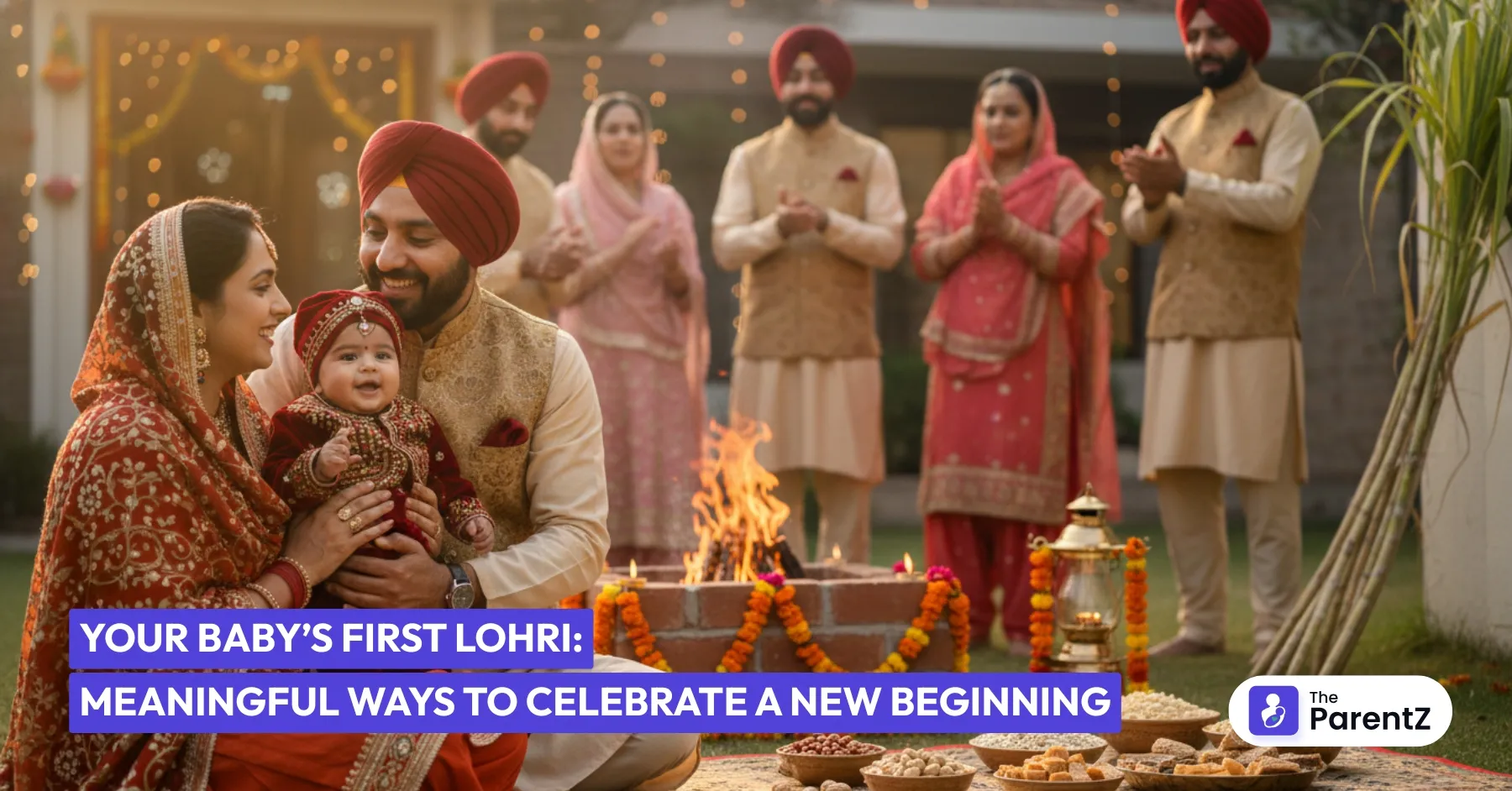
As your baby's first or ‘Pehli’ Lohri approaches, you're probably wondering how to make this special without turning it into a big production. We get it. Between diaper changes and sleepless nights, the last thing you need is another reason to stress.
One of the beautiful things about Pehli Lohri is that it doesn't have to be complicated. In fact, the most meaningful celebrations are often the simplest ones.
Pehli Lohri holds a place in parents' hearts that goes beyond just another festival. When families gather around that bonfire, usually around January 13, they're not just marking the end of winter; they're welcoming your baby into the fold of family traditions, seeking blessings for their health and prosperity.
The timing itself is considered auspicious. Lohri is celebrated just before Makar Sankranti, which marks the sun’s northward journey (Uttarayan), bringing longer days and warmer weather. Our ancestors saw this as nature's way of blessing new beginnings, and what bigger new beginning is there than your baby?
Think of it as your baby's formal introduction to their cultural roots. It's the day when dadis and nanis, chachas and maasis all come together to shower your baby with love and blessings.
Before we explore how to celebrate, let's talk about what Lohri actually means. At its core, Lohri is a harvest festival; farmers celebrating the cutting of sugarcane and the winter crops. The bonfire represents gratitude to Agni (the fire god) and Surya (the sun god) for the harvest.
You'll hear the legend of Dulla Bhatti during celebrations. He was like Punjab's Robin Hood during Emperor Akbar's time, rescuing girls from being sold and arranging their marriages. That's why children still sing "Sunder Mundriye" songs about the girls he saved.
These days, for most families, Lohri is simply about coming together, keeping warm around the fire, and celebrating abundance and joy.
A big bonfire with a tiny baby often feels nerve-wracking. And that's completely valid.
Pro Tips:
For apartment dwellers: You don't need a massive bonfire. A small, controlled fire in a designated spot works perfectly. Some families use a large steel or copper vessel with some wood; it gives you the ritual without the risk. Make sure you're in an open space like your building's terrace or courtyard with proper permission.
Safety first:
The offerings: Bring some til (sesame seeds), gur (jaggery), moongfali (peanuts), and popcorn. When you circle the fire, toss these in as offerings. This tradition symbolizes gratitude for the harvest. Your baby won't remember it, but the photos will be beautiful, and you're setting up a tradition they'll grow into.
Social media might make you feel like your baby needs a designer lehenga and you need full bridal jewelry. Ignore that noise.
For your baby: A comfortable ethnic outfit is lovely; a simple kurta-pajama or a soft cotton outfit in festive colors. Layer it appropriately because January evenings get cold. Skip anything too heavy or scratchy. Your baby's comfort matters more than Instagram aesthetics.
For you: Yes, traditionally, new mothers dress up elaborately with mehendi and jewelry. But if you're exhausted and still healing, a comfortable salwar-kameez with a nice dupatta is absolutely fine. Do what makes YOU feel good, not what makes others' photos look good.
Pehli Lohri does involve gift-giving. In many families, maternal grandparents (nanihal) traditionally send gifts to the baby's paternal home.
What works:
What your guests might bring: Sweets, dry fruits, small toys, and clothes. Accept gracefully and don't stress about reciprocating immediately. The blessing is the gift.
Traditional Lohri food is hearty winter fare:
You don't need to make everything from scratch. Buy the gajak and rewri from your local sweet shop. Order the makki di roti if you're not up for making it. The point is to have the traditional foods present and share them with family, not to exhaust yourself proving you can do it all.
If you want to keep it even simpler, just have the traditional Lohri munchies, like til, gur, peanuts, and popcorn, alongside regular snacks.
Your baby won't remember their first Lohri, but you will. So make it memorable for the right reasons:
If your family is spiritually inclined, here's what traditionally happens:
Before the bonfire:
During the bonfire:
After: Share prasad with everyone present. It's usually the same items you offered to the fire: til, gur, peanuts.
Let's talk practically about keeping your baby comfortable and safe:
The beauty of Lohri is that it adapts to your family's needs. Here's how to keep the spirit alive without the pressure:
It's not the size of the bonfire or the cost of the clothes. It's not about having the perfect decorations or the most elaborate feast.
It's about pausing in the middle of winter, when everything feels dark and cold, to create warmth and light together. It's about looking at your baby and feeling grateful for this new life. It's about connecting with family, honoring traditions that have been passed down for generations, and adding your own chapter to that story.
Your baby's first Lohri is special because they're here. Because you survived those first months of parenthood. Because your family has a new member to celebrate. That's it. That's all it needs to be.
Your baby's first Lohri doesn't need to be perfect. It needs to be yours.
Whether you go all out or keep it simple, whether you have fifty relatives or just your small family, whether you follow every tradition or create new ones, what matters is the love and intention behind it.
Lohri is about welcoming longer days, celebrating abundance, and beginning new chapters. Your baby IS your new chapter. Your abundance. Your light in the darkness.
So light that fire, hold your baby close, feel the warmth of family around you, and know that you're giving your child something precious: roots, traditions, and the knowledge that they're deeply loved and blessed.
Happy First Lohri!. May this be the first of many beautiful celebrations in their life.
TheParentZ offers expert parenting tips & advice, along with tools for for tracking baby and child growth and development. Know more about Baby Growth and Development Tracker App.It serves as an online community for parents, providing valuable information on baby names, health, nutrition, activities, product reviews, childcare, child development and more
Disclaimer:
The views, thoughts, and opinions expressed in this article/blog are solely those of the author and do not necessarily reflect the views of The ParentZ. Any omissions, errors, or inaccuracies are the responsibility of the author. The ParentZ assumes no liability or responsibility for any content presented. Always consult a qualified professional for specific advice related to parenting, health, or child development.
Conversations (Comments) are opinions of our readers and are subject to our Community Guidelines.


Be the first one to comment on this story.