
Screen Time and Infant Vision: What Every Parent Needs to Know
Jul 19, 2026By Indira Varma
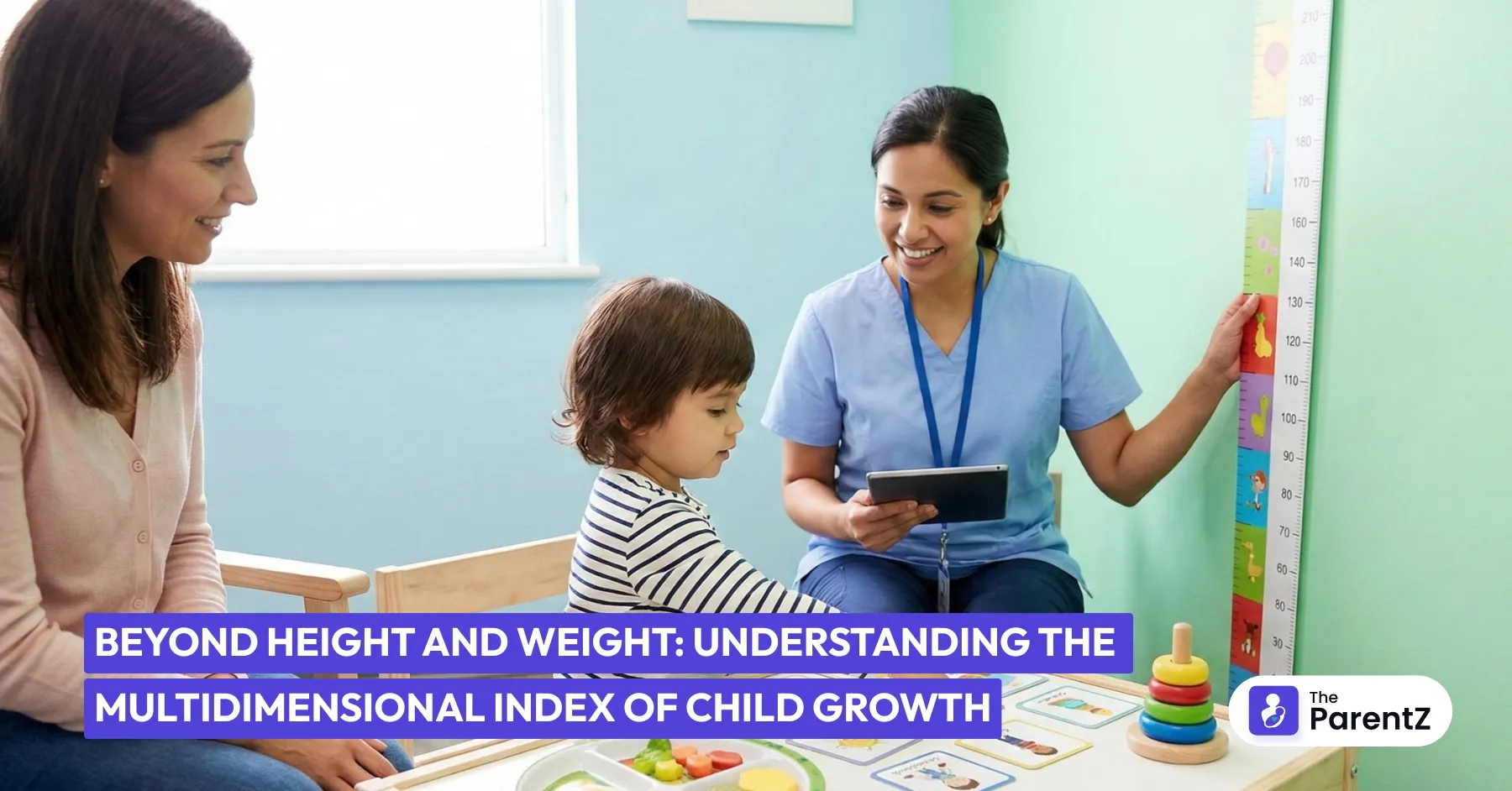
When we think about how our kids are growing, most of us picture the pediatrician's growth chart on the wall. Those curves showing height and weight percentiles. The tape measure against the doorframe marking how many inches taller they've gotten since last year. It makes sense. Physical growth is visible, measurable, and easy to track.
But measuring just height and weight is like judging a book by looking at only its cover. There's so much more happening inside.
The Multidimensional Index of Child Growth (MICG) is a research framework proposed in 2025 by an international task force hosted by the International Union of Nutritional Sciences (IUNS). It looks at 14 different dimensions of how children develop, offering a more complete health report card than height and weight alone.
This tool was created to help identify children who might be struggling in ways that traditional measurements miss; things like emotional well-being, safety at home, or opportunities to learn and play.
Remember when pediatricians only worried about kids being underweight? Today's reality is different. We're facing what experts call the "double burden of malnutrition," where undernutrition exists alongside rising obesity rates in the same communities. This tells us something important: we need better tools to understand what's really going on with our children's development.
Building on UNICEF and WHO’s recognition that early childhood development is multidimensional (physical, cognitive, social, emotional, and mental), the MICG framework proposes 14 specific areas:
A child might be at the 75th percentile for height and weight, but if they're experiencing chronic stress at home, being bullied at school, or not getting opportunities to play and explore, their development is still compromised.
Studies show that physical growth and cognitive development respond differently to interventions; nutrient supplementation improves physical measures, while responsive caregiving and stimulation improve cognitive development. This is exactly why we need to look at all dimensions together.
Understanding multidimensional growth doesn't mean you need to become a child development expert or start stressing about 14 new things.
These days, kids face pressures our generation didn't, like constant digital stimulation, academic pressure starting younger, less outdoor play time, and more scheduled activities. The MICG framework reminds us that development isn't just about hitting physical milestones or acing tests.
All children benefit from adequate and enriching environments where they can survive, thrive, and develop to their fullest potential. This means balancing screen time with active play, academics with creativity, structured activities with free exploration, and achievement with emotional security.
The point of understanding multidimensional growth isn't to create more anxiety or add to the already long list of things parents worry about. It's actually the opposite; it's permission to trust your instincts when something feels off, even if your child's height and weight chart looks perfect.
If your usually cheerful child seems persistently sad, if they're having trouble making friends, if they seem anxious or fearful, if they're not getting enough time to just be a kid, these observations are valid and important. They deserve attention just like any physical health concern.
The MICG helps identify which specific areas of development children need support in, allowing for targeted interventions rather than one-size-fits-all approaches. This is progress. It means we can finally address the real, whole-child needs rather than just the visible ones.
Your child's growth is about so much more than those marks on the doorframe or the number on the scale at the doctor's office. It's about whether they feel safe and loved. Whether they have opportunities to learn and play. Whether they're developing friendships and emotional resilience. Whether they have time to be children.
The Multidimensional Index of Child Growth gives us the language and framework to talk about raising healthy, thriving children, which requires nurturing every part of who they are, not just their physical bodies.
TheParentZ offers expert parenting tips & advice, along with tools for for tracking baby and child growth and development. Know more about Baby Growth and Development Tracker App.It serves as an online community for parents, providing valuable information on baby names, health, nutrition, activities, product reviews, childcare, child development and more
Disclaimer:
The views, thoughts, and opinions expressed in this article/blog are solely those of the author and do not necessarily reflect the views of The ParentZ. Any omissions, errors, or inaccuracies are the responsibility of the author. The ParentZ assumes no liability or responsibility for any content presented. Always consult a qualified professional for specific advice related to parenting, health, or child development.
Conversations (Comments) are opinions of our readers and are subject to our Community Guidelines.



Be the first one to comment on this story.