
Most Moms Report Slower Recovery After a Second Birth
Jul 19, 2026By Dr. Akanksha Priya
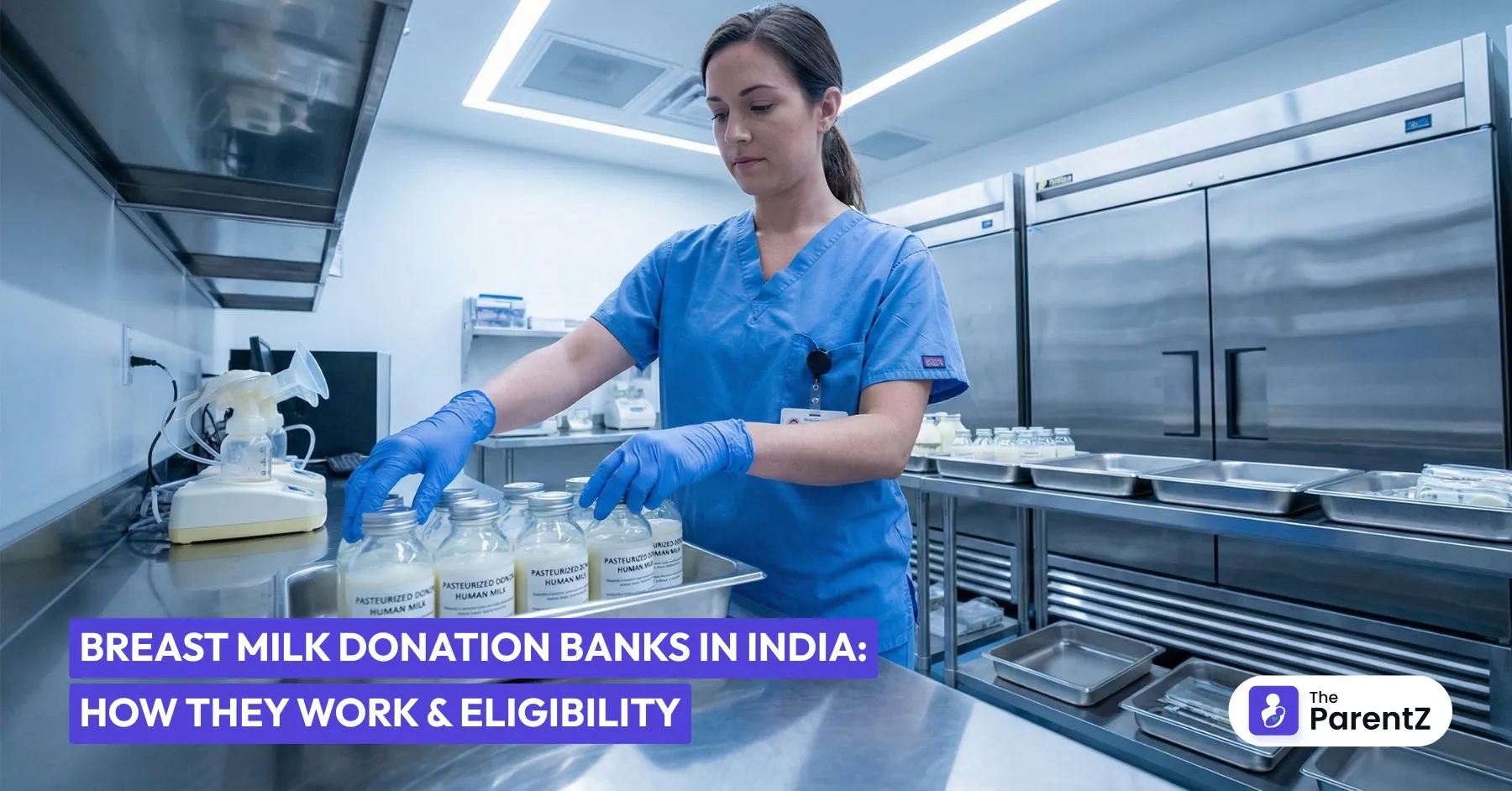
Milk is the essence of life, a vital food that supplies essential nutrients to children. However, due to the unavailability of mother's milk, various breast milk banks in India have been established. These are often referred to as human milk banks (HMBs) or lactation centers.
Milk banks have become increasingly vital in neonatal care in India. They serve as the next best nutrient option for infants when a mother’s milk is unavailable. The good news? They are the best choice for both preemies and infants.
However, this topic isn’t widely discussed in India for various reasons. That’s why we at Parentz took it upon ourselves to raise awareness among modern parents about this concept. We will discuss how milk banks operate in India and who is eligible to donate.
Human milk reduces the risk of necrotizing enterocolitis (NEC), improves feeding tolerance and immunity, and supports long-term neurodevelopment, benefits that formula cannot fully replicate for preterm or sick infants.
For these vulnerable babies, milk from screened donors, processed and pasteurized in an HMB, can be lifesaving. Recent reviews and national projects highlight that pasteurized donor human milk reduces NEC incidence and improves short-term outcomes for NICU infants.
Hospitals which caters to breast milk bank in India or standalone HMBs identify potential donors (usually lactating mothers with excess milk). Counselling explains the donation process, storage, screening tests, and consent.
Hospitals also educate about hygiene during expression and storage at home. Indian guidelines emphasise informed consent and counselling as routine.
Before any milk is accepted, donors complete a health questionnaire and undergo screening tests. Typical checks include:
If screening is satisfactory, the bank accepts expressed milk. These safety steps are central to human milk donation guidelines used in India.
Donors are instructed on hand hygiene, breast care, and clean expression (manual or pump). Milk is collected into sterile containers and either dropped off at the milk bank or transported in a cold box to maintain refrigeration. Many milk banks provide labels and clear instructions to ensure traceability (donor ID, date/time, volume).
On arrival, samples from each donation batch may be cultured to detect bacterial contamination. If contamination exceeds acceptable limits, that batch is discarded. Records maintain chain-of-custody from donor to recipient.
Most breast milk banks in India use Holder pasteurisation (heating milk to 62.5°C for 30 minutes, then rapid cooling). This method inactivates many pathogens while preserving a reasonable portion of milk’s beneficial components.
Pasteurisation is followed by repeated microbiological testing to confirm safety before storage. Holder pasteurisation is the standard recommended in national and international guidance used by HMBs.
Pasteurised milk is stored frozen (often at −18°C or colder) and labelled with batch numbers, pasteurisation dates, and expiry dates.
HMBs keep meticulous records of donor history, test results, processing details, and recipient logs. This traceability is essential if any safety issue arises.
Because supply rarely meets demand, milk banks prioritise the highest-need infants: very low birth weight, preterm, postoperative neonates, and infants with severe illnesses. Feeding protocols vary by hospital, but prioritisation is a universal practice.
Where possible, banks aim to provide milk until a mother’s own supply is established. Local policies (and hospital ethics committees) guide specific allocation decisions.
Eligibility rules differ slightly among banks, but Indian guidance and published milk-bank protocols establish common standards. The eligibility checklist includes:
Medical and lifestyle criteria:
Recent medical history and exposures:
Practical considerations:
Indian professional guidance (IAP/IYCF and national HMB documents) provides detailed donor criteria and procedural checklists that most operational milk banks use. Always check the specific bank’s policy for precise cutoffs and test lists.
Recipients are usually infants in NICUs who are preterm, have very low birth weight, or cannot be fed mother’s own milk due to maternal illness, absence, or contraindications.
In some non-NICU settings, donor milk may be used for infants discharged home but still medically vulnerable, depending on local policy. Priority principles are clinical need and potential benefit.
Contact the nearest human milk bank (many tertiary hospitals and state-run lactation centres now host HMBs). Several city lists are available through hospital networks and parenting resources.
India’s network of milk banks has expanded over recent years, with many states establishing Comprehensive Lactation Management Centres (CLMCs) and hospital-based HMBs.
Reports show growing donor participation and successful state programs; for example, Gujarat reported thousands of donors and several thousand litres collected in a recent year. Still, supply often lags demand, and many regions remain without easy access to milk banks. National guidelines and hospital efforts aim to scale services, train staff, and standardise operations across states.
The breast milk bank in India has always played a pivotal role. They make pasteurised donor human milk available to infants who need it the most. Although the process, from donor screening to pasteurization and allocation, is designed to protect babies from any infection. The process caters to the thought process of preserving the mother’s milk.
If you're thinking about donating, visit your nearest HMB, which we've highlighted in our blog. Your contribution can help bridge the gap between supply and demand. For more information on this and other pregnancy topics, download our Parentz app, where you'll find all the essential details.
References:
TheParentZ offers expert parenting tips & advice, along with tools for for tracking baby and child growth and development. Know more about Baby Growth and Development Tracker App.It serves as an online community for parents, providing valuable information on baby names, health, nutrition, activities, product reviews, childcare, child development and more
Dr. Shreya Karan is a dedicated oral and maxillofacial surgeon who brings over ten years of experience to her practice, combining surgical expertise with genuine care for her patients.
Disclaimer:
The views, thoughts, and opinions expressed in this article/blog are solely those of the author and do not necessarily reflect the views of The ParentZ. Any omissions, errors, or inaccuracies are the responsibility of the author. The ParentZ assumes no liability or responsibility for any content presented. Always consult a qualified professional for specific advice related to parenting, health, or child development.
Conversations (Comments) are opinions of our readers and are subject to our Community Guidelines.


Be the first one to comment on this story.