
Most Moms Report Slower Recovery After a Second Birth
Jul 19, 2026By Dr. Akanksha Priya
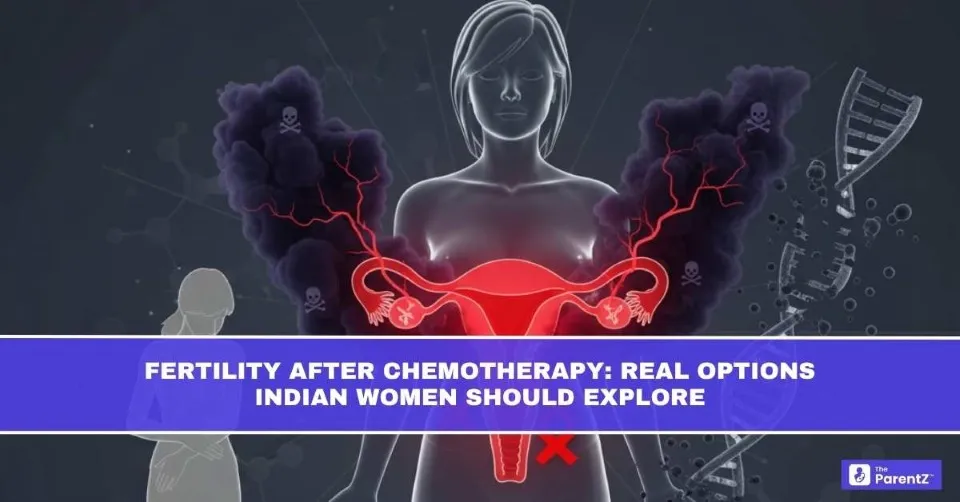
Cancer treatment has come a long way in India. Improved survival rates have ensured that women diagnosed with cancer at a young age have long and healthy productive years after treatment. This is wonderful news, but it also brings up an important question asked by many young women: What happens to fertility after chemotherapy?
The good news is that while chemotherapy can affect fertility, it does not mean motherhood is no longer possible. There are meaningful choices available today. Understanding fertility after chemotherapy in India helps women make informed choices. Options like ovarian protection and egg freezing post-cancer can protect both long-term health and future plans for motherhood.
Chemotherapy involves killing rapidly growing cells. However, these rapidly growing cells also include your eggs in the ovaries. This can affect your ovarian reserve, which refers to the number and quality of eggs you have left.
Three key factors affect how chemotherapy affects your fertility:
Even if periods return after chemotherapy:
Before and after chemotherapy, your doctor will use a blood test called Anti-Müllerian Hormone (AMH) to determine your ovarian reserve. Your AMH level is like a peephole into how many eggs your ovaries have left.
AMH is one of the most reliable tests doctors use to understand fertility after cancer treatment. Women with AMH levels between 2.1 and 2.8 ng/ml who undergo fertility treatment have about a 35-42% chance of having a baby. Your doctor will test AMH before chemotherapy to establish a baseline, and then again afterward to see how your ovaries have recovered.
Doctors may use a combination of tests to assess fertility:
The bright side is that Indian women have several effective methods at their disposal to bank their fertility before embarking on cancer therapy. Now, let’s see what’s available in the major Indian cities.
Egg freezing has become the most sought-after option for single women and those who want to preserve their fertility on their own. It is also known as oocyte cryopreservation. The process is fairly simple. Doctors stimulate the ovaries with hormones, collect mature eggs, and freeze them for future use.
The whole process will take about two weeks, which means that you can finish it quickly and begin your cancer treatment soon. Timing is very important in this process, as eggs should be frozen immediately after a cancer diagnosis, before chemotherapy.
Egg freezing post cancer is now available at major hospitals across India, including Cloud Nine, Manipal, and Milann fertility centers in cities like Mumbai, Bangalore, Delhi, and Chennai. When eggs are frozen before treatment, success rates are comparable to those of women without cancer.
If you are married or in a committed relationship, embryo freezing is the best option for you because it has the highest success rates compared to other methods of fertility preservation. The procedure is similar to egg freezing, but after the egg retrieval process, your eggs are fertilized with your partner's sperm in the laboratory, and the resulting embryos are frozen.
Research shows pregnancy rates of about 40% and live birth rates up to 47% when using frozen embryos after cancer treatment. What's even more reassuring is that IVF pregnancy rates in cancer survivors are very close to those without cancer.
This option is widely available at fertility centers throughout India and gives couples the best chance of having a biological child after treatment.
Here is a treatment that may work in combination with your chemotherapy: ovarian suppression with GnRH agonist injections. These drugs basically "put your ovaries to sleep" during your chemotherapy, shielding them from harm.
This is a cost-effective option available at most oncology centers in India. You don't need to delay your cancer treatment, and it can be used alone or combined with egg or embryo freezing for extra protection.
When cancer treatment is extremely urgent, and you don't have two weeks for egg retrieval, ovarian tissue freezing might be an option. The doctors surgically extract a small part of your ovary and freeze it. Later, after you have recovered from cancer, the tissue can be reimplanted to restore hormone production and even fertility.
This is a relatively new technique that is only available at select fertility centers in major Indian cities. It is useful for young girls who have yet to attain puberty or when chemotherapy needs to be initiated immediately.
Now, let's discuss the topic of what to realistically expect regarding fertility after chemotherapy in India. The studies are encouraging.
If cancer survivors attempt conception using frozen eggs or embryos or IVF with fresh eggs, if the ovaries have recovered, the rates of success are remarkably similar to those of women who never had cancer. Pregnancy success rates in cancer survivors are very close to those of women without a history of cancer.
Live birth rates tell the same hopeful story: 30% for cancer survivors versus 32% for women without a cancer history. This means that with proper fertility preservation and treatment, your chances of becoming a mother remain strong.
If you selected ovarian suppression with GnRH agonist during chemotherapy, the chances are even better, as most women who attempted conception after treatment successfully conceived. You can still conceive naturally if your ovarian reserve was properly protected
When you meet with your oncologist, advocate for your fertility by asking:
These questions will make sure that fertility counseling becomes a standard part of your cancer care, and not something that is done as an afterthought.
The possibility of fertility after chemotherapy in India is no longer a distant dream; it is a reality that can be achieved with proper planning. There are several effective methods available, ranging from egg freezing after cancer to embryo preservation and ovarian suppression, which are increasingly being made available in Indian cities.
The success rates are truly heartening. If fertility preservation is done correctly, cancer survivors have almost the same chances of becoming parents as women who have never had cancer. The increasing number of Indian hospitals and experts providing oncofertility facilities means that you can avail yourself of the best treatment options right in your own backyard.
The moment you receive a cancer diagnosis, speak with both your oncologist and a fertility specialist. Your cancer treatment and your dreams of motherhood can both be prioritized. With the proper medical care and planning, you can battle cancer today while ensuring you have the opportunity to become a mother tomorrow.
Do you have questions about fertility after cancer or what you should do next?
Explore expert-backed guides on theparentz.com and get personalised support anytime by downloading the Parentz app on your phone:
References
TheParentZ offers expert parenting tips & advice, along with tools for for tracking baby and child growth and development. Know more about Baby Growth and Development Tracker App.It serves as an online community for parents, providing valuable information on baby names, health, nutrition, activities, product reviews, childcare, child development and more
Dr. Shreya Karan is a dedicated oral and maxillofacial surgeon who brings over ten years of experience to her practice, combining surgical expertise with genuine care for her patients.
Disclaimer:
The views, thoughts, and opinions expressed in this article/blog are solely those of the author and do not necessarily reflect the views of The ParentZ. Any omissions, errors, or inaccuracies are the responsibility of the author. The ParentZ assumes no liability or responsibility for any content presented. Always consult a qualified professional for specific advice related to parenting, health, or child development.
Conversations (Comments) are opinions of our readers and are subject to our Community Guidelines.



Be the first one to comment on this story.