Most Moms Report Slower Recovery After a Second Birth
Jul 19, 2026By Dr. Akanksha Priya
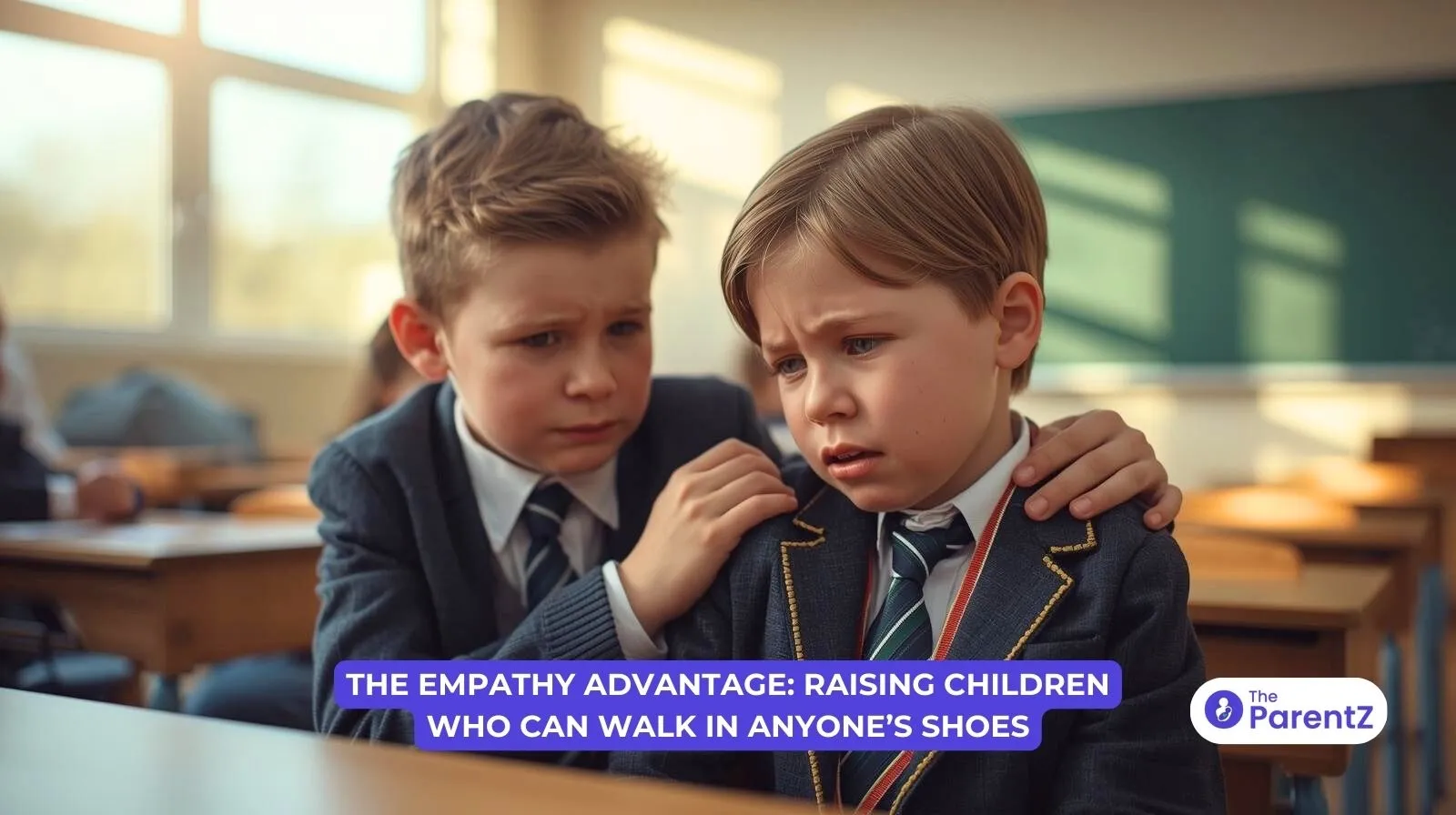
There's a scene that plays out in almost every household. Your child comes home and says their friend is sad because their parents are fighting. Your child wants to skip their own plans to stay with that friend. You watch and think, Is this good? Is my child too soft? Or is this exactly what good parenting looks like?
The answer is: it depends. And that "it depends" is exactly what this piece is about.
Kids today are growing up in a world that is louder, faster, and more divided than anything we experienced at their age. Social media shows them curated highlight reels and extreme opinions. Group chats are full of drama. Classroom dynamics shift every week. And somewhere in all of this noise, children are trying to figure out, “Who am I, and how do I treat other people?”
Empathy, the ability to understand what someone else is feeling, is not a soft skill. Research consistently shows that empathetic children do better in friendships, in school environments, and later in workplaces. They're better at resolving conflict. They're less likely to bully. They build trust more naturally.
But here in India, empathy often gets a complicated reputation. We teach children to respect elders, to adjust, and to not cause drama. Sometimes that crosses the line from empathy into suppression, where kids learn to ignore their own feelings to keep others comfortable. That's not empathy. That's erasure.
Real empathy has to start from a secure, grounded place. A child who doesn't understand their own feelings cannot truly understand someone else's.
For a 5-year-old, empathy might just look like noticing that a classmate is crying and going to sit near them. That's huge.
For a 10-year-old, it might mean not laughing at a joke that's at someone else's expense, even when everyone else is laughing. That takes courage.
For a teenager, it looks like being able to hold space for a friend's struggle without feeling like they have to fix it or absorb it.
None of this happens automatically. It's built, slowly, through small everyday moments at home.
Empathy has a limit. It must.
A child who is taught only to understand others, without being taught to protect themselves, does not grow up empathetic. They grow up exhausted, resentful, or worse, they become someone's emotional punching bag.
This is a real risk, especially for girls in Indian families, where "adjusting" is often praised as a virtue. But boys face this too, quietly. For instance, that friend group where one kid's moods control the whole group's plans, the cousin who always needs something, or the classmate who guilt-trips every time they don't get their way.
Teach your child that understanding someone's pain is not the same as being responsible for fixing it.
You don't want to raise a child who says "not my problem" and walks away. But you also don't want a child who cannot say no, who shrinks their own needs constantly, and who confuses loyalty with self-sacrifice.
The balance sounds like this:
"It's okay to feel bad that your friend is sad. It's also okay to go to your class and feel good about what you did today. Both things can be true."
"You can love someone and still say no to them."
"Being kind doesn't mean being available to everyone, all the time."
These are not complicated concepts. Children understand them when you say them plainly, without making them feel guilty for having needs.
If your child is constantly being made to feel responsible for someone else's emotions, teach them to name it. "This is your feeling, not mine to carry." That sentence alone can change the trajectory of a friendship or a future relationship.
The most emotionally healthy adults are not the ones who say yes to everything. They're the ones who can feel deeply for others and still hold their own ground.
That balance is what you're raising toward. Not a child who is cold and self-absorbed. Not a child who dissolves into everyone else's pain. But a child who can walk in someone else's shoes, and then take them off, and walk in their own.
That's the empathy advantage. And it starts at home, in the smallest conversations, on the most ordinary days.

TheParentZ offers expert parenting tips & advice, along with tools for for tracking baby and child growth and development. Know more about Baby Growth and Development Tracker App.It serves as an online community for parents, providing valuable information on baby names, health, nutrition, activities, product reviews, childcare, child development and more
Disclaimer:
The views, thoughts, and opinions expressed in this article/blog are solely those of the author and do not necessarily reflect the views of The ParentZ. Any omissions, errors, or inaccuracies are the responsibility of the author. The ParentZ assumes no liability or responsibility for any content presented. Always consult a qualified professional for specific advice related to parenting, health, or child development.
Conversations (Comments) are opinions of our readers and are subject to our Community Guidelines.


Be the first one to comment on this story.