
Most Moms Report Slower Recovery After a Second Birth
Jul 19, 2026By Dr. Akanksha Priya
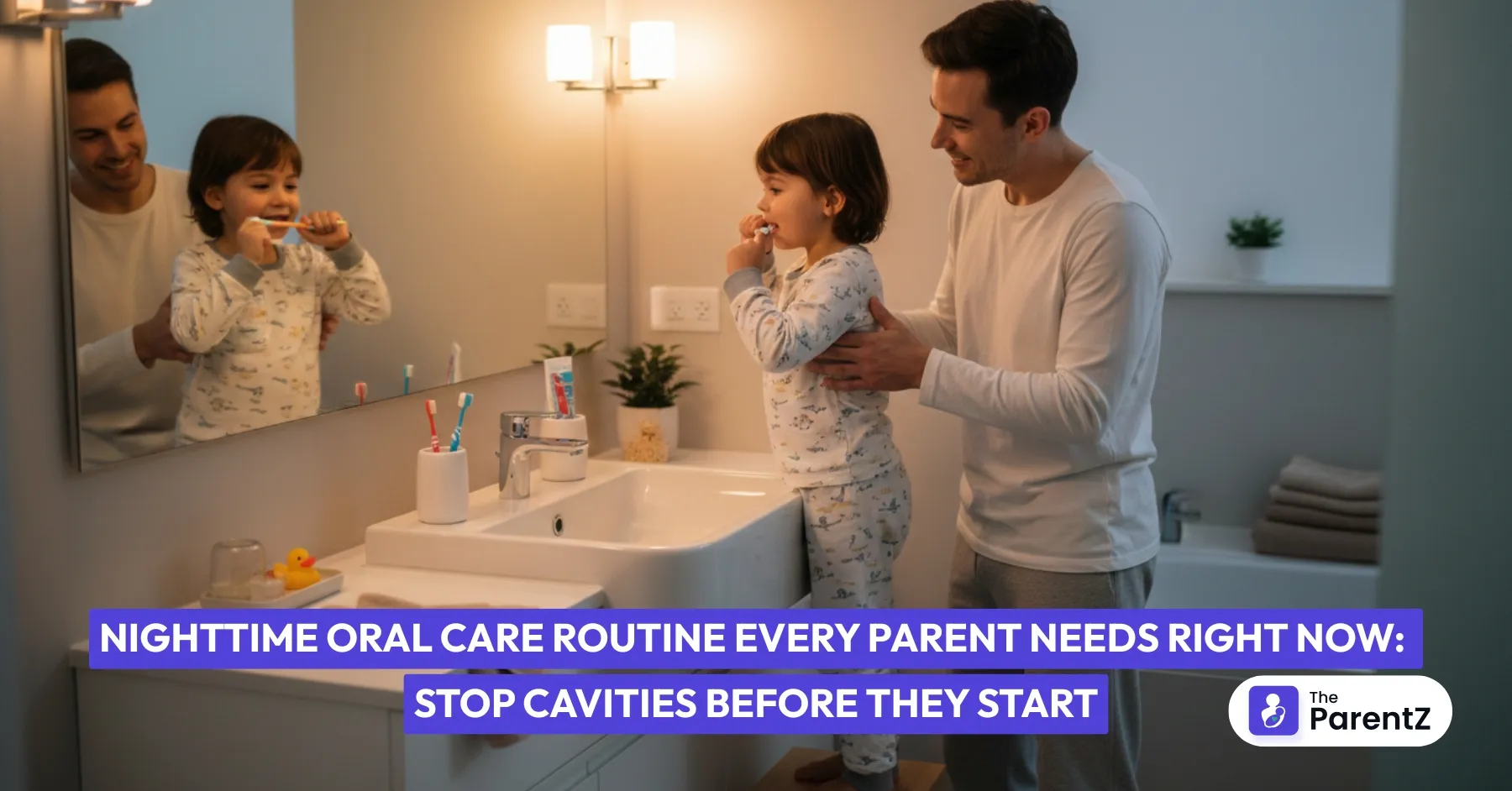
You're exhausted. Your toddler threw a tantrum during dinner, your older one still has homework pending, and the thought of another battle at bedtime over brushing teeth feels like too much. Unfortunately, what happens to your child's teeth at night can make or break their dental health.
We are not saying this to scare you. We are saying this because nearly one in two Indian children suffers from cavities by the time they're in preschool. That's almost every other child. If you're thinking, "My child's baby teeth are temporary anyway, so what's the big deal?" then let's talk about why that's a dangerous myth that could cost your child more than you think.
During the day, your child's mouth is active. They're eating, drinking, talking, swallowing. Saliva keeps washing over their teeth, acting like a natural cleaner. But at night? Everything slows down.
Saliva production drops significantly when we sleep. This is a problem because saliva is your child's first line of defence against cavity-causing bacteria. Without it, any sugar or food particles left on their teeth become a feast for bacteria. These bacteria produce acids that attack tooth enamel all night long. Eight to ten hours of acid attack on tiny teeth.
That's why what you do before your child sleeps matters so much more than you might realize.
Forget those perfect Instagram routines. Let's talk about what actually works when you have a tired child who just wants to sleep.
Ideally, brush your child's teeth after their last meal or snack of the evening – not right before bed when they're already cranky. If dinner is at 8 PM and bedtime is 9:30 PM, brush around 8:30 PM or 9 PM. This way, you're not rushing, and your child isn't already half-asleep.
The rule is simple: After brushing at night, only water. No milk, no juice, no biscuits. If your child is used to drinking milk before bed, shift this to before brushing time. I know this might be a big change if your little one falls asleep with a bottle, but nighttime milk sitting on teeth is one of the biggest causes of early childhood cavities in India.
This is crucial, so pay attention:
Why fluoride? Unlike in some Western countries, most parts of India don't have fluoridated water. Fluoride toothpaste is our main source of cavity protection. It strengthens tooth enamel and fights the bacteria that cause decay. You want a toothpaste with 1000 ppm fluoride for children, so check the label.
Two minutes sounds short, but with a wriggly child, it feels like forever. Here's what works:
Once your child has two teeth that touch each other, you should start flossing. We know what you're thinking, "I can barely get them to brush, now flossing too?"
Start with just the back molars if that's all you can manage. Even once a day at night is better than nothing. As your child gets older and has more teeth touching, make it a habit. Cavities often start between teeth where our brushes can't reach.
There are floss picks designed for kids that make this easier than traditional floss. They come in fun colours and shapes.
This is non-negotiable, but we know it's hard, especially if your child is used to a bedtime bottle or milk.
Here's a practical transition plan:
First, don't panic. Cavities happen even in children with decent oral care sometimes, and genetics play a role too. What matters now is damage control:
Use a soft-bristled toothbrush designed for your child's age. Get a new one every three months, or earlier if you notice the bristles becoming worn or bent.
Electric toothbrushes can work well for older children, but they're not necessary. A manual brush used properly is just as effective.
Store the toothbrush upright and let it air dry. Don't cover it or store it in a closed container – that creates a breeding ground for bacteria.
Some nights, you'll be too exhausted. Your child will fall asleep in the car on the way home. You'll have guests over, and routines will go out the window.
It's okay. One missed night won't cause cavities. What matters is getting back on track the next day and maintaining consistency most of the time. If your child is sick and refusing to brush, at least rinse their mouth with water. Do what you can, then resume the proper routine once they're feeling better.
The goal isn't just cavity-free teeth today. It's teaching your child that oral care is a non-negotiable part of their daily routine, like eating or sleeping.
Nearly half of Indian preschoolers have cavities. But this doesn't have to be your child's story. A consistent nighttime oral care routine, including proper brushing with the right amount of fluoride toothpaste, no food or drinks after brushing, and flossing when needed, can prevent most cavities. It takes maybe 5 minutes of your evening.
Five minutes to prevent pain, infection, expensive dental treatments, and years of dental anxiety. Five minutes to give your child healthy teeth and good habits that will serve them for life.
Is it always easy? No. Is it worth it? Absolutely.
Start tonight. Not tomorrow, not next week. Tonight. Take your child, get that toothbrush, use a rice grain or pea-sized amount of fluoride toothpaste, brush for two minutes, and make sure they only have water after that.
Your child's smile will thank you for it.

TheParentZ offers expert parenting tips & advice, along with tools for for tracking baby and child growth and development. Know more about Baby Growth and Development Tracker App.It serves as an online community for parents, providing valuable information on baby names, health, nutrition, activities, product reviews, childcare, child development and more
Disclaimer:
The views, thoughts, and opinions expressed in this article/blog are solely those of the author and do not necessarily reflect the views of The ParentZ. Any omissions, errors, or inaccuracies are the responsibility of the author. The ParentZ assumes no liability or responsibility for any content presented. Always consult a qualified professional for specific advice related to parenting, health, or child development.
Conversations (Comments) are opinions of our readers and are subject to our Community Guidelines.



Be the first one to comment on this story.