
Most Moms Report Slower Recovery After a Second Birth
Jul 19, 2026By Dr. Akanksha Priya
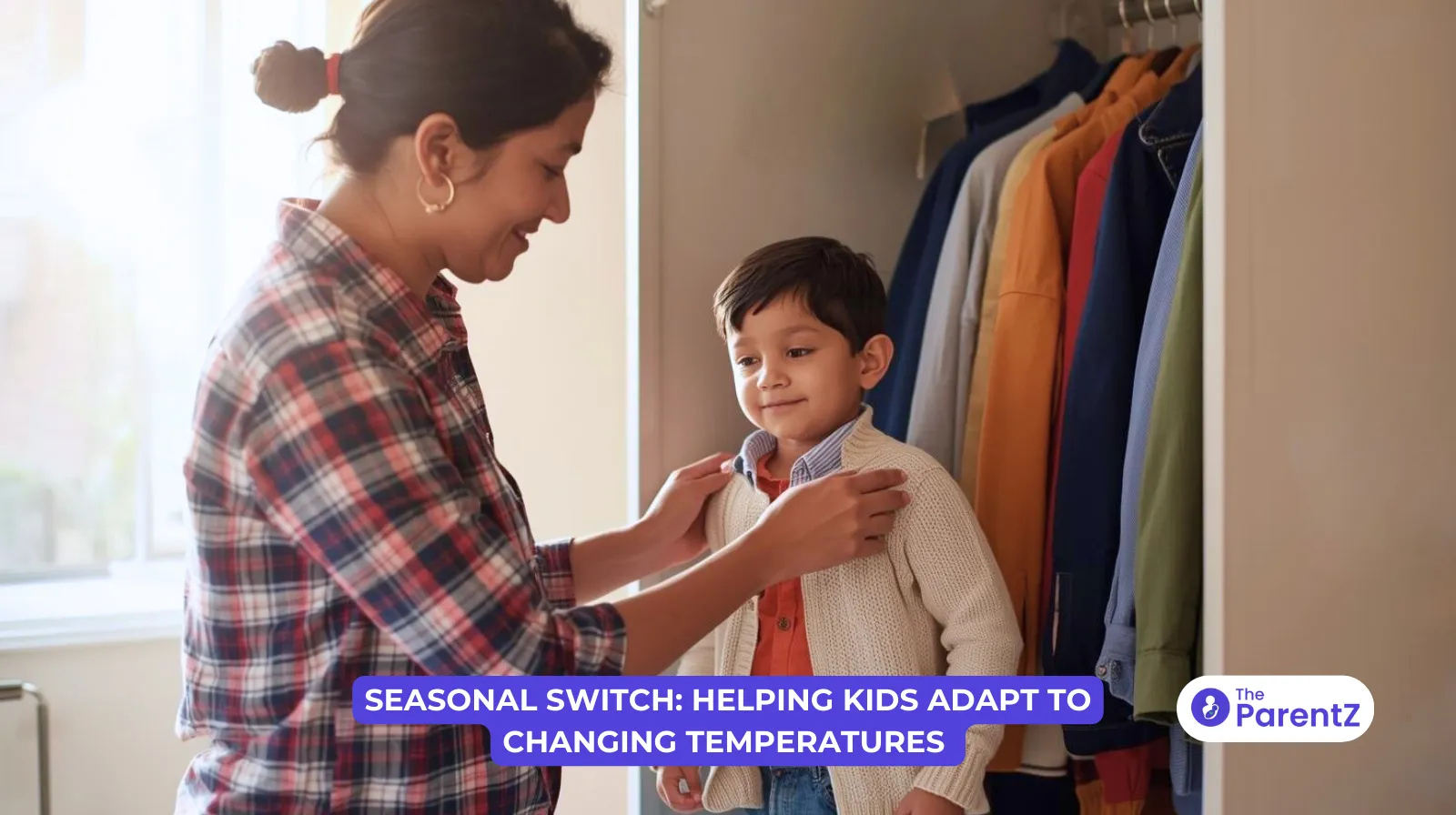
It's 2 PM, and your child just came home from school, shirt soaked through, complaining it's too hot. By 9 PM, that same child is kicking up a fuss because you won't give them their blanket back.
Welcome to this strange in-between time that isn't quite winter anymore but definitely isn't summer yet either. The mornings are still crisp, the afternoons are suddenly hitting 28–32°C in most parts of the country, and the evenings cool right back down. For adults, it's a minor inconvenience. For kids, especially younger ones, it can genuinely throw their bodies off balance.
Children have a higher surface-area-to-body-mass ratio than adults, which means they lose and gain heat faster. Their hypothalamus, the part of the brain that manages body temperature, is still maturing. So when the environment shifts, their bodies take longer to catch up.
The seasonal transition is especially confusing because the temperature swings are sharp within a single day. A child's body that was dressed for 15°C at 7 AM is now dealing with 30°C by 2 PM. That's a 15-degree swing in a few hours. Their internal thermostat gets genuinely confused, and the result can be crankiness, fatigue, or low-grade discomfort that they can't explain to you.
The most medically sound and practical advice for this season is layering. It's not just a fashion thing; it's based on how the body retains and releases heat.
Send your child to school in a light full-sleeve cotton top under their school uniform or a light jacket they can tie around their waist. Cotton breathes well, doesn't trap sweat, and keeps them warm in the morning without making them miserable in the afternoon.
The key is making sure the jacket or layer is something they can remove on their own and carry. Don't give them something so bulky or valuable that they'll leave it somewhere and you'll have a problem. A simple cotton hoodie or a light dupatta-style wrap works perfectly for older kids.
This is the one thing parents consistently overlook. We often dress our kids for the morning temperature and forget the afternoon completely. Or we dress for the afternoon, and our child is shivering at the 7 AM bus stop.
When children refuse socks and caps in the morning now, there's a genuine argument for letting it go, partially.
The idea that you catch a cold from being cold is a myth. Colds are caused by viruses, not cold air. However, exposure to cold air can slightly suppress the immune response in the nasal passages, which can make it easier for a virus to take hold if one is present.
Pro Tip: On days where the morning temperature is around or below 18°C, light socks and a soft cap are still genuinely helpful, especially during the school commute. Once they're inside a warm classroom or the day heats up, it's fine to remove them. The goal isn't to keep them bundled all day. It's to protect them during the cold pockets of the day.
If your child point-blank refuses the cap, at minimum keep their chest and back covered on cool mornings. Thermal regulation happens a lot through the core.
In peak winter, kids don't feel thirsty because they're not sweating. The moment temperatures start rising, they begin sweating, but their thirst mechanism doesn't immediately catch up.
They genuinely don't feel thirsty even when their body needs water.
Start sending water bottles to school now if you weren't already. Remind them to drink before they leave, during meals, and after any outdoor activity. You don't need fancy electrolyte drinks, as plain water is fine. If they've been running around in the afternoon heat, adding a tiny pinch of salt and sugar to their water or giving them nimbu paani, chaas, or coconut water works well as a natural rehydrator.
Pro Tip: Watch out for dry lips, darker urine, unusual crankiness, or fatigue in the afternoon. These are early signs of mild dehydration in kids.
Your child still wants the blanket at night, and you think they don't need it anymore. They're probably right, and so are you.
In most of northern and central India right now, nights are still dropping to 14–18°C. A light blanket or a single cotton quilt is still appropriate. What you want to avoid is the thick winter razai (quilt), because children can overheat in their sleep without waking up, which disturbs sleep quality.
Switch to a single layer, like a cotton quilt or light blanket, and let them keep it. Don't fight this battle. It's not worth it, and the temperature genuinely warrants it.
Your child comes home from the park or school, sweaty. They sit under the fan. The sweat cools rapidly on their skin. Suddenly, they're shivering.
When sweat sits on the skin and air (from a fan or breeze) blows over it, it evaporates quickly. Evaporation pulls heat away from the body. That’s how sweating cools us down. But if the cooling happens too fast, your child may suddenly feel chilly or start shivering.
This rapid cooling does not cause viral infections. Viruses cause infections. However, quick temperature shifts can make children uncomfortable, especially when their bodies are already adjusting to changing weather.
Pro Tip: When your child comes home sweaty, don't immediately sit them under the fan. Let them cool naturally for a few minutes. If they want to change, great. Have a dry cotton set of home clothes ready. Keep the fan speed low initially.
Winter foods like heavy dals, lots of ghee, and fried snacks start becoming harder to digest as temperatures rise. Children may start showing reduced appetite or slight indigestion. This is normal.
Begin transitioning toward lighter meals like more fruits, curd, vegetables, and dal-chawal over heavier non-veg or fried items. This supports their digestion as the body shifts its metabolic mode from cold-weather conservation to warm-weather function.
The seasonal switch transition isn't dangerous if you're paying attention. Your child's body is doing its job; it just needs a little help from you to bridge the gap between the morning chill and the afternoon heat. Layer up, keep them hydrated, and stop fighting over the blanket at night. Small changes when done consistently actually work.
Note: Always consult your paediatrician if your child develops a persistent fever, unusual fatigue, or other symptoms during seasonal transitions.

TheParentZ offers expert parenting tips & advice, along with tools for for tracking baby and child growth and development. Know more about Baby Growth and Development Tracker App.It serves as an online community for parents, providing valuable information on baby names, health, nutrition, activities, product reviews, childcare, child development and more
Disclaimer:
The views, thoughts, and opinions expressed in this article/blog are solely those of the author and do not necessarily reflect the views of The ParentZ. Any omissions, errors, or inaccuracies are the responsibility of the author. The ParentZ assumes no liability or responsibility for any content presented. Always consult a qualified professional for specific advice related to parenting, health, or child development.
Conversations (Comments) are opinions of our readers and are subject to our Community Guidelines.



Be the first one to comment on this story.