
Most Moms Report Slower Recovery After a Second Birth
Jul 19, 2026By Dr. Akanksha Priya
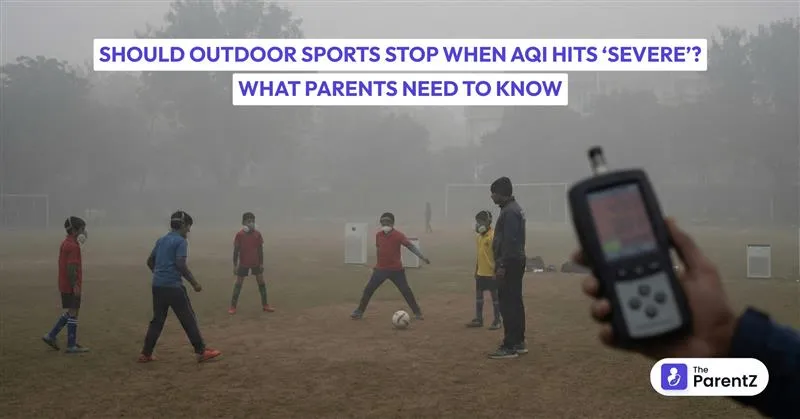
If you've been glancing at your weather app lately and seeing terms like "severe" or "hazardous" next to the air quality reading, you're not alone. This past October and November 2025, parents across Delhi and northern India watched those numbers climb higher and higher, wondering: should my child even be playing outside?
The short answer? When air quality hits severe levels, outdoor sports need to stop.
October 2025 marked Delhi's worst air quality in three years, with an average AQI of 223 and levels hovering between 200 and 400 for much of the month. Around Diwali, pollution spiked dramatically; New Delhi's AQI reached 442.
By mid-November, Delhi's AQI fluctuated between 350 and 428, with 37 out of 39 monitoring stations reporting "very poor" to "severe" levels. It's not just Delhi: Cities like Ghaziabad, Noida, Greater Noida, and parts of Uttar Pradesh, Haryana, and Punjab faced similar crises, driven by stubble burning, firecrackers, vehicle emissions, construction dust, and winter inversions that trap pollutants near the ground.
Think of the AQI like a weather forecast, but for air pollution. It's a simple color-coded system that tells you how safe (or unsafe) the air is to breathe:
When we discuss "very poor" or "severe" AQI (301+), the air poses genuine risks to lung and heart health for all, but especially developing children.
Children inhale 40-50% more air per body weight than adults, amplifying pollutant exposure. They're often closer to the ground (where PM concentrates) and breathe faster/deeper during play, increasing intake. Lungs develop until age 20-21, making them prone to permanent damage.
Studies (e.g., WHO, American Academy of Pediatrics) link high AQI exposure to:
During sports like cricket or football in polluted air, kids' deeper breaths pull in more toxins, potentially raising hospitalization risks by 20-30% on severe days.
India's Commission for Air Quality Management (CAQM) and the Supreme Court recommend postponing all outdoor activities when AQI exceeds 300, per 2025 directives. This applies universally, not just to kids with conditions. Schools must shift PE indoors during Nov-Jan if AQI >300.
When AQI is 101-200 (Poor to Unhealthy):
When AQI is 201-300 (Very Unhealthy):
When AQI is 301+ (Severe to Hazardous):
Even if the AQI says it's "moderate," every child responds differently. Watch for these warning signs:
If you notice any of these, bring your child indoors immediately and consult your pediatrician if symptoms persist.
Check the AQI Daily:
Download apps or check websites. Make it part of your morning routine, just like checking the temperature.
Talk to Your Child's School:
Most parents support moving recess and physical education indoors during poor air quality days. Ask your school about its air quality policy. If they don't have one, suggest creating guidelines based on AQI readings.
Create Indoor Alternatives:
Yes, kids need physical activity. But when AQI is severe, indoor exercise is the only safe option. Set up indoor games, use exercise videos, or invest in some basic indoor sports equipment.
Invest in Protection:
Time Outdoor Activities Wisely:
On days when AQI is moderate, pollution levels are often lower in the early morning. Plan any necessary outdoor time before 9 AM if possible.
This isn't just about today or this season. Air pollution exposure during childhood can lead to decreased lung function and is associated with an increased risk of COPD and asthma later in life. The respiratory health foundation laid in childhood affects your child's entire life.
Delhi's 2024 average PM2.5 concentration was nearly 11 times higher than the WHO guidelines, making India the world's 5th most polluted country. These aren't temporary problems; they require sustained attention and action.
If your child has asthma, allergies, or any respiratory condition, extra caution is crucial. People with asthma should reduce prolonged outdoor exertion when AQI is over 50, and should pay attention to which specific pollutants are elevated.
Talk to your pediatrician about:
Should outdoor sports stop when the AQI hits severe? Absolutely yes. There's no game, no practice, no outdoor activity worth risking your child's respiratory health. While we all want our kids to be active and enjoy the outdoors, severe air pollution creates genuine health risks that can have lasting effects.
TheParentZ offers expert parenting tips & advice, along with tools for for tracking baby and child growth and development. Know more about Baby Growth and Development Tracker App.It serves as an online community for parents, providing valuable information on baby names, health, nutrition, activities, product reviews, childcare, child development and more
Disclaimer:
The views, thoughts, and opinions expressed in this article/blog are solely those of the author and do not necessarily reflect the views of The ParentZ. Any omissions, errors, or inaccuracies are the responsibility of the author. The ParentZ assumes no liability or responsibility for any content presented. Always consult a qualified professional for specific advice related to parenting, health, or child development.
Conversations (Comments) are opinions of our readers and are subject to our Community Guidelines.



Be the first one to comment on this story.