
Most Moms Report Slower Recovery After a Second Birth
Jul 19, 2026By Dr. Akanksha Priya
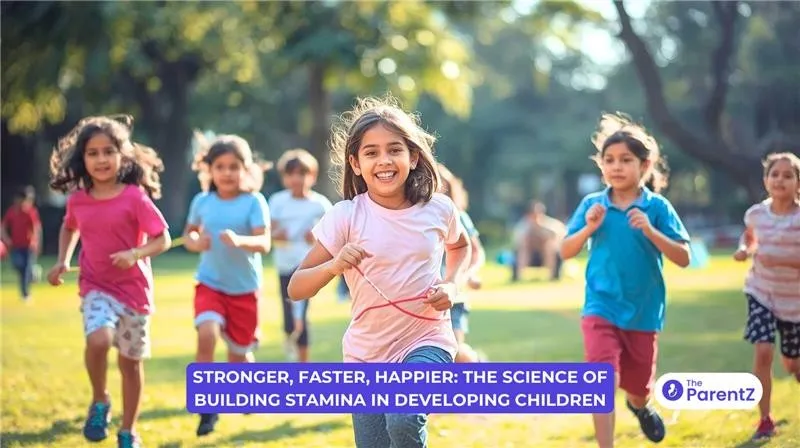
Your 8-year-old used to run around the park for an hour straight. Now, after five minutes on the cricket ground, he's pulling at your sleeve asking for water and a break. Your daughter can't walk up a flight of stairs without complaining that her legs hurt.
Before you panic, this isn't laziness, and it's not a medical problem in most cases. It's stamina. The good news is that stamina is something you can actually build, at any age, with habits that fit into a regular daily schedule.
Stamina is your child's ability to sustain physical (and mental) effort over time without tiring quickly. It depends on how efficiently the heart pumps blood, how well the lungs deliver oxygen, how strong the muscles are, and how the nervous system handles fatigue.
Research consistently shows that children who develop good cardiovascular stamina early on have stronger immune systems, better concentration in school, healthier weight, and lower risk of anxiety and depression.
One thing we must understand is that children are not mini adults. Their bodies build stamina differently. They respond better to short bursts of activity rather than long, sustained exercise. This is called intermittent exercise, and it's how children naturally move. Running, stopping, playing, resting, running again. Working with this pattern is the key.
At this age, the goal isn't fitness. It's movement. Children in this age group are developing their basic motor skills, coordination, and body awareness, all of which form the physical foundation for stamina later on.
What actually builds stamina here is unstructured outdoor play. That's it. A child running after a ball, climbing a small jungle gym, playing tag with neighbourhood kids. This does more for their cardiovascular development than any structured class ever will. Studies from the World Health Organization recommend at least 180 minutes of physical activity per day for children under 5, and most of it should be active play.
So, let them play outside after school instead of screen time. Even a 45-minute play session in the colony park or on the terrace makes a real difference. If outdoor space is limited, dancing at home to Bollywood songs counts. Don't underestimate how much energy this age group burns when they're just playing freely.
We must avoid forcing children this age to do "exercise." Structured workouts are not developmentally appropriate and can actually create a negative association with physical activity.
By this age, children's hearts and lungs are more developed, and they can sustain moderate physical activity for longer. This is the best window to start building real stamina. Not through pressure, but through habit.
Research supports aerobic activity for at least 60 minutes a day, according to guidelines from the American Academy of Pediatrics and WHO. This doesn't mean one continuous hour. It can be broken into chunks. For instance, 20 minutes walking to school, 30 minutes playing cricket after school, and 10 minutes cycling.
Focus on these three habits:
Sleep matters enormously here. Children aged 6–12 need 9–12 hours of sleep per night, per the American Academy of Sleep Medicine. Sleep is when muscle repair and growth hormone release happens. Poor sleep directly reduces stamina and recovery. This means fixed bedtimes, even on weekends, matter more than most parents realise.
Hydration is non-negotiable. Children often don't feel thirst the way adults do, but dehydration reduces stamina significantly. Send a water bottle to school and remind them to drink before, during, and after physical activity.
Puberty changes everything. Some children, especially girls, show a sudden drop in physical activity around ages 11–13. This is partly hormonal, partly social, as self-consciousness increases, academic pressure rises, and screens become more compelling. This is also the age when stamina gaps become very visible.
Science says that resistance training (bodyweight exercises, not weights) can now be safely introduced alongside aerobic activity. Research confirms that bodyweight exercises like squats, lunges, push-ups, and planks are safe, effective, and help build muscular endurance in children aged 11 and above when done under supervision.
For instance, a 20-minute home workout three times a week alongside regular outdoor activity is a realistic and effective routine. Apps or YouTube videos designed for kids can help with this if parents aren't sure what to include.
Nutrition becomes a major factor at this age. Iron deficiency is extremely common in Indian children, especially girls post-puberty, and it is one of the most overlooked causes of fatigue and low stamina. A study from AIIMS found that iron deficiency anaemia affects up to 50–60% of adolescent girls in India. If your child seems unusually tired despite regular activity, a simple blood test to check haemoglobin and ferritin levels is worth it. Iron-rich foods like rajma, chana, leafy greens like palak and methi, and jaggery with nuts should be regular parts of the diet.
Screen time and sedentary behaviour are the biggest stamina saboteurs at this age. We should try to limit recreational screen time to 2 hours per day for school-age children. Every extra hour on a phone or gaming device typically replaces physical movement and disrupts sleep, and both of these directly hurt stamina.
Pushing children to exercise when they're unwell, undertrained, or emotionally burnt out does more harm than good. Rest is a legitimate and necessary part of building stamina, as overtraining without recovery actually reduces endurance over time.
Comparing your child's stamina to other children's is counterproductive. Individual variation in aerobic capacity is real and largely genetic in baseline. What you can influence is the trajectory, like whether they're improving or declining.
Don't rely on energy drinks or protein supplements to build stamina. These are not tested for children, and whole foods like dals, eggs, milk, fruits, and nuts provide everything a growing child needs.
Stamina in children builds slowly, through consistent daily movement, adequate sleep, good nutrition, and enough free play. There's no shortcut, but there's also no mystery. The families who do this well aren't doing anything extraordinary; they're just keeping it regular.
An evening walk that becomes a family habit. A sport your child genuinely enjoys. Meals that include iron and protein. Bedtimes that are actually respected.
That's the science of building a stronger, faster, happier child. And it fits into an ordinary family's life. No gym required.
TheParentZ offers expert parenting tips & advice, along with tools for for tracking baby and child growth and development. Know more about Baby Growth and Development Tracker App.It serves as an online community for parents, providing valuable information on baby names, health, nutrition, activities, product reviews, childcare, child development and more
Disclaimer:
The views, thoughts, and opinions expressed in this article/blog are solely those of the author and do not necessarily reflect the views of The ParentZ. Any omissions, errors, or inaccuracies are the responsibility of the author. The ParentZ assumes no liability or responsibility for any content presented. Always consult a qualified professional for specific advice related to parenting, health, or child development.
Conversations (Comments) are opinions of our readers and are subject to our Community Guidelines.



Be the first one to comment on this story.