
Most Moms Report Slower Recovery After a Second Birth
Jul 19, 2026By Dr. Akanksha Priya
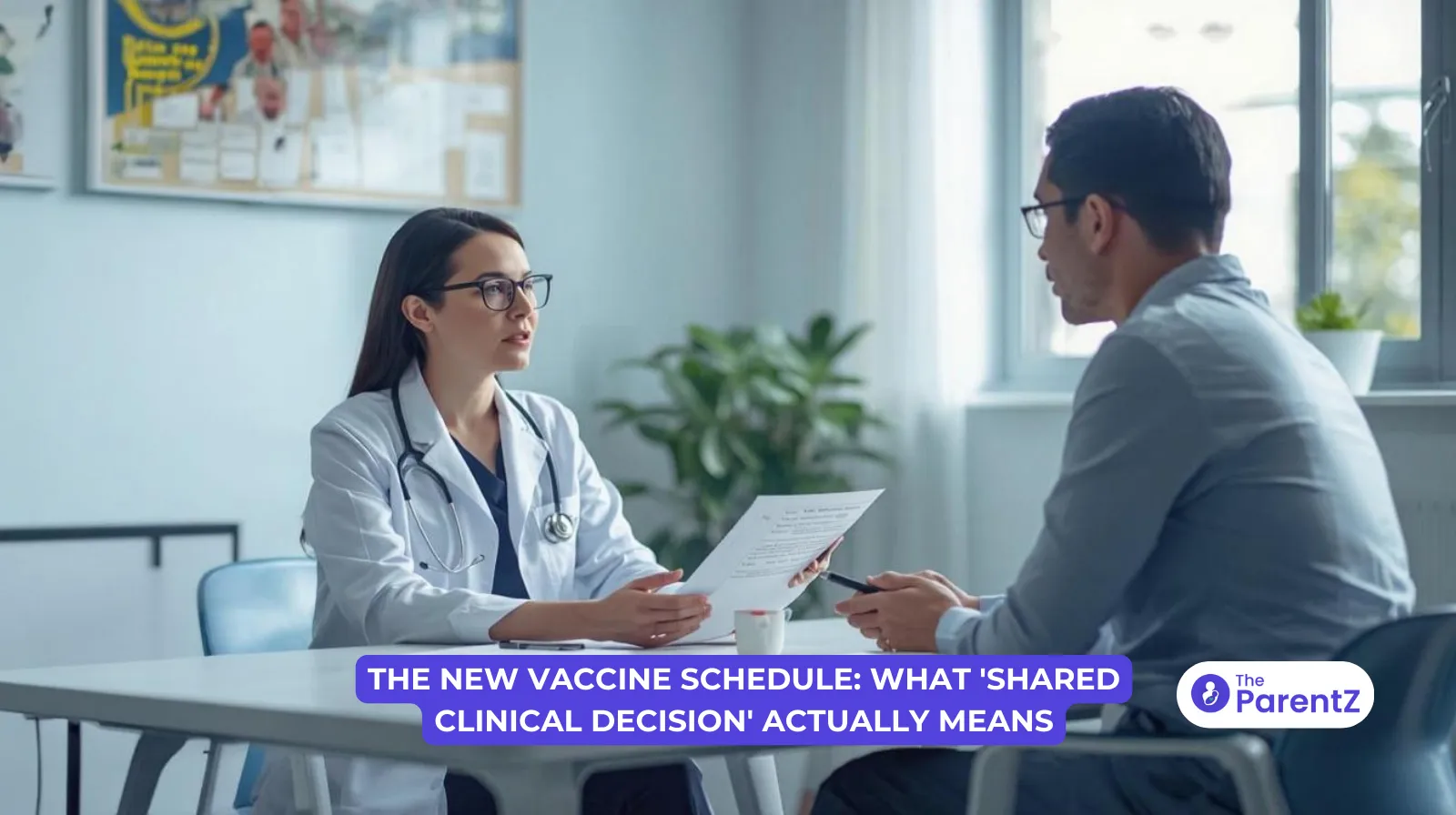
If you've been hearing about changes to childhood vaccines and something called "shared clinical decision-making," you're probably confused. You're not alone. Recent surveys show that most parents don't really understand what this term means, and that's understandable because it sounds pretty vague.
As per the official definition from the CDC, it's a conversation between you (or your child's parent/guardian) and your healthcare provider about whether a specific vaccine makes sense for your child.
But the key difference is that shared clinical decision-making vaccines are NOT automatically recommended for every child in a certain age group. Unlike routine vaccines (think measles or polio), there's no "default yes" here. Instead, your doctor will talk with you about your child's specific situation to decide together if the vaccine is right for them.
According to the CDC, this decision can be based on things like your child's medical history, their risk of exposure to certain diseases, your family's values and preferences, and your doctor's professional judgment. There's no checklist or script; it's genuinely a conversation.
The CDC uses "shared clinical decision-making" when some people might benefit from a vaccine, but not everyone needs it for public health reasons.
For example, the HPV vaccine for adults aged 27-45 falls into this category. Most people of that age either have immunity from past infections or a lower exposure risk. But someone never vaccinated who might have new partners could benefit. So instead of "everyone needs this," it's "talk to your doctor about your situation."
As of now, there are several vaccines that fall under shared clinical decision-making. For kids, this recently started including vaccines for COVID-19, flu, and rotavirus. For adults, it includes things like the meningococcal B vaccine for young adults and the hepatitis B vaccine for certain older adults.
What's causing this confusion is that recent federal changes moved some previously routine childhood vaccines into this category. Many states and major medical organizations, including the American Academy of Pediatrics (AAP), still recommend these vaccines for all kids. The AAP has been very clear that their science-based schedule hasn't changed.
Surveys from the Annenberg Public Policy Center found some big misconceptions:
Here's what you should do:
"Shared clinical decision-making" is really just a fancy way of saying "talk to your doctor about whether your child needs this vaccine." It doesn't mean the vaccine is unsafe. It doesn't mean you should skip it. It just means the decision should be individualized based on your child's situation.
The confusion around this term shows us that medical slang doesn't help parents make good decisions. What does help is having an honest conversation with a healthcare provider you trust, asking questions, and making an informed choice that protects your child's health.
Your pediatrician cares about your child and knows the science. Trust that relationship, ask your questions, and work together to keep your kid healthy. That's what shared clinical decision-making is really all about.
TheParentZ offers expert parenting tips & advice, along with tools for for tracking baby and child growth and development. Know more about Baby Growth and Development Tracker App.It serves as an online community for parents, providing valuable information on baby names, health, nutrition, activities, product reviews, childcare, child development and more
Disclaimer:
The views, thoughts, and opinions expressed in this article/blog are solely those of the author and do not necessarily reflect the views of The ParentZ. Any omissions, errors, or inaccuracies are the responsibility of the author. The ParentZ assumes no liability or responsibility for any content presented. Always consult a qualified professional for specific advice related to parenting, health, or child development.
Conversations (Comments) are opinions of our readers and are subject to our Community Guidelines.



Be the first one to comment on this story.