
Most Moms Report Slower Recovery After a Second Birth
Jul 19, 2026By Dr. Akanksha Priya
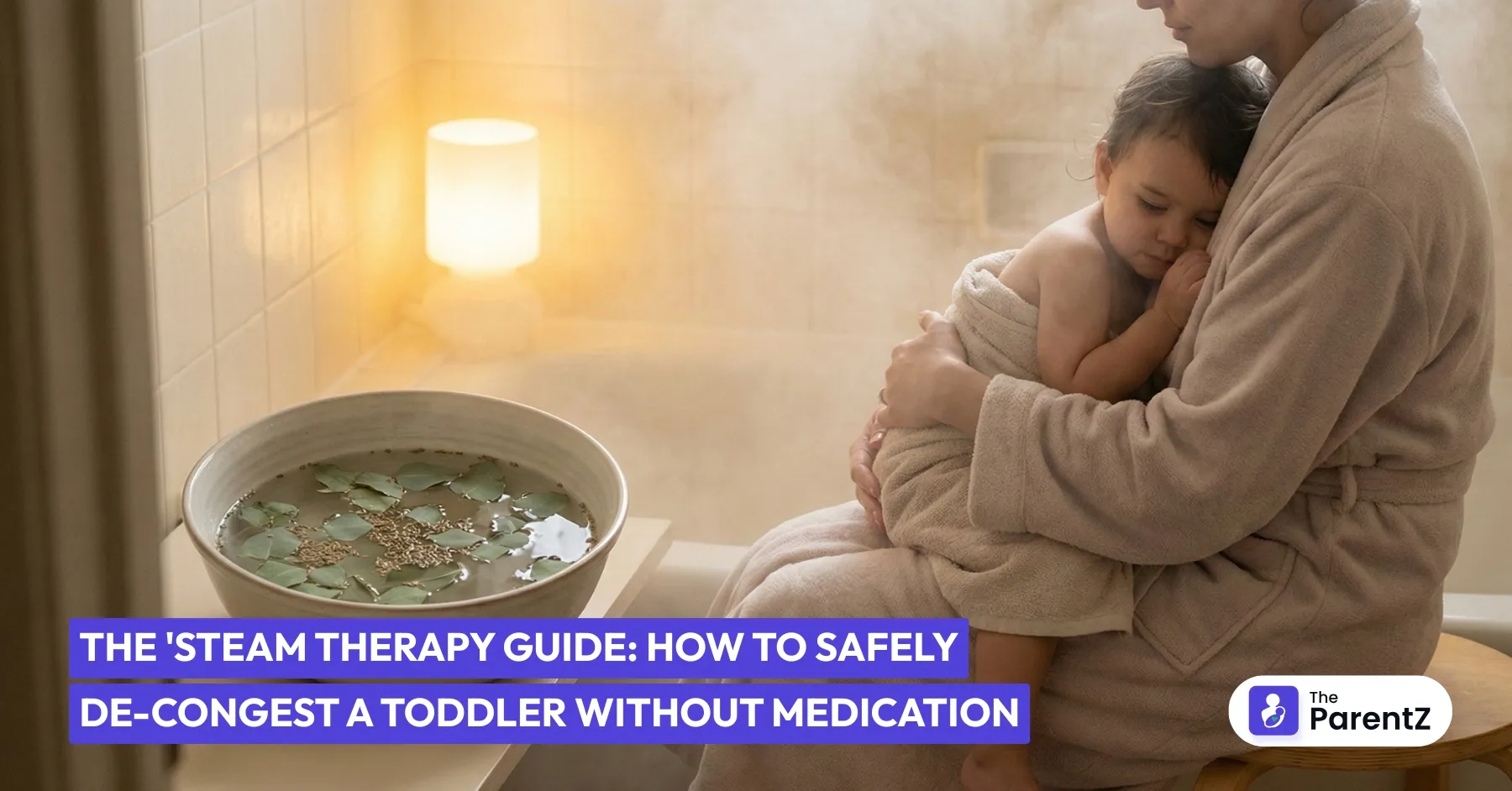
When your toddler's nose is stuffed up, and they can barely breathe, watching them struggle breaks your heart. You want to help, but when you're standing in the pharmacy aisle looking at all those cold medicines, you remember what your pediatrician said: no over-the-counter decongestants for young kids.
Those medications don't work well for babies anyway. According to the American Academy of Pediatrics (AAP), decongestants don't provide much benefit to children under four years old and can actually cause serious side effects.
So what can you do? Steam therapy is one of the safest, most effective options, but only when done correctly.
Think about how you feel when you step into a warm, steamy shower. That's essentially what steam does for your toddler's congested airways. The warm, moist air helps thin out the thick mucus that's blocking their nose, making it easier for them to breathe and eventually clear out that gunk.
A warm, steamy environment can help loosen thick mucus and make breathing easier for children. It's not a cure, as nothing makes a cold disappear overnight, but it genuinely provides relief.
You've probably heard of steam therapy, but maybe you're picturing a bowl of hot water or a fancy vaporizer. Stop right there.
Never, ever use bowls of hot water, pots on the stove, or hot steam vaporizers with toddlers. This isn't about being overly cautious; this is about real danger. Studies and burn centers have documented cases of children suffering severe scalds from knocked-over bowls, accidental contact with steam, or touching hot vaporizers. These aren't minor injuries; they're serious burns that can require surgery and cause permanent scarring.
Pediatricians recommend turning your bathroom into a steam room by running a hot shower and sitting with your child in the steamy environment for a few minutes. Here's exactly how to do it safely:
Step-by-Step Safe Steam Therapy:
The best times are:
These are great and much safer for overnight use. The American Academy of Pediatrics recommends cool-mist humidifiers over hot-steam vaporizers because vaporizers can cause burns if a child gets too close or knocks them over.
Run a cool mist humidifier in your toddler's room while they sleep. Just make sure to clean it every few days, as mold loves humid environments.
Steam therapy works best when combined with these pediatrician-approved methods:
Let's be crystal clear about what NOT to do:
❌ No bowls or pots of hot water: These tip over easily and cause severe burns
❌ No hot steam vaporizers: Water must reach 100°C to create steam, and even one second of contact with this temperature can cause tissue damage in children who have thinner skin
❌ No essential oils: These can irritate toddlers' airways and some are dangerous if ingested
❌ Never leave them alone: Bathroom accidents happen in seconds
❌ Don't make it too hot: If you're gasping for air, so is your child
Steam therapy helps with symptoms, but it doesn't treat infections. Call your doctor if:
Steam therapy can genuinely help your congested toddler feel better, but safety comes first. The bathroom steam method is one of the approaches that's both effective and safe for young children when done properly. Those bowls of hot water and fancy vaporizers? They're not worth the risk.
TheParentZ offers expert parenting tips & advice, along with tools for for tracking baby and child growth and development. Know more about Baby Growth and Development Tracker App.It serves as an online community for parents, providing valuable information on baby names, health, nutrition, activities, product reviews, childcare, child development and more
Disclaimer:
The views, thoughts, and opinions expressed in this article/blog are solely those of the author and do not necessarily reflect the views of The ParentZ. Any omissions, errors, or inaccuracies are the responsibility of the author. The ParentZ assumes no liability or responsibility for any content presented. Always consult a qualified professional for specific advice related to parenting, health, or child development.
Conversations (Comments) are opinions of our readers and are subject to our Community Guidelines.



Be the first one to comment on this story.