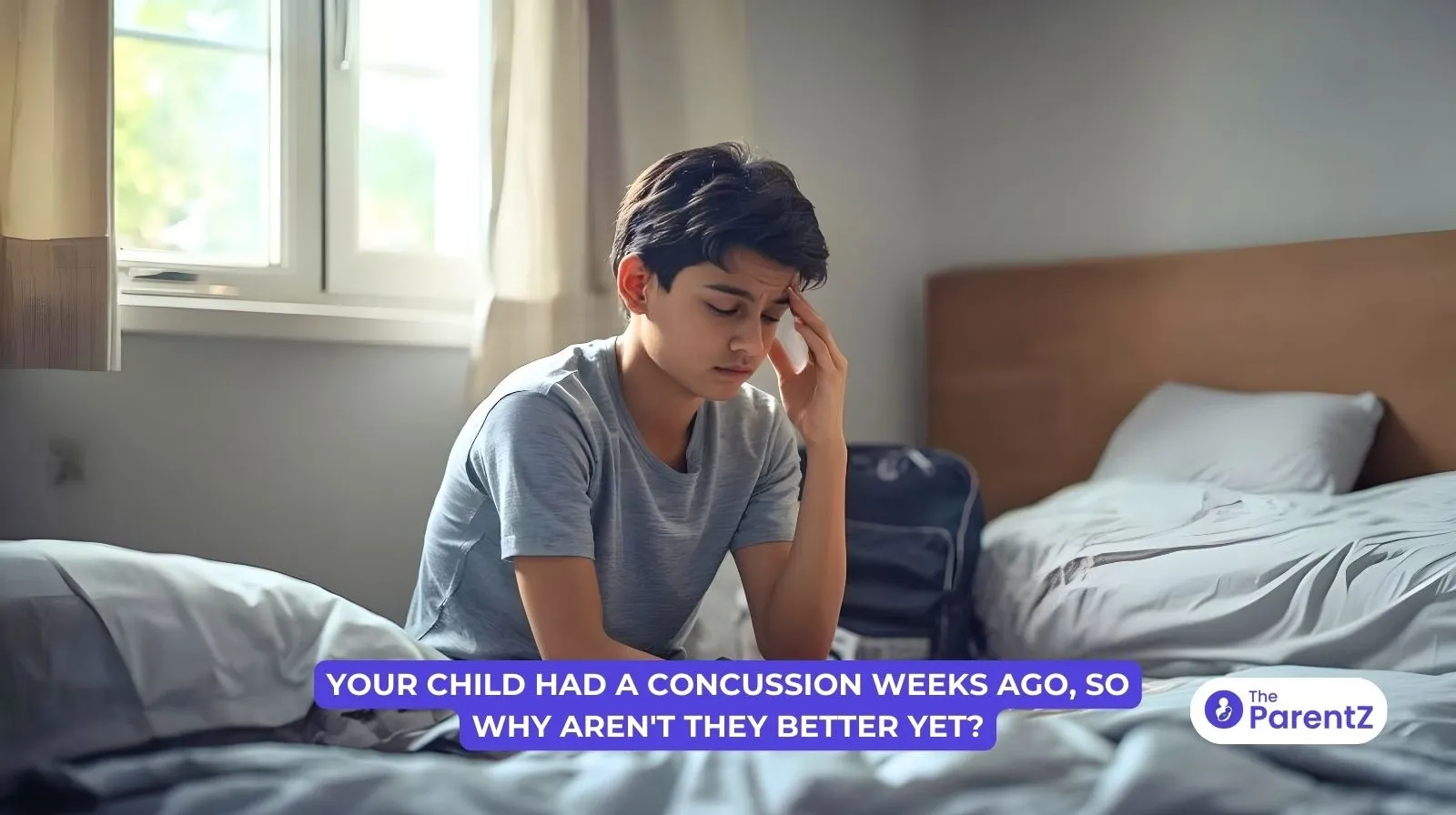
Your Child Had a Concussion Weeks Ago, So Why Aren't They Better Yet?

By Samira Reddy|5 - 6 mins read| February 28, 2026

You were told your child had a concussion. The doctor said to rest, avoid screens, take it easy for a week or two, and they'd be fine. So you did everything right. You kept them home from school, turned off the iPad, and skipped soccer practice.

Two weeks passed. Then three. And your child still has headaches. They're irritable. They can't focus in class. They're not sleeping well. They don't feel like themselves.

There is something most parents aren't told at the emergency room. About 1 in 4 children who sustain a concussion will go on to experience what's called Persistent Post-Concussive Symptoms (PPCS), symptoms that last longer than four weeks. That's not a rare edge case. That's a quarter of all kids who get concussed.

If your child is in that group, you're not being paranoid. You're not overreacting. And no, it does not mean something is permanently wrong. But it does mean you need to understand what's happening and what to actually do about it.

What "Prolonged Symptoms" Actually Means

A typical concussion clears up within 1–4 weeks for most children. But when symptoms stretch beyond four weeks, it's classified as persistent post-concussive syndrome. This can last anywhere from a few additional weeks to several months.

The most common prolonged symptoms reported in children and adolescents include:

  • Headaches: These are the most frequently reported symptoms. They may feel like tension headaches, pressure behind the eyes, or migraines. They often get worse with activity, screen time, or busy environments.
  • Difficulty concentrating and brain fog: Your child may struggle to follow along in class, forget things they just read, or feel mentally exhausted after tasks that used to be easy.
  • Sleep problems: This goes both ways. Some kids sleep way too much. Others can't fall or stay asleep. Either pattern disrupts recovery because the brain heals most during sleep.
  • Emotional changes: Irritability, mood swings, anxiety, and low mood are all well-documented in kids with prolonged concussion symptoms. This isn't behavioral; it's neurological. The brain is under stress.
  • Light and noise sensitivity: Fluorescent lighting in classrooms, loud hallways, and gym class. All these things that never bothered your child before may now feel genuinely overwhelming.
  • Dizziness and balance issues: Some children report feeling unsteady, especially when moving between environments or transitioning from sitting to standing.

Why Does This Happen to Some Kids and Not Others?

Researchers have identified several factors that make a child more likely to experience prolonged symptoms. These include:

  • A history of previous concussions significantly raises the risk, as each subsequent concussion tends to take longer to heal. 
  • Girls and adolescent females also appear to recover more slowly than males, though the reasons are still being studied. 
  • Children who had pre-existing migraines, anxiety, ADHD, or learning differences before the injury are at higher risk too. 
  • And early return to school or physical activity before symptoms fully resolved can extend recovery considerably.

None of these is your fault. But knowing them helps you advocate for your child appropriately.

What Parents Actually Need to Do

  • Get a proper follow-up: Don't skip it. A single ER visit is not enough for a child with ongoing symptoms past two weeks. Ask your pediatrician for a referral to a physician who specializes in concussion management. This can be a sports medicine doctor, a pediatric neurologist, or a concussion clinic. They can properly assess where your child is in recovery and adjust the plan.
  • Talk to the school in writing: This is one of the most important and most skipped steps. Your child's brain is still recovering, and sitting in a full day of school under fluorescent lights, switching between seven subjects, and navigating a noisy cafeteria is a significant cognitive load. Request a temporary academic accommodation plan. This might include reduced homework, extra time on tests, permission to wear sunglasses indoors, a quiet space to take breaks, or partial school days. You don't need a formal IEP, as many schools will informally accommodate based on a doctor's note. Ask specifically.
  • Understand that rest doesn't mean total isolation: The old advice of "dark room, no screens, no activity" has actually been updated by current research. Complete rest beyond the first 24–48 hours is no longer recommended. Light, gradual activity, like short walks, actually supports recovery. The goal is to stay below the symptom threshold: doing enough to keep the body and brain gently engaged, but not so much that symptoms spike. If your child feels worse after an activity, it was too much. Scale back and try again the next day.
  • Track symptoms daily, even briefly: You don't need a complicated system. A simple note on your phone each evening, including headache level, mood, sleep, and energy, gives you and the doctor a real picture of progress over time. Without this, it's very easy to lose track of whether things are actually improving or staying the same.
  • Protect their sleep above everything else: Sleep is when the brain repairs itself. Keep bedtimes consistent, even on weekends. Reduce screen time in the hour before bed. If your child is having significant sleep disruption, mention it explicitly to their doctor. This is not something to manage on your own.
  • Don't rush return to sport: This is hard, especially if your child plays competitively or has a season coming up. But returning to contact sports too early is one of the most common reasons prolonged recovery stretches even longer, or leads to a second concussion, which is significantly more serious. Return-to-play should always be gradual and medically guided, with a symptom-free period at each stage before advancing.

A Note on Your Child's Mental Health

It's not unusual for kids with prolonged concussion symptoms to develop or worsen anxiety and depression during recovery. Being pulled out of sports, social activities, and normal school life for weeks or months is genuinely hard. If your child seems withdrawn, hopeless, or is expressing a lot of frustration about their situation, take that seriously. Mention it at their next medical visit. Some children benefit from short-term counseling during recovery, and this is a recognized and recommended part of comprehensive concussion care.

Conclusion

Two things we should always remember are that our children rarely exaggerate concussion symptoms, and the symptoms they report are real, measurable changes in brain function. If your child says their head hurts or they can't concentrate, believe them.

Recovery from prolonged post-concussive symptoms is very possible. The majority of children do fully recover with proper management. But it takes patience, consistency, and a care team that actually understands what your child is going through.

If you're a few weeks in and things don't feel right, trust that instinct. Push for a referral. Ask questions. You know your child.


TheParentZ offers expert parenting tips & advice, along with tools for for tracking baby and child growth and development. Know more about Baby Growth and Development Tracker App.It serves as an online community for parents, providing valuable information on baby names, health, nutrition, activities, product reviews, childcare, child development and more

Disclaimer:

The views, thoughts, and opinions expressed in this article/blog are solely those of the author and do not necessarily reflect the views of The ParentZ. Any omissions, errors, or inaccuracies are the responsibility of the author. The ParentZ assumes no liability or responsibility for any content presented. Always consult a qualified professional for specific advice related to parenting, health, or child development.

Comments

Conversations (Comments) are opinions of our readers and are subject to our Community Guidelines.



Start the conversation
Send
Be the first one to comment on this story.
Top