Most Moms Report Slower Recovery After a Second Birth
Jul 19, 2026By Dr. Akanksha Priya
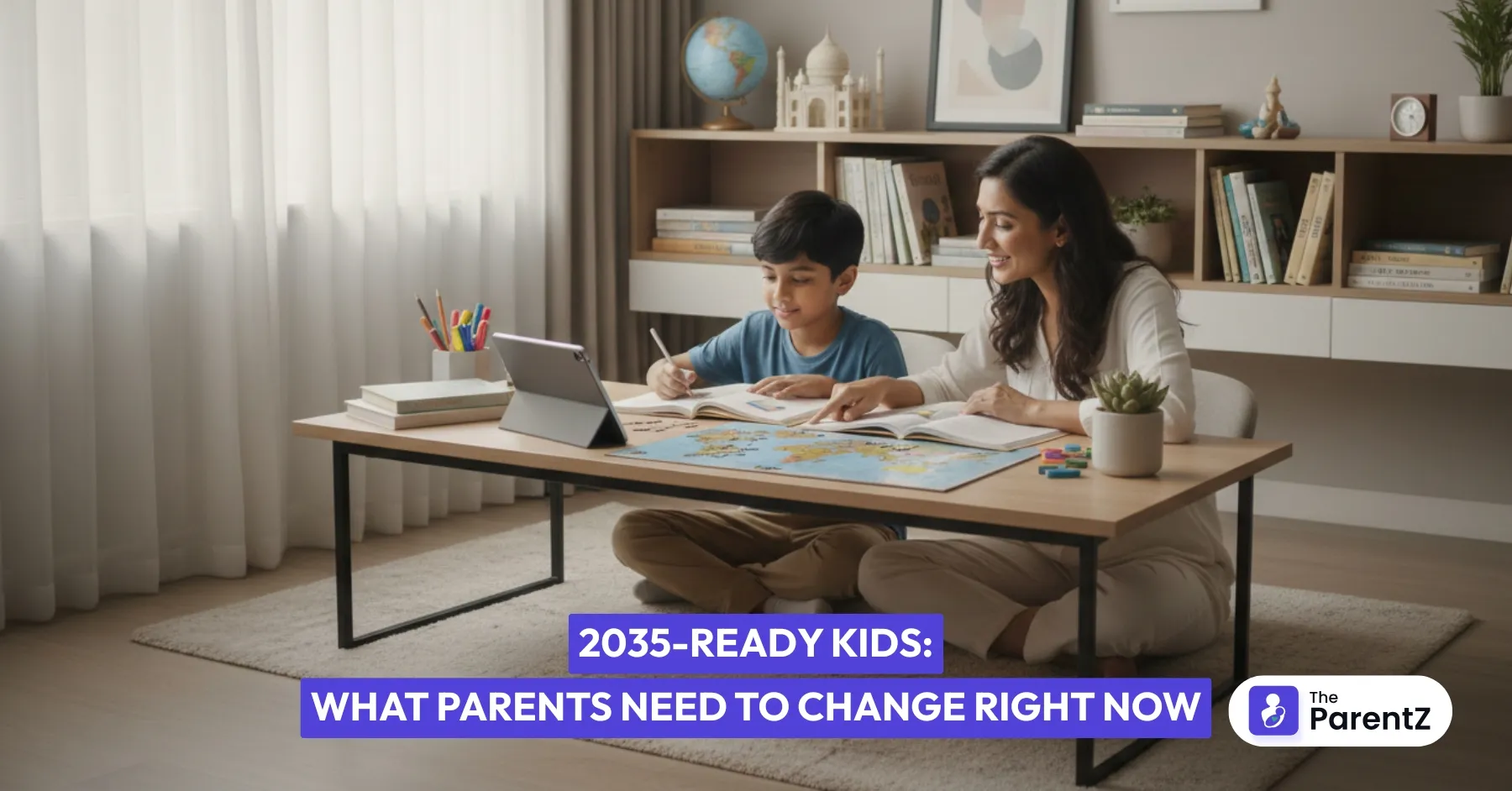
It's 2035. Your child is walking into their first real job. The interviewer asks them to collaborate with team members across three continents, solve a problem that didn't exist five years ago, and handle cultural differences they've never encountered before. Ready or not, this is the world we're raising our kids for.
Most of us have no idea how to prepare them for it. Because the rulebook we grew up with needs some serious updates. Not because they got it wrong, but because the game itself has changed.
Whether we're looking back decades or forward to 2035, the core goal remains the same: we want our kids to be happy and healthy. That's universal. That's timeless.
How do we get them there? That's where everything has shifted.
Think about it. Our parents worried about us watching too much TV. Today, we're managing screen addiction, social media comparison, and kids who can access the entire internet before they can tie their shoes. The challenges aren't just different; they're more intense, more complex, and frankly, more overwhelming.
Let's break down what's changed:
What's the one parenting shift experts keep coming back to?
Raising globally-minded, culturally-aware children.
Before you roll your eyes and think, "Great, another thing to add to my to-do list," hear us out. This isn't about booking expensive international trips or becoming a world traveler. It's about something much more fundamental: exposing your kids to different perspectives, cultures, and ways of thinking right where you are.
OECD's 2028 global competence assessment found that children exposed to international learning experiences, whether virtual or physical, show significantly higher levels of empathy, critical thinking, and conflict-resolution skills. They perform better in teamwork-based assessments, which is exactly what the 2035 workplace will demand.
Think about your child's future job. It probably doesn't even exist yet. But we know one thing for sure: it will require working with people from different backgrounds, adapting to rapid change, and solving problems we haven't even imagined.
Students who speak two or more languages showed positive associations with awareness of global issues, self-efficacy, cognitive adaptability, interest in learning about other cultures, and respect for people from other cultures. And the good news is that in many regions, such as across Europe, a majority of students learn two or more languages at school.
Research examining diverse classrooms found that children in ethnically diverse settings and those with cross-ethnic friendships excel at understanding others' minds and perspectives. These kids are literally better at reading people, which is a skill that will serve them forever.
Even more compelling, exposure to diversity in preschool is associated with more cross-cultural friendships in first grade and lower levels of bias. The effects last.
The message is clear: when children learn across borders and cultures, they don't just become better students, they become better humans.
You don't need to move to another country or enroll your kid in expensive international programs. You can try the following:
Start small. Tonight at dinner, pick a country and learn one fact about how families there live. Or find a book at the library about a child from a different culture. Or watch a short documentary together about kids around the world.
You don't have to revolutionize your entire parenting approach overnight. But adding this layer of global awareness, this exposure to different perspectives and cultures, can be the difference between raising a child who simply survives the future and one who thrives in it.
The world is changing fast. Our kids will inherit challenges we can barely imagine. But by raising them to be open-minded, culturally-aware, and genuinely curious about the world beyond their immediate bubble, we're giving them the tools they'll actually need.
TheParentZ offers expert parenting tips & advice, along with tools for for tracking baby and child growth and development. Know more about Baby Growth and Development Tracker App.It serves as an online community for parents, providing valuable information on baby names, health, nutrition, activities, product reviews, childcare, child development and more
Disclaimer:
The views, thoughts, and opinions expressed in this article/blog are solely those of the author and do not necessarily reflect the views of The ParentZ. Any omissions, errors, or inaccuracies are the responsibility of the author. The ParentZ assumes no liability or responsibility for any content presented. Always consult a qualified professional for specific advice related to parenting, health, or child development.
Conversations (Comments) are opinions of our readers and are subject to our Community Guidelines.

Be the first one to comment on this story.