
Most Moms Report Slower Recovery After a Second Birth
Jul 19, 2026By Dr. Akanksha Priya
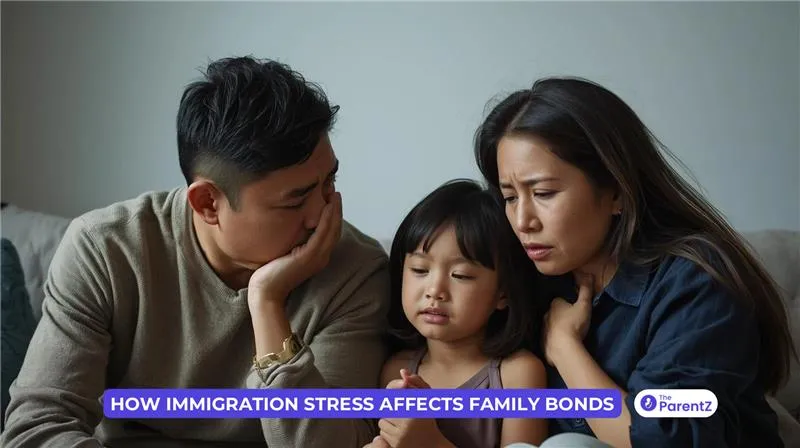
Moving to a new country isn't just about packing boxes and booking flights. It's about uprooting your entire life, and pretending it's all sunshine and opportunity doesn't help anyone, especially your kids.
You're stressed. Your kids are stressed. And somewhere between handling paperwork and figuring out which grocery store sells the spices you need, your family bonds are taking hits you didn't sign up for.
Your stress leaks. When you're anxious about visas, jobs, or whether you'll ever truly belong here, your kids absorb it like sponges. They might not understand immigration policies, but they absolutely understand that Mom's voice sounds different now, or Dad barely smiles anymore.
Kids don't process stress like adults. While you're trying to "stay strong" and "keep it together," they're acting out, getting clingy, or going silent. That's not misbehavior. That's their brain trying to make sense of chaos with zero life experience to draw from.
Your eight-year-old can't articulate "I'm struggling with cultural displacement." Instead, they'll refuse to go to school or suddenly hate the foods they used to love. Your teenager won't say, "I'm grieving my old life." They'll slam doors and spend hours on their phone talking to friends from back home.
Immigration stress isn't just about the new place. It's about what you brought with you, like the expectations, the guilt, and the constant comparison game.
You moved for better opportunities, so now there's this silent pressure that everyone must be happy, must be grateful, must adjust quickly. That pressure itself kills your family bonds faster than any culture shock ever could.
Then there's the identity crisis everyone's facing. You're caught between two worlds, and so are your kids. Except they're dealing with it at school, where they're too "foreign" for some kids and not "foreign enough" for others. Meanwhile, you're trying to figure out if maintaining your culture means your kids won't fit in, or if letting them adapt means losing who you are as a family.
Communication breaks down first. You're all speaking the same language, but nobody's saying what they actually mean. You ask, "How was school?" Your kid says, "Fine." Meanwhile, they spent lunch crying in the bathroom because someone made fun of their accent.
You stop doing things together because everyone's in survival mode. No more casual evening walks or weekend family time. You're too busy proving yourself at work. Kids are too busy trying to keep up academically in a different system. Family dinners become silent phone-scrolling sessions.
Roles shift in weird ways. Sometimes kids adapt faster and become translators, navigators, and cultural guides for their own parents. That's a heavy burden for a child, even if they seem okay with it.
First, stop pretending everything's fine. Your kids know it's not. Acknowledge the hard parts out loud. "This is tough for all of us" is a complete sentence, and it's more valuable than any fake positivity.
Create a space where messy feelings are allowed. Not a scheduled family meeting with an agenda, just regular moments where someone can say "I hate it here" without you immediately jumping to fix it or defend your decision to move. Sometimes they just need to vent. Let them.
Accept that your kids will handle stress in ways that make zero sense to you. Crying over a lost pencil isn't about the pencil. Getting angry about dinner isn't about the food. Stop treating their emotional reactions like logic problems to solve.
Keep some routines from back home, but don't turn your house into a museum of the past. Maybe Friday nights are still pizza night, or you still tell the same bedtime stories. Small anchors matter more than you think.
Find your version of community, but give it time. This doesn't mean forcing your kids into every cultural association event. Maybe it's one family you connect with. Maybe it's an online group where you can complain freely. Something that reminds everyone you're not completely alone in this.
Talk to your kids about the fact that things will get better, but be real about the timeline. "Better" doesn't mean next week. It might mean next year. It might mean different things to different family members.
Tell them their feelings about the move can be complicated. They can miss home AND enjoy things here. They can be angry about leaving AND excited about new opportunities. Both things can be true.
Most importantly, remind them (and yourself) that your family bond isn't tied to a location. It's what you build together, whether that's here, there, or anywhere.
Your job isn't to make everything perfect. It's to keep your family connected through imperfect times. Some days you'll nail it. Some days you'll barely survive it. That's immigration, and that's parenting, and that's okay.
Stop comparing your family's adjustment to others. Stop measuring progress by impossible standards. Start measuring it by whether you still talk to each other, still laugh sometimes, still show up for each other, even when it's hard.
Immigration stress is real, and it will test your family bonds. But bonds don't break from being tested. They break from being ignored. Pay attention. Stay present. Be honest about the struggle.
Your family is still your family, no matter which country you're standing in.
TheParentZ offers expert parenting tips & advice, along with tools for for tracking baby and child growth and development. Know more about Baby Growth and Development Tracker App.It serves as an online community for parents, providing valuable information on baby names, health, nutrition, activities, product reviews, childcare, child development and more
Disclaimer:
The views, thoughts, and opinions expressed in this article/blog are solely those of the author and do not necessarily reflect the views of The ParentZ. Any omissions, errors, or inaccuracies are the responsibility of the author. The ParentZ assumes no liability or responsibility for any content presented. Always consult a qualified professional for specific advice related to parenting, health, or child development.
Conversations (Comments) are opinions of our readers and are subject to our Community Guidelines.


Be the first one to comment on this story.