
Most Moms Report Slower Recovery After a Second Birth
Jul 19, 2026By Dr. Akanksha Priya
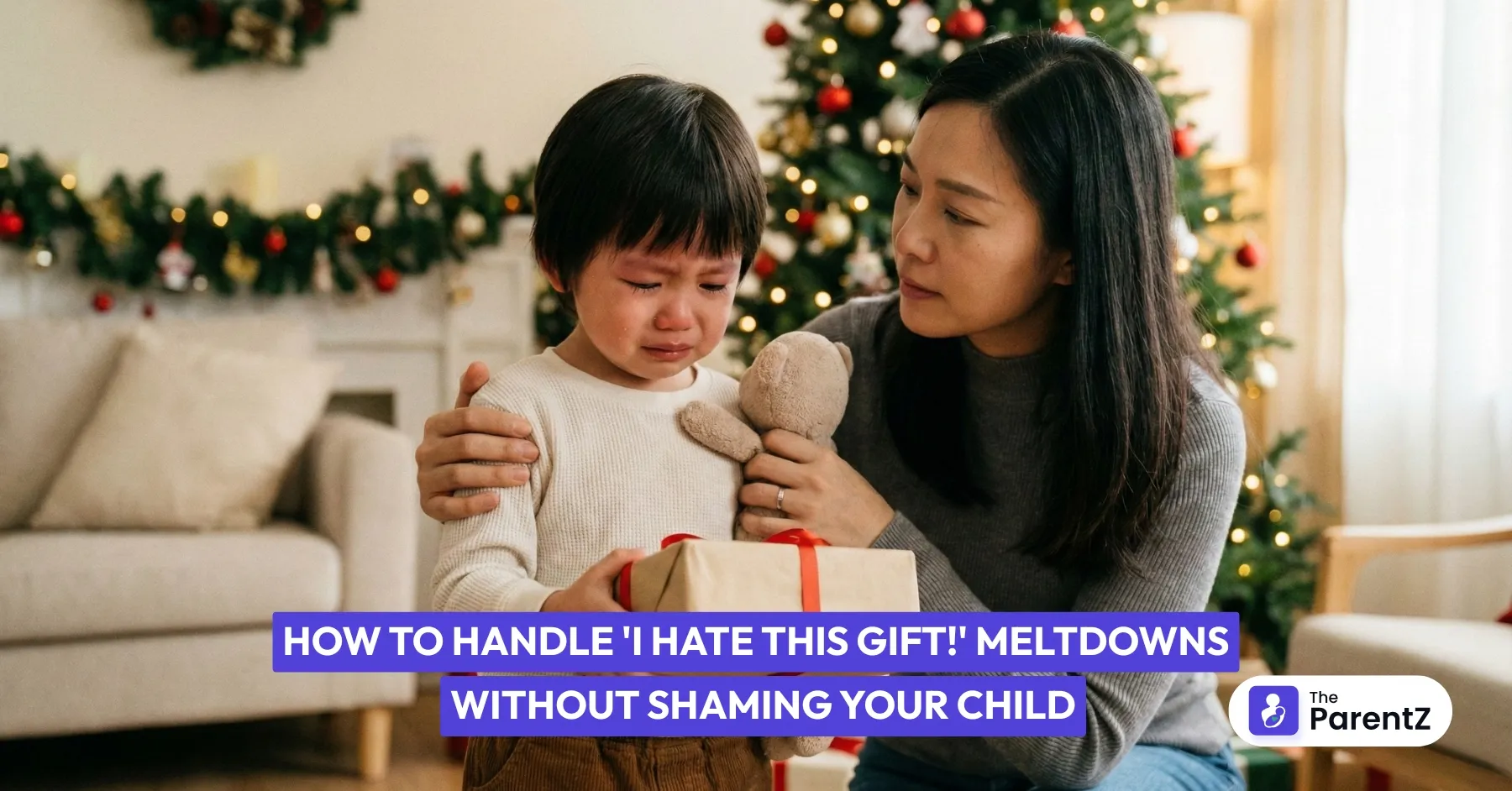
Your child tears open a beautifully wrapped gift, their eyes sparkling with excitement. But then their face falls. "I hate this!" they wail, throwing the gift aside. Cue the complete meltdown in front of everyone, including your family, friends, and that one judgy relative who's mentally updating their parenting report card on you.
If your kid has ever lost it over a gift they didn't like, welcome to the club. It's messy, it's embarrassing, and it happens in more homes than you'd think. But these meltdowns aren't about you being a bad parent or your child being spoiled. They're about something much deeper.
Let's understand what's actually happening in that tiny, overwhelmed brain.
Kids' brains aren't fully developed, especially the part that manages disappointment and regulates emotions. When they expected that specific toy and got clothes instead, their brain basically sounds all the alarm bells. It's not manipulation; it's biology.
Between festive movies, decorations everywhere, and everyone asking, "What do you want for Christmas?", kids build massive expectations. When reality doesn't match the dream, it hits hard. Add to that being tired from late nights, overstimulated from all the celebration, and maybe hungry because they skipped lunch to get to the gift-opening faster, and you've got the perfect recipe for a meltdown.
Sometimes the gift is just the trigger, not the actual problem. Kids carry around big feelings they don't know how to express. That random Tuesday when they felt left out at school? The disappointment when their best friend couldn't come over? All those unprocessed emotions can come pouring out over a pair of socks.
Adults can feel disappointed and grateful simultaneously. Kids? Not so much. They're still learning that it's possible to think "This isn't what I wanted" and "Mom loves me and tried hard" at the same time.
Before we get to solutions, let's talk about what doesn't work:
Your child's meltdown can trigger your own stuff. Maybe you feel embarrassed in front of relatives. Maybe you're remembering your own childhood when you were told to "be grateful." Maybe you worked really hard on this gift and feel rejected.
Your feelings are valid too. But kids aren't responsible for managing your emotions. Take a moment before reacting. Talk it out with a friend later. Journal about it. But don't dump it on your kid.
Sometimes kids do throw tantrums to get better stuff. How do you tell the difference? Look at the pattern. If every gift leads to demands for something "better," and they instantly calm down when promised an upgrade, you might be dealing with learned behavior rather than genuine distress.
The solution is to stick to your boundaries. "I understand you're disappointed. We're not buying a replacement. Let's find what we can appreciate about this gift." Then follow through without budging.
Your child isn't ruined because they had a meltdown over a gift. They're not ungrateful monsters. They're little humans still learning how to handle the complicated feelings that come with life.
Every disappointing gift is actually an opportunity to practice emotional regulation, to build empathy, to learn that relationships matter more than things, and to understand that it's okay to feel multiple emotions at once.
So next time your kid yells, "I hate this gift!" take a breath. You've got this. And more importantly, they'll get through this. Together.
TheParentZ offers expert parenting tips & advice, along with tools for for tracking baby and child growth and development. Know more about Baby Growth and Development Tracker App.It serves as an online community for parents, providing valuable information on baby names, health, nutrition, activities, product reviews, childcare, child development and more
Disclaimer:
The views, thoughts, and opinions expressed in this article/blog are solely those of the author and do not necessarily reflect the views of The ParentZ. Any omissions, errors, or inaccuracies are the responsibility of the author. The ParentZ assumes no liability or responsibility for any content presented. Always consult a qualified professional for specific advice related to parenting, health, or child development.
Conversations (Comments) are opinions of our readers and are subject to our Community Guidelines.


Be the first one to comment on this story.