
Most Moms Report Slower Recovery After a Second Birth
Jul 19, 2026By Dr. Akanksha Priya
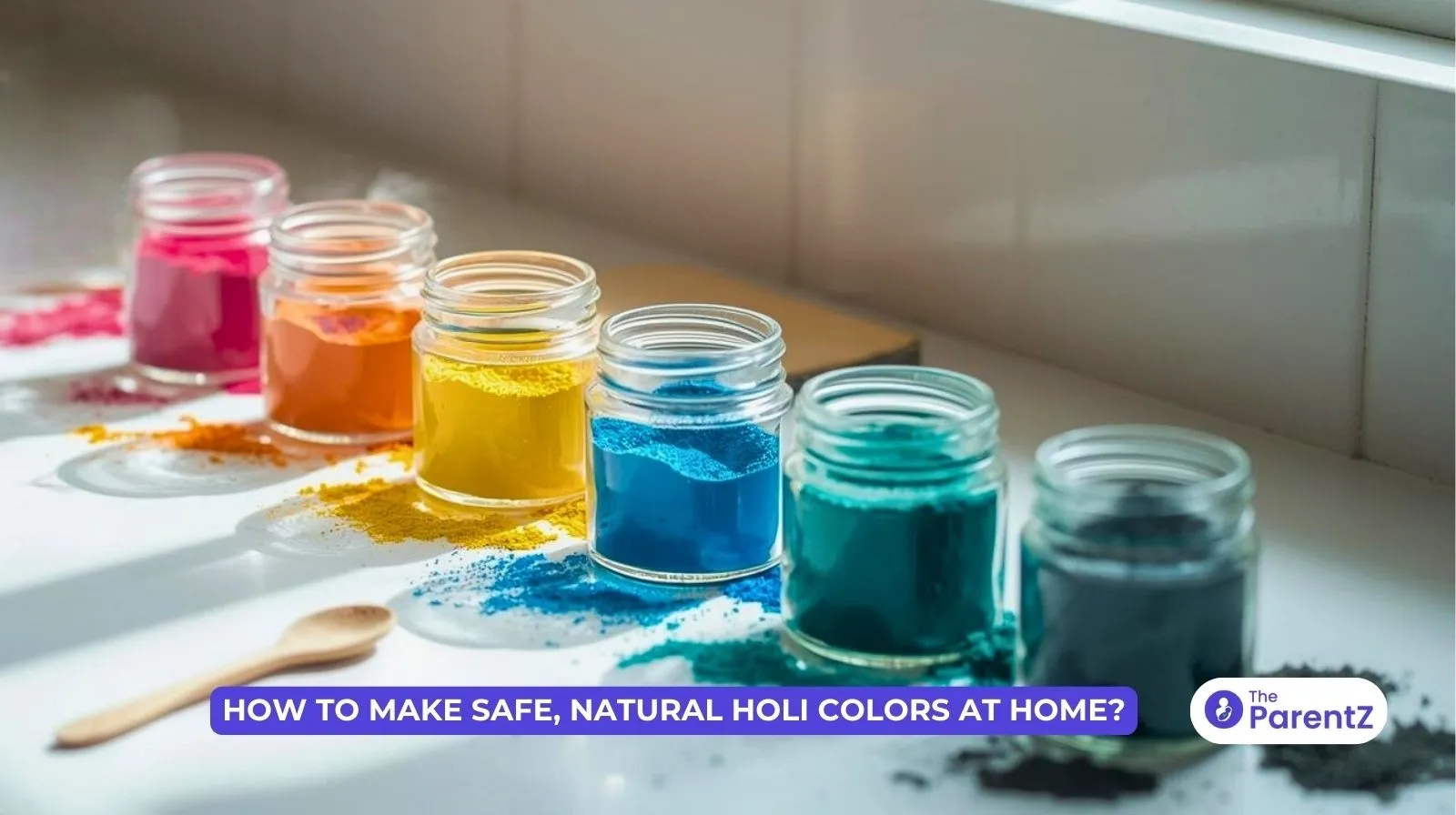
The moment the calendar flips to March, there's a certain energy in every Indian household with kids. Your child starts talking about Holi at the breakfast table. Then at dinner. Then, literally in their sleep. The excitement is almost impossible to contain, and it's one of the most beautiful things to witness.
Holi is not just a festival in India. It's an emotion. It's the shrieking laughter of kids chasing each other with pichkaris. It's the neighbor aunty getting absolutely drenched and pretending to be upset about it. It's gulal flying in every direction, turning the entire street into a living painting. For children, especially, Holi might as well be one of the best days of the entire year.
But it is also a festival where you worry a lot too. Because while your kid is dreaming of bright pinks and electric blues, you're quietly Googling: "Are Holi colors safe for children?" And spoiler alert, some of the cheaper, non-certified synthetic colors sold in the market are not.
So what do you do? You don't cancel the fun. You just upgrade it.
This isn't fear-mongering. It's just about being aware.
Over the years, laboratory testing in India has found that certain low-cost, non-branded Holi colors contained heavy metals like lead or mercury compounds, harsh industrial dyes, and coarse particles that can irritate the skin. Not all market-bought colors are unsafe, as many reputable brands now sell certified herbal options, but the cheaper varieties without proper labeling can sometimes cause problems.
For adults, that’s concerning. For children with delicate skin, it can be a genuine issue. Rashes, eye irritation, mild respiratory discomfort from inhaling powder, and allergic flare-ups are commonly reported around Holi season. Many parents only connect the dots afterward.
The good news? You don’t need to take that risk.
You don't need to hunt down fancy organic stores or spend a fortune on "natural Holi color" packets. The ingredients to make safe, skin-friendly colors are probably sitting in your kitchen right now. And making them takes less effort than you think. We're talking 10-15 minutes, tops.
Boil 2-3 medium beetroots in about 2 liters of water. Let it cool. Done. You have a gorgeous, deep pink-red watercolor. For dry color, grate the beetroot, let it dry completely, and then mix with rice flour or cornstarch.
Beetroot contains natural pigments called betalains. They are non-toxic and generally safe for skin. It may temporarily stain skin and can stain clothes, but it washes off over time.
This one is practically made for Holi. Mix turmeric powder with besan (gram flour) in a 1:4 ratio. That's your dry yellow color. For wet play, dissolve turmeric in water. It might stain clothes a little longer, but it's completely safe and actually good for the skin. Your dadi will approve.
Blend a big bunch of spinach or mint leaves with water and strain it. You get beautiful green water. For dry color, dry the leaves completely in shade, grind them into powder, and mix with cornstarch.
The color may be softer rather than neon bright, but it’s made from simple chlorophyll-rich leaves. It smells fresh. It feels light. And it avoids chemical additives.
Natural blue is slightly harder to make, but it’s absolutely possible.
Butterfly pea flowers (commonly available at herbal stores) give a beautiful blue when boiled in water. The color can deepen depending on how long you steep them.
Some seasonal purple flowers like jacaranda may give a light purplish-blue tint when boiled, though the shade can vary.
It may not look like electric synthetic blue. But that’s kind of the point.
India runs on marigolds, and Holi is no exception. Boil a big batch of marigold petals in water for a warm, golden-orange liquid color. For dry color, dry the petals and grind them with cornstarch. It's the most desi Holi color you can possibly make.
Marigolds contain natural carotenoid pigments. The shade may lean more yellow than bright orange depending on concentration, but it’s beautifully festive and safe for skin.
Apply coconut oil or any moisturizer on your child's skin and hair before they step out. This creates a barrier that makes color removal much easier and protects sensitive skin. This is genuinely the single most helpful thing you can do.
Keep a bowl of plain coconut oil nearby for eye area color removal. Never rub dry color near the eyes.
If you're making dry colors, always use cornstarch or rice flour as the base. They're soft, fine, and completely harmless, even if a little ends up in the mouth (which, let's be honest, it will).
Kids with eczema, sensitive skin, or allergies have often had to sit Holi out or participate with a cloud of anxiety hanging over the whole day. Natural colors change that completely. When you know exactly what went into making the color, you play freely. The kids play freely. And that's what Holi is supposed to feel like.
You're not being an overprotective parent by doing this. You're being a smart one. And the effort genuinely pays off when you see your child absolutely covered in beetroot pink, laughing so hard they can barely stand, with zero trip to the doctor afterward.
This Holi, let the colors be loud, the pichkaris be full, and the memories be the kind your kids talk about for years. You've got this, and your kitchen's got the rest.
Happy Holi!
TheParentZ offers expert parenting tips & advice, along with tools for for tracking baby and child growth and development. Know more about Baby Growth and Development Tracker App.It serves as an online community for parents, providing valuable information on baby names, health, nutrition, activities, product reviews, childcare, child development and more
Disclaimer:
The views, thoughts, and opinions expressed in this article/blog are solely those of the author and do not necessarily reflect the views of The ParentZ. Any omissions, errors, or inaccuracies are the responsibility of the author. The ParentZ assumes no liability or responsibility for any content presented. Always consult a qualified professional for specific advice related to parenting, health, or child development.
Conversations (Comments) are opinions of our readers and are subject to our Community Guidelines.

Be the first one to comment on this story.