
Most Moms Report Slower Recovery After a Second Birth
Jul 19, 2026By Dr. Akanksha Priya
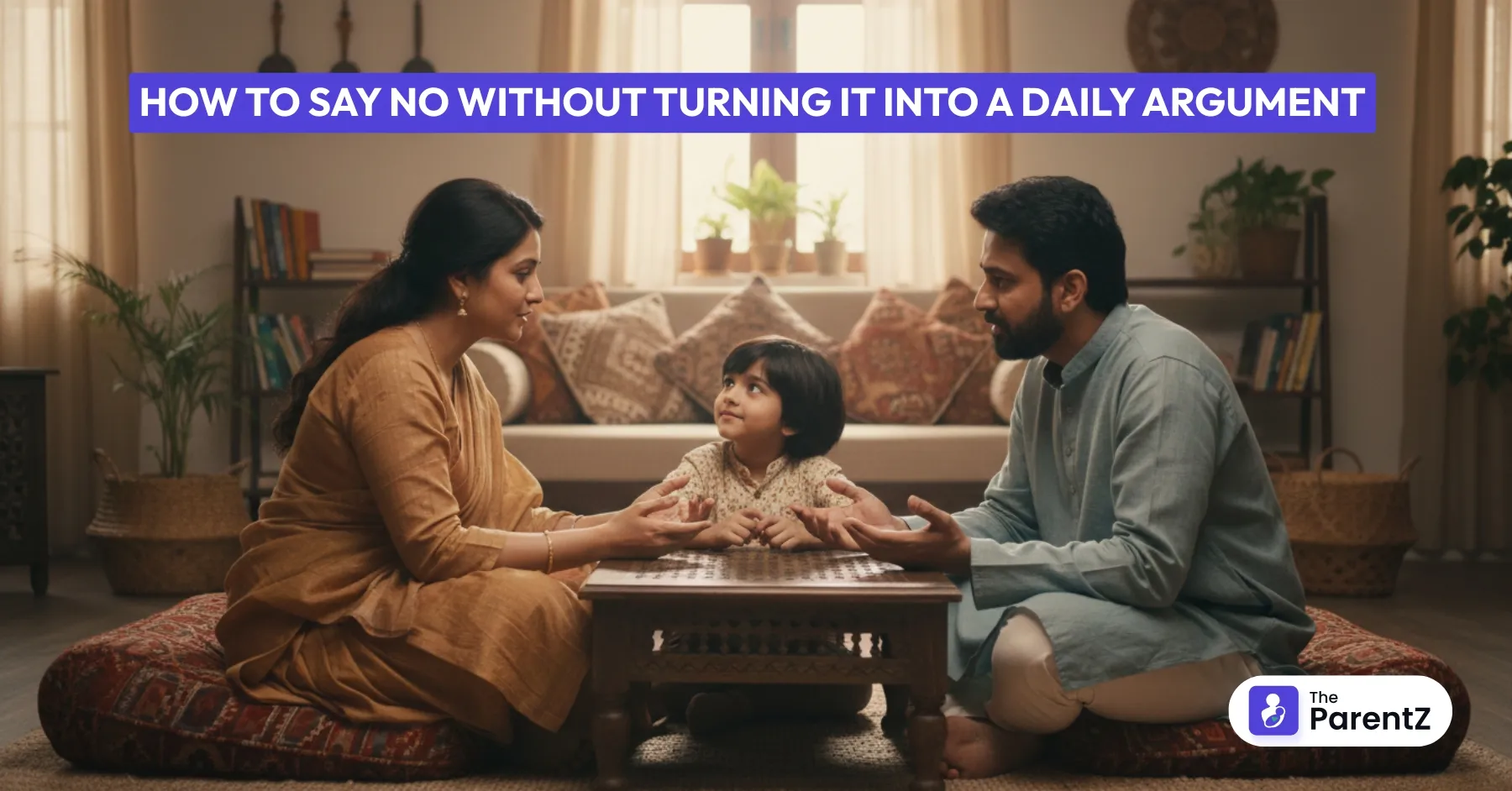
You know that moment when your child asks for something. You say no. And then the battle begins. The whining. The pleading. The "But why not?"And somewhere between the third "please please please" and the tenth explanation, you wonder: Maybe I should just give in this once. At least then I'd get some peace.
If this sounds familiar, breathe. You're not alone, and you're definitely not failing. The daily arguments over "no" are exhausting every parent across the world.
Your child arguing with your "no" is actually normal. Not pleasant, but completely normal.
Their brain is still developing. The part handling impulse control won't be fully ready until their twenties. So when they want something NOW, their brain fights for it like survival depends on it.
Unfortunately, when we say "no" but give in after enough pestering, we're accidentally teaching them that "no" doesn't really mean no. It means "maybe if you push hard enough."Experts call this the "slot machine effect." When we sometimes give in, our kids learn: "If I argue long enough, there's a chance."
How many times this week have you said "no" and meant "maybe if you convince me"?We've all done it. Monday, chips before dinner? No. Wednesday, exhausted? Fine, here's the packet. Saturday? No again.
And we wonder why they keep arguing!
Inconsistent boundaries don't just create more arguments; they stress children out. When kids don't know which "no" is real, they feel anxious. They have to keep testing to find the actual line.
Not everything needs to be a battle. Before saying no, ask: "Does this really matter?"
For instance,
Is it related to their safety? Yes, it matters!
Is it related to respect? Yes, it matters!
Is it about the blue shirt versus the red? Probably not worth fighting.
"No toys today; we bought one last week."
"No screens before homework; schoolwork comes first."
One sentence. When the "but why" loop starts, a calm "I already explained" works. The more you argue back, the more you signal "no" is negotiable.
If you say no, it stays no. Always. Yes, they'll be upset. But that discomfort of watching them sad is temporary. The confusion of changing rules? That lasts.
If the TV time ends at 8, then the TV goes off at 8.
If the sweet shop is a no, then you walk past it.
The first few times, arguments escalate. They're testing. Stay consistent. In weeks, they'll accept your "no" faster because they've learned you mean it.
Your child isn't manipulating you. They're just being a child.
When they push against your "no," they're testing if the boundary is real. They're learning how the world works, and that sometimes we don't get what we want, and that's okay.
Every time you hold your boundary calmly, you're teaching them that rules exist for a reason, they can handle disappointment, and your words have meaning. These lessons serve them for life.
If you are already in daily battle mode, then start by picking one boundary that matters. For instance, pick "No screens during meals" or "Homework before playtime." Then, be crystal clear and make sure to follow through every time.
The first few days might involve major pushback. But after two consistent weeks, watch what happens. Once that boundary is established, add another.
You're not being mean when you say no and mean it; you're being clear and trustworthy.
Your child might not thank you now. That's okay. Sometimes, they need a parent more than a friend who gives them everything. The peace won't come from avoiding "no." It comes from saying it with confidence and sticking to it with love.
Will there still be arguments? Some. But they'll be shorter and less exhausting. Most importantly, your child will feel more secure knowing exactly where the boundaries are, and that's better for you and for them.
TheParentZ offers expert parenting tips & advice, along with tools for for tracking baby and child growth and development. Know more about Baby Growth and Development Tracker App.It serves as an online community for parents, providing valuable information on baby names, health, nutrition, activities, product reviews, childcare, child development and more
Disclaimer:
The views, thoughts, and opinions expressed in this article/blog are solely those of the author and do not necessarily reflect the views of The ParentZ. Any omissions, errors, or inaccuracies are the responsibility of the author. The ParentZ assumes no liability or responsibility for any content presented. Always consult a qualified professional for specific advice related to parenting, health, or child development.
Conversations (Comments) are opinions of our readers and are subject to our Community Guidelines.



Be the first one to comment on this story.