
Most Moms Report Slower Recovery After a Second Birth
Jul 19, 2026By Dr. Akanksha Priya
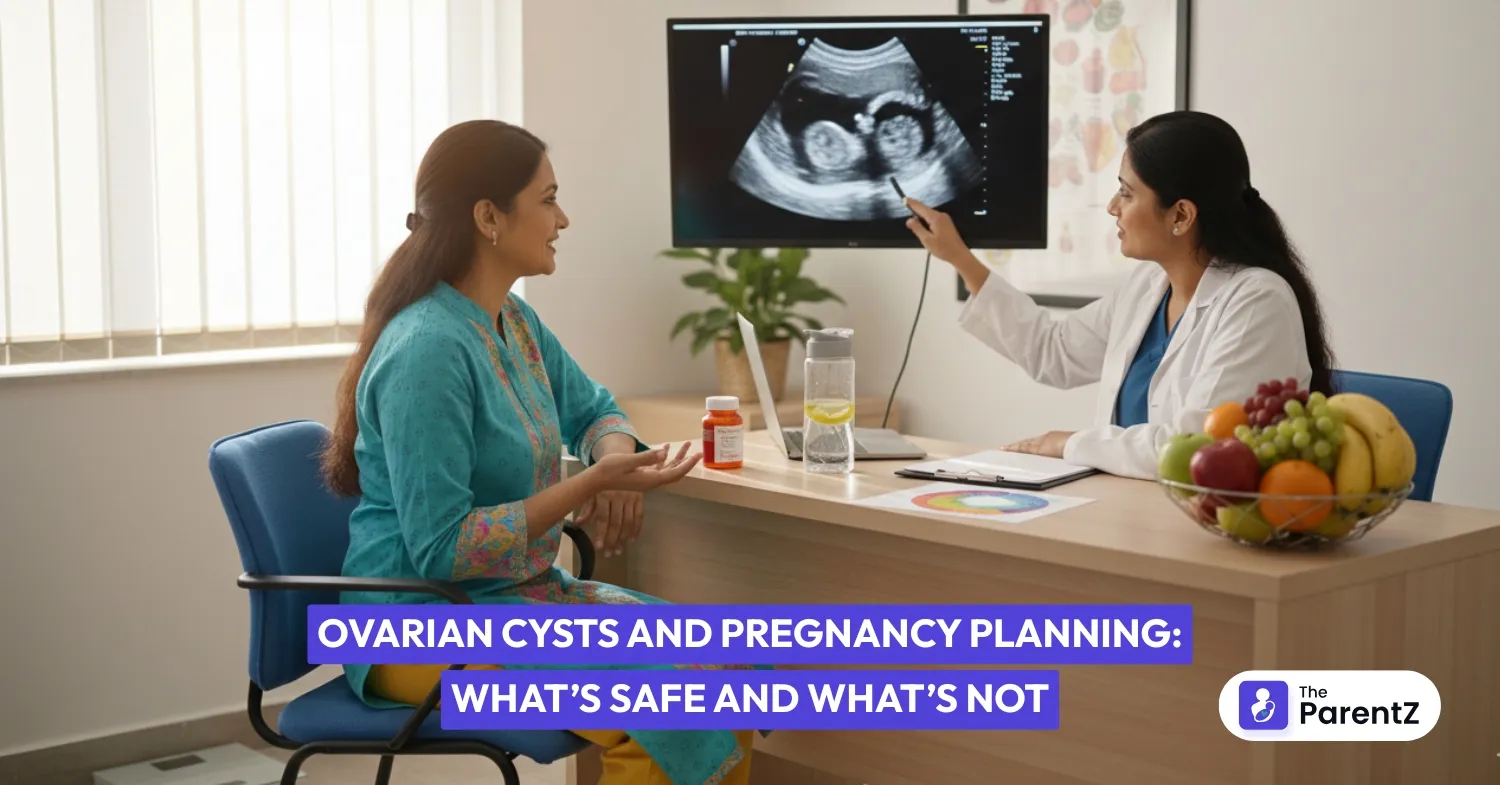
Benign cysts are the most common kind, and most cysts do not impair fertility or the pregnancy, but occasionally the cyst or the condition it presents with will either impair fertility or increase the chances of complications, so it is necessary to discuss the plans with the gynecologist because whether it is safe or not safe depends on the nature, size, and character of the cyst, the symptoms, and the conception plans.
Understanding ovarian cyst pregnancy in India helps expectant mothers make informed decisions about their reproductive health. Parentz has curated this blog to assist you in making informed choices. So, let’s learn more about this.
Ovarian cysts refer to fluid-filled structures or pockets that develop in the ovaries or on the ovaries, and they are found quite frequently in reproductive-age women in India and other countries around the world.
Many of the ovarian cysts are found incidentally through ultrasound examinations that are performed for normal follow-ups, for the evaluation of fertility, or for pregnancy examinations. The incidence of ovarian cysts has been increasing in Indian women, owing to advanced facilities for diagnosis and awareness regarding the importance of reproductive health screenings.
Ovarian cysts generally do not cause problems for most women when they conceive. Safety depends on whether the cyst affects ovulation, ovarian reserve, or if there is a risk of torsion, rupture, or malignancy. Additionally, health assessment should be personalized when planning pregnancy.
In these cases, pregnancy planning may be allowed with monitoring, if your specialist allows:
Small, simple functional cysts, usually less than 5 cm with benign ultrasound features, remain asymptomatic with normal tumor markers and carry no risk. In fact, a stable corpus luteum cyst, which in reality supports early pregnancy due to the production of progesterone, is not only safe but advantageous to have in early pregnancy. Even more so, a small, asymptomatic cyst found incidentally at fertility work‑up or early in pregnancy, which on follow‑up scans appears to be regressing spontaneously, can safely be left alone without any intervention.
Many fertility experts in India now follow a "watch and wait" approach for such low-risk cysts. So that the couple can conceive and progress under careful surveillance.
Situations where you should delay or individualise pregnancy plans
Consider delaying conception or adjusting your plans if any of the following apply:
This section focuses on actionable, evidence-aligned guidance. But Parentz would like to warn you before making any decision. Your own gynaecologist or fertility specialist must make final decisions for your case. So without further ado, let’s know what should be done and what shouldn’t:
What is generally safe to do
Practice a healthy living style to preserve ovarian function
What is not safe or recommended
1. Ignoring persistent pain or sudden severe symptoms:
2. Self-diagnosis without professional help and only trusting home remedies.
3. Planning pregnancy without counselling in high-risk situations
If an ovarian cyst has been diagnosed, it's advisable to consult a gynaecologist or reproductive medicine specialist beforehand, before attempting to conceive. Early, personalized planning can help reduce risks and preserve fertility.
Consider specialist review if you have :
Useful questions to ask your doctor:
Managing the challenges of ovarian cyst pregnancy in India need not be tough. At Parentz, we are sensitive to the fact that each pregnancy case differs, and the situations surrounding ovarian cysts could cause you distress. Do not let doubts prevent you from achieving your goal of becoming a parent. Be part of the Parentz support system and learn how you can make informed decisions about your pregnancy.
Visit our website for the latest updates on our newsletter, download our complimentary pregnancy planning checklist, and join the community of thousands of parents who are on the same journey that you are on. Every parent deserves the best health advice that takes into consideration the culture we belong to. Your journey to becoming a parent begins with accurate information. Let us be your trusted guide along the way.
TheParentZ offers expert parenting tips & advice, along with tools for for tracking baby and child growth and development. Know more about Baby Growth and Development Tracker App.It serves as an online community for parents, providing valuable information on baby names, health, nutrition, activities, product reviews, childcare, child development and more
Dr. Shreya Karan is a dedicated oral and maxillofacial surgeon who brings over ten years of experience to her practice, combining surgical expertise with genuine care for her patients.
Disclaimer:
The views, thoughts, and opinions expressed in this article/blog are solely those of the author and do not necessarily reflect the views of The ParentZ. Any omissions, errors, or inaccuracies are the responsibility of the author. The ParentZ assumes no liability or responsibility for any content presented. Always consult a qualified professional for specific advice related to parenting, health, or child development.
Conversations (Comments) are opinions of our readers and are subject to our Community Guidelines.



Be the first one to comment on this story.