
Most Moms Report Slower Recovery After a Second Birth
Jul 19, 2026By Dr. Akanksha Priya
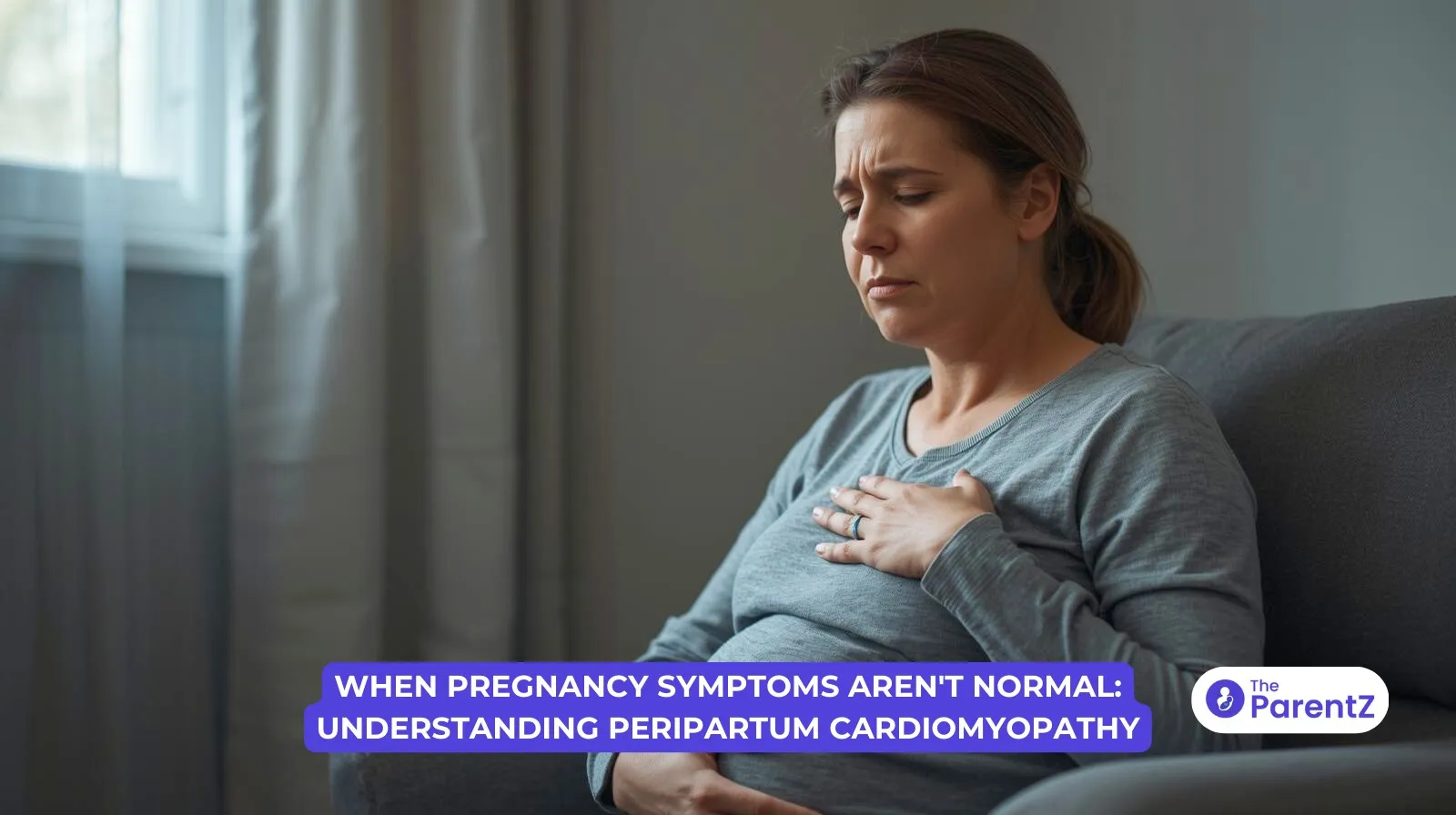
If you caught that recent Grey's Anatomy episode where Dr. Jo Wilson suddenly couldn't breathe after having her twins, you probably felt your own heart skip a beat. What seemed like typical late-pregnancy exhaustion turned out to be peripartum cardiomyopathy, a rare but serious heart condition.
This isn't just made-for-TV drama. Real moms experience this, and it's time we all knew what to watch for.
Think of your heart as a pump. Peripartum cardiomyopathy (PPCM) happens when that pump suddenly weakens around the time you're having your baby. Your heart chambers enlarge and the muscle doesn't squeeze effectively.
According to research, PPCM develops in the last month of pregnancy or within six months after delivery (StatPearls, NCBI). The heart's pumping efficiency often drops below 45%, and in many cases, under 40%, which can lead to heart failure if not caught quickly.
What makes this scary? It happens to women who had zero heart problems before pregnancy.
According to patient accounts reported in medical interviews, Casey Gould from Cincinnati was 36 hours into labor when she told her doctor, "I'm gonna die." She had gained 20 pounds in her last month, not from eating, but from her failing heart retaining fluid. But who would've suspected? Weight gain, swelling, and breathlessness are what we expect when we're about to have a baby.
The symptoms look like normal third-trimester complaints: shortness of breath, ankle swelling, exhaustion, heart palpitations, and weight gain. Most pregnant people feel at least some of these things.
Research points out that while everyone feels breathless in late pregnancy, severe shortness of breath is different. If you can't walk across the room without gasping, that's not normal.
Watch for:
PPCM symptoms can develop and intensify rapidly, making early recognition critical.
PPCM affects about 1 in 1,000 to 1 in 4,000 U.S. pregnancies. It's rare, but not as rare as you'd think. Risk factors include:
Important note: Having a "high-risk pregnancy" for other reasons doesn't automatically increase PPCM risk. Being diabetic or older doesn't necessarily raise your chances. The biggest risk factor? Having had it before.
Casey Gould's heart stopped. Her medical team used an Impella device, a mechanical pump that did her heart's work while it healed. She was in a medically induced coma for three days.
Treatment focuses on supporting your heart with diuretics, beta-blockers, and other pregnancy-safe medications. Studies show that more than half of women recover normal heart function with early treatment.
Trust your gut. If something feels off, it probably is.
Be specific with your healthcare team. Instead of "I feel tired," say "My symptoms seem worse than normal" or "My shortness of breath is rapidly worsening."
Ask about:
There's no harm in speaking up. If everything's fine, great. But if something's wrong, early detection could save your life.
The emotional toll is real. Casey started therapy months after giving birth, as dealing with a heart condition on top of new parenthood creates serious anxiety. Research shows 1 in 3 women experience traumatic birth.
For women who've had PPCM, future pregnancies require serious discussion with a cardiologist. Casey was told another pregnancy could be fatal, though every case differs.
Grey's Anatomy did something valuable by featuring this condition. PPCM happens often enough that every pregnant person should know the warning signs.
You know your body better than anyone. If your swelling seems extreme, if you're gaining weight shockingly fast, if you can barely catch your breath, then don't brush it off as "just pregnancy." Advocate for yourself.
Casey Gould grabbed her doctor's arm and said, "I'm about to die." That moment of self-advocacy, combined with quick medical action, saved her life.
Your instincts matter. Your symptoms matter. You matter.
TheParentZ offers expert parenting tips & advice, along with tools for for tracking baby and child growth and development. Know more about Baby Growth and Development Tracker App.It serves as an online community for parents, providing valuable information on baby names, health, nutrition, activities, product reviews, childcare, child development and more
Disclaimer:
The views, thoughts, and opinions expressed in this article/blog are solely those of the author and do not necessarily reflect the views of The ParentZ. Any omissions, errors, or inaccuracies are the responsibility of the author. The ParentZ assumes no liability or responsibility for any content presented. Always consult a qualified professional for specific advice related to parenting, health, or child development.
Conversations (Comments) are opinions of our readers and are subject to our Community Guidelines.



Be the first one to comment on this story.