
Most Moms Report Slower Recovery After a Second Birth
Jul 19, 2026By Dr. Akanksha Priya
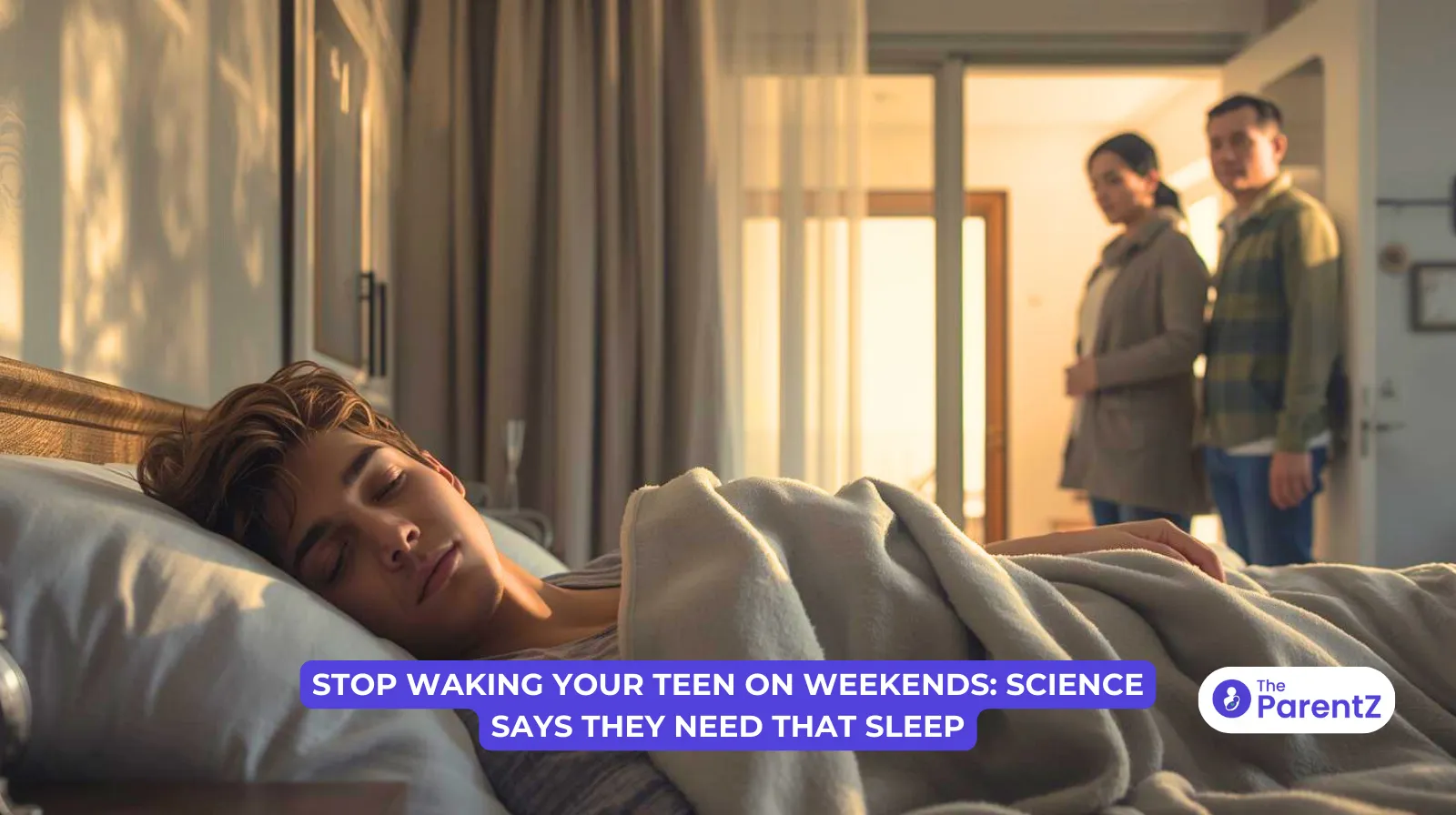
You know that look your teenager gives you when you try to wake them up on Saturday morning? Well, here's something that might surprise you: science is actually on their side.
Recent research from the University of Oregon found that teenagers who caught up on sleep during weekends showed a 41 percent lower risk of depression symptoms compared to those who didn't. That's not about being lazy. That's about their mental health.
Remember when your kid was little and woke up at 6 a.m. ready to conquer the world? Those days are gone, and it's not because they're being difficult. Their brain is literally rewiring itself.
During adolescence, melatonin, the hormone that makes us sleepy, gets released slightly later than it does in children or adults. So when you're getting drowsy at 10 p.m., your teen's brain is still wide awake. They're not choosing to stay up late. Their body clock is genuinely telling them it's not bedtime yet.
Teens naturally want to fall asleep around 11 p.m., but school starts at 7:30 or 8 a.m. They're waking up at 6 a.m., right when their brain thinks they should still be sleeping.
Only 23 percent of high school students get enough sleep on school nights. Most run on about 6.5 to 7.5 hours when they actually need 8 to 10 hours. That's significant sleep debt building up all week.
Picture your teen in first period. They've been yanked out of sleep at their body's lowest point of alertness. No wonder they're not at their best.
Studies using Fitbit devices found there's a "sweet spot" for weekend catch-up sleep. Teenagers who got up to two extra hours of sleep on weekends showed fewer anxiety symptoms. But sleeping way more than that (like four or five extra hours) was actually associated with higher anxiety.
It's about balance. Their body is trying to recover from the weekday deficit without throwing everything off track.
Think about Monday mornings after a weekend of recovery sleep. Your teen might actually come downstairs without looking like a zombie. Compare that to Thursday evening, after four days of early wake-ups, they're irritable, can't focus, and snapping at siblings. That's sleep debt accumulating.
Notice their mood on a Saturday afternoon after they've slept in. They're more pleasant, more willing to help around the house, maybe even suggesting family activities. That's what adequate sleep does for their mental state.
This isn't just about feeling tired. Teens who consistently sleep less than six hours per night are three times more likely to consider suicide compared to those getting eight hours.
Depression, anxiety, trouble concentrating, and risky behaviors all increase when teens don't get enough sleep. Research shows that moderate weekend catch-up sleep acts as a protective factor against these mental health challenges.
Don't let the weekend sleep schedule drift too far. If they're sleeping until 2 p.m. on Sundays, Monday morning will be brutal. Two extra hours of sleep are beneficial. Five hours create a new problem.
Keep Sunday nights consistent. Encourage an earlier bedtime on Sunday to help them transition back to the school week.
Recognize the difference between recovery sleep and avoidance. If your teen is sleeping 12 hours every single day, including weekdays, that might signal depression or another issue worth discussing with their doctor.
Talk to your teen about their schedule. Many teenagers are juggling school, sports, jobs, and social obligations that would exhaust anyone. Help them identify where they might cut back.
Create a bedroom environment that supports sleep. Dark curtains, comfortable temperature, and phones charging outside the bedroom. The phone thing will be a battle, but screens before bed genuinely interfere with melatonin production.
Encourage wind-down routines. Reading, taking a shower, listening to calm music, and other activities that signal their brain that sleep is coming.
Be understanding on weekend mornings. That sleep-in isn't laziness. It's their body doing essential repair work.
Your teenager's weekend sleep-in isn't a character flaw. It's a biological necessity in the face of a schedule that doesn't match their natural sleep rhythms. Research consistently shows that this catch-up sleep protects their mental health, reduces anxiety and depression symptoms, and helps them function better.
Does this mean letting them sleep until 3 p.m. every Saturday with no limits? No. But it does mean cutting them some slack when they want to sleep in on weekends, understanding there's real science behind their sleep needs, and working together to find solutions that honor both family life and their biological requirements.
The teenage years are hard enough. Let's not make them harder by fighting against their biology. Those weekend sleep-ins might just be one of the best things you can allow for your teen's well-being.
TheParentZ offers expert parenting tips & advice, along with tools for for tracking baby and child growth and development. Know more about Baby Growth and Development Tracker App.It serves as an online community for parents, providing valuable information on baby names, health, nutrition, activities, product reviews, childcare, child development and more
Disclaimer:
The views, thoughts, and opinions expressed in this article/blog are solely those of the author and do not necessarily reflect the views of The ParentZ. Any omissions, errors, or inaccuracies are the responsibility of the author. The ParentZ assumes no liability or responsibility for any content presented. Always consult a qualified professional for specific advice related to parenting, health, or child development.
Conversations (Comments) are opinions of our readers and are subject to our Community Guidelines.



Be the first one to comment on this story.