
Most Moms Report Slower Recovery After a Second Birth
Jul 19, 2026By Dr. Akanksha Priya
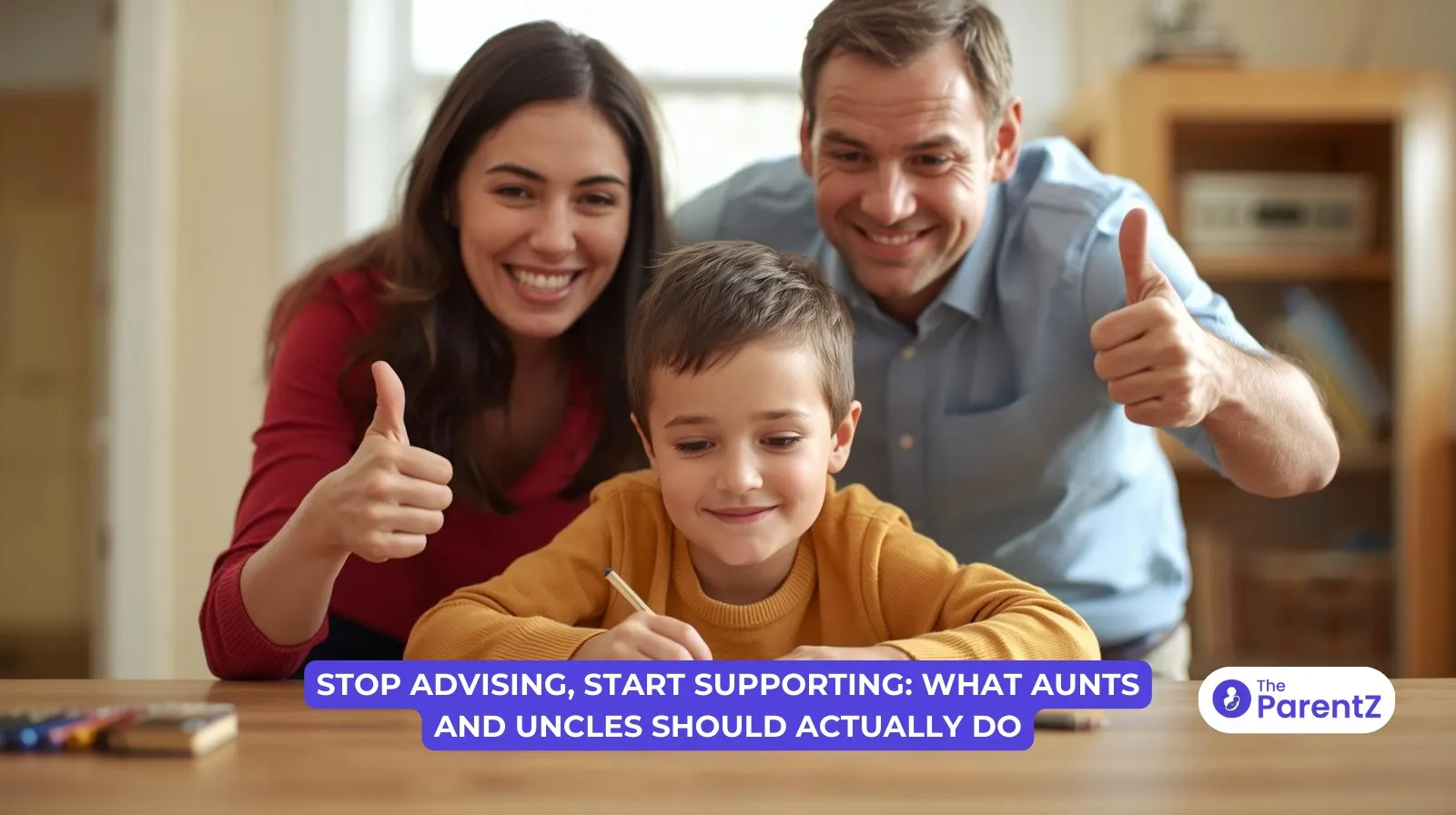
There's this moment that happens in almost every Indian household. Maasi walks in and immediately starts advising parents on feeding their toddler, or Chacha decides the six-year-old needs stricter homework rules. The parents smile awkwardly, trying to be respectful, while inside they're screaming.
Being an aunt or uncle in India comes with a beautiful connection and responsibility. But somewhere between "I'm just helping" and "this is how we used to do it," boundaries get blurred. Parents feel undermined, kids get confused, and family gatherings become tense.
According to research, many parents today feel the loss of traditional support systems. Nuclear families are now the norm, and parents face pressures their own parents never did, from social media to mental health conversations to completely different schooling systems.
So how can aunts and uncles be the support parents desperately need without becoming another source of stress?
You're not the parent. When parents decide on screen time limits, bedtime routines, or food choices, that's their call. Not yours.
Think of yourself as the backup singer, not the lead vocalist. Parents make hundreds of decisions daily while exhausted and doubting themselves. They need someone who shows up, sees them trying, and makes life easier.
Research shows that family support systems work best when they strengthen parents' capacity, and not replace it.
Sometimes you'll see something concerning. Approach carefully in a private moment with "I" statements: "I've noticed Aarav seems anxious lately. Is everything okay? How can I help?"
The goal is to open a door for honest conversation. Trust the parents unless there's clear evidence of harm.
Want to know what truly helps? Just being there. Consistently. Without drama. Consistent support networks make a significant difference in parental well-being.
Show up for the boring stuff, like school functions, birthday parties, or the random Tuesday when everyone has the flu, and parents need someone to pick up medicine.
Those moments matter more than grand gestures.
Supporting parents isn't about proving your parenting philosophy is superior. It's about creating an environment where children feel loved by multiple generations, and parents feel supported instead of judged.
Ask yourself: Are you helping in ways that actually matter to these specific parents and kids? Or are you helping in ways that make you feel needed but create more work for everyone else?
Be the aunt or uncle who makes parents breathe easier when you walk through the door. Be the one kids are excited to see. Be the family member who shows up, respects boundaries, and genuinely helps.
Start small. Pick one thing to try this week, like offering specific help, biting your tongue when you disagree, or texting to ask how parents are doing without adding advice.
Small, consistent efforts create big changes. That's exactly the kind of support families need right now.
TheParentZ offers expert parenting tips & advice, along with tools for for tracking baby and child growth and development. Know more about Baby Growth and Development Tracker App.It serves as an online community for parents, providing valuable information on baby names, health, nutrition, activities, product reviews, childcare, child development and more
Disclaimer:
The views, thoughts, and opinions expressed in this article/blog are solely those of the author and do not necessarily reflect the views of The ParentZ. Any omissions, errors, or inaccuracies are the responsibility of the author. The ParentZ assumes no liability or responsibility for any content presented. Always consult a qualified professional for specific advice related to parenting, health, or child development.
Conversations (Comments) are opinions of our readers and are subject to our Community Guidelines.


Be the first one to comment on this story.