
Most Moms Report Slower Recovery After a Second Birth
Jul 19, 2026By Dr. Akanksha Priya
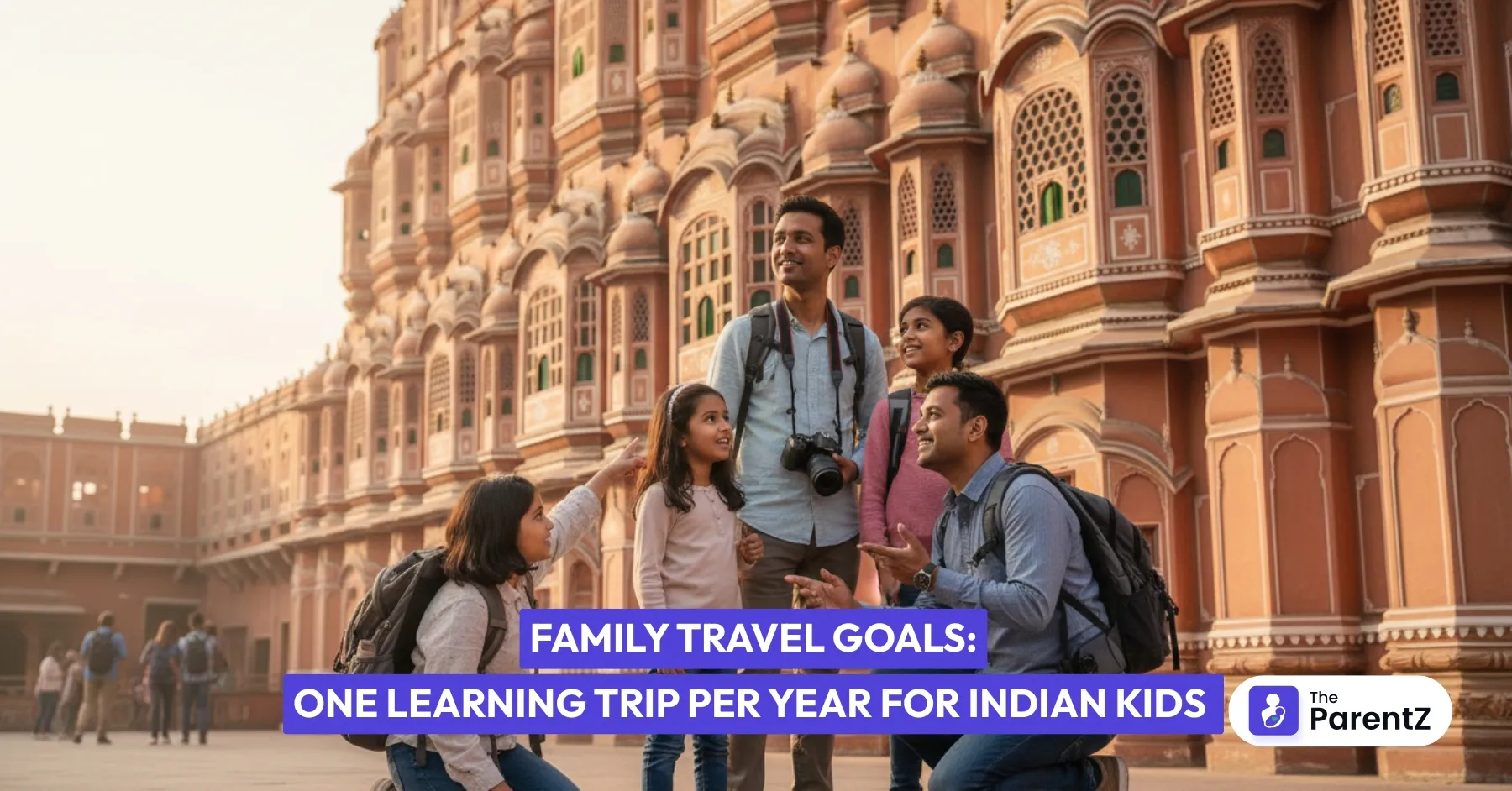
Remember when you learned to ride a bike? Not from a YouTube video or a textbook chapter on physics and balance. You learned by actually doing it, by wobbling, falling, and getting back up. That's exactly how kids learn best when they travel too.
We're raising kids in a time when they know what the Eiffel Tower looks like but might not recognize a banyan tree. They can name every Marvel character but can't tell you how wheat becomes roti. And that's not entirely on them. It's on us to show them the real world, not just the filtered version on screens.
Learning doesn't mean dragging your 8-year-old through museum after museum while they ask "Are we done yet?" every five minutes. Real learning happens when your child figures out how to order food in a new place, watches chai being made from scratch, or realizes that not everyone lives like they do.
When kids pet goats at a farm and see milk being collected, they're learning about food sources. When they watch a potter shape clay on a wheel, they're understanding craftsmanship. When they climb up old fort steps (and complain about it), they're experiencing history in a way no textbook can match.
Kids learn best when they're having fun. So if you're planning every minute with "educational value," you're probably going to end up with cranky kids and a stressful vacation. Balance is everything.
Forget the usual "Golden Triangle" suggestions everyone throws around. Let's talk about places that are genuinely manageable with kids and where they'll actually learn something without realizing they're learning.
Hampi, Karnataka, looks like a movie set with massive boulders, ancient temples, and a stone chariot. Once one of the richest cities in the world, it's now a massive open-air museum spread over 4,000 hectares with over 1,600 monuments. The Vittala Temple is famous for its musical pillars (now protected and no longer played freely). Try keeping kids away from that. Stay in Hospet nearby, hire a local auto-rickshaw, and pick 4-5 main sites. Don't try to see everything. Kids will remember the boulder-hopping more than the 47th temple anyway.
Munnar, Kerala, is where kids learn that tea doesn't magically appear in packets. The Tata Tea Museum shows the entire process, and then you can take them to a plantation where workers are actually picking leaves during active harvesting seasons. Eravikulam National Park nearby is home to the endangered Nilgiri Tahr. The park is well-maintained, not too strenuous, and the wildlife spotting keeps them engaged. Book a stay near the plantations, as many homestays offer plantation walks included. October to March is ideal weather-wise.
Konark, Odisha, has the Sun Temple built to look like the Sun God's chariot, complete with 24 massive stone wheels taller than most adults. The carvings show daily life from 700 years ago. Since it's by the Bay of Bengal, combine it with beach time at Chandrabhaga Beach (way less crowded than Puri). Go early in the morning to avoid crowds and heat. Hire a local guide for 30-45 minutes max, as any longer and the kids zone out.
Ranthambore, Rajasthan, offers wildlife safaris designed for families. You might not see a tiger, but kids will see deer, peacocks, crocodiles, various birds, and the jungle itself. The historic Ranthambore Fort inside the park gives kids that fort-exploration experience without endless climbing. Book safari permits well in advance. Evening safaris are easier on kids' schedules than early morning ones.
Khajuraho, Madhya Pradesh, is known for certain sculptures, but 90% of the carvings show incredible artistry, including daily life, gods, goddesses, musicians, and animals from the 10th century. For families with kids aged 10+, the temples are spread across well-maintained complexes, not too crowded. The light and sound show in the evening narrates the history engagingly. Visit the Western Group first; it's the most impressive and manageable.
Coorg, Karnataka, is where kids see coffee-making from start to finish. Visit a plantation, watch the process, and stay at a plantation homestay where breakfast includes coffee made from beans roasted on-site. Abbey Falls is a manageable trek, and the Dubare Elephant Camp offers supervised elephant interaction programs, subject to current welfare guidelines. Stay at a plantation homestay, not a resort, as the experience feels authentic.
McLeod Ganj, Himachal Pradesh, is home to the Dalai Lama and the Tibetan government-in-exile. Kids get exposed to Tibetan culture, food, and Buddhism through museums designed for visitors. Simple treks to Bhagsu Waterfall or Triund (for older kids) give that mountain experience. The town has a calm, reflective vibe. Book accommodations in McLeod Ganj itself. Explain the political and cultural context to older kids beforehand; it makes the visit more meaningful.
The Andaman Islands teach marine ecosystems better than any textbook. Snorkeling at Elephant Beach (Havelock Island) is safe for kids with basic swimming skills; shallow water near shore, excellent visibility, colorful fish, coral, and maybe sea turtles. The Cellular Jail in Port Blair teaches freedom struggle history in a way that sticks. Stick to Havelock and Port Blair for a manageable trip. Book water activities in advance, especially during December-February peak season.
One learning trip a year doesn't need to be elaborate or expensive or Instagram-perfect. It needs to be real. Real experiences, real exposure, real engagement with something beyond the usual routine.
Your kid might not remember the exact year the Sun Temple was built. But they'll remember touching those ancient stone wheels. They'll remember the first time they saw a peacock in the wild instead of a zoo. They'll remember the taste of fresh coffee in Coorg or the sound of monastery bells in McLeod Ganj.
And somewhere along the way, without even realizing it, they'll learn that the world is fascinating, diverse, and worth exploring. That's education no classroom can provide.
So pick a place. Any place from this list or somewhere else entirely. Book it before you overthink it. And watch what happens when your kids experience something real, something different, something that makes them ask "why?" and "how?" and "what if?"
That's the whole point. Not the photos. Not the check-boxes. Just genuine curiosity sparked by genuine experiences.
TheParentZ offers expert parenting tips & advice, along with tools for for tracking baby and child growth and development. Know more about Baby Growth and Development Tracker App.It serves as an online community for parents, providing valuable information on baby names, health, nutrition, activities, product reviews, childcare, child development and more
Disclaimer:
The views, thoughts, and opinions expressed in this article/blog are solely those of the author and do not necessarily reflect the views of The ParentZ. Any omissions, errors, or inaccuracies are the responsibility of the author. The ParentZ assumes no liability or responsibility for any content presented. Always consult a qualified professional for specific advice related to parenting, health, or child development.
Conversations (Comments) are opinions of our readers and are subject to our Community Guidelines.



Be the first one to comment on this story.