
Most Moms Report Slower Recovery After a Second Birth
Jul 19, 2026By Dr. Akanksha Priya
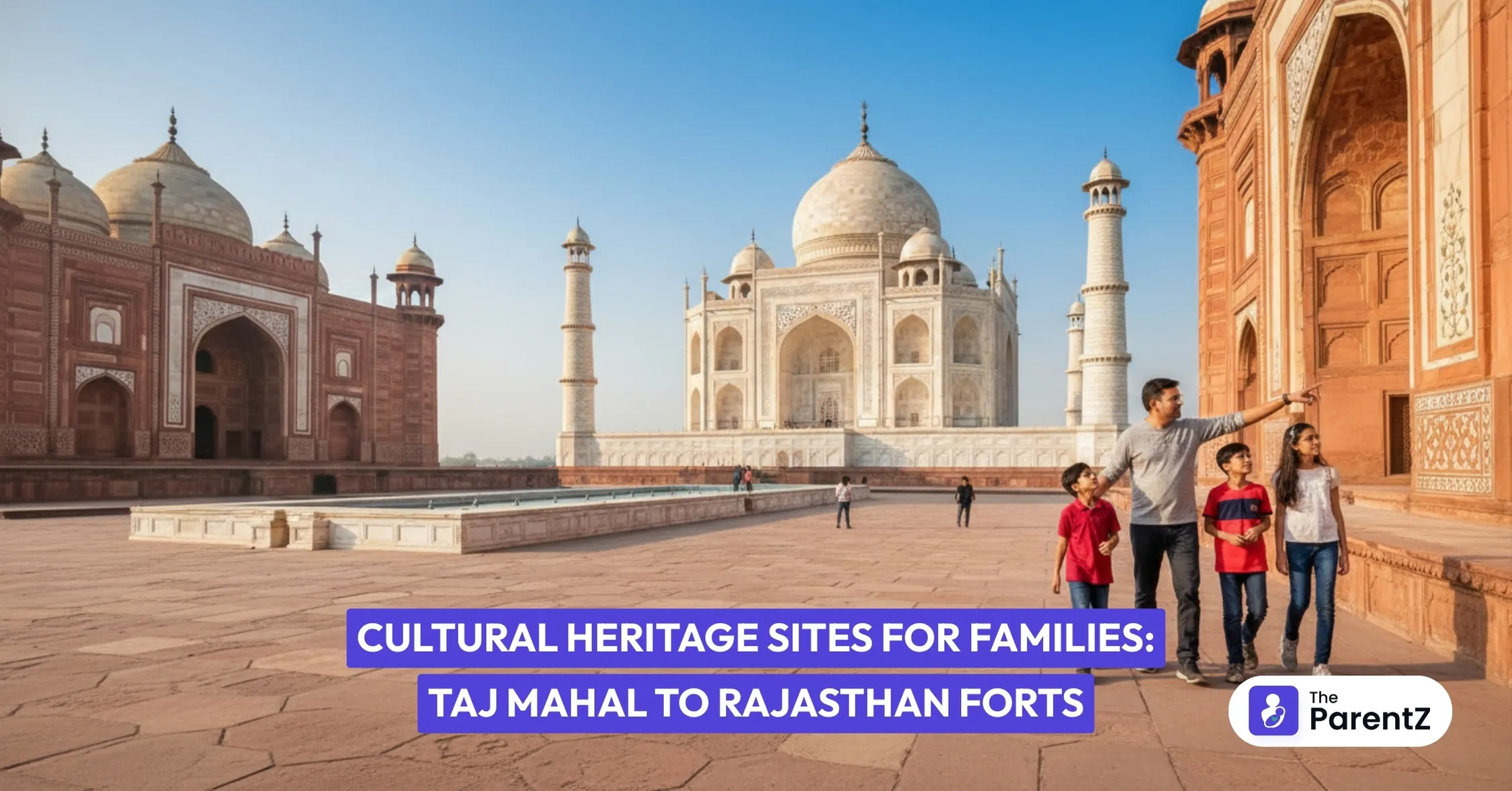
Taking your family to our cultural heritage sites isn't just about ticking off famous monuments. It's about watching your child's eyes widen when they touch a 400-year-old wall, or hearing them retell the story at dinner months later.
But planning a heritage trip with kids can feel overwhelming. Will they complain after the first fort? Can you actually handle the Taj Mahal crowds with a cranky toddler? What if your 8-year-old finds it all "boring"?
Take a breath. It's absolutely doable, and honestly, some of the best family memories happen at these ancient sites. Here's everything you need to know.
When your kids stand in front of the Taj Mahal or climb through a Rajasthan fort, our history stops being words in a textbook and becomes real for them. They start asking questions you didn't expect, like "How did they build this without machines?" "Why did the king put his son in prison?" "Can we live in a palace?"
These trips teach patience, cultural respect, and perspective. Your child learns that people centuries ago were just as creative, loving, and ambitious as we are today. They see that India's story is their story too.
And you're all learning together. Unlike a beach vacation where everyone does their own thing, heritage sites get you talking, wondering, and exploring as a team. Your teenager might actually put down their phone to photograph the mirror work at Amber Fort. Your 6-year-old might remember the story of Rani Padmini for years.
Indian citizens pay a nominal entry fee, and children under 15 enter for free. Prices may vary slightly depending on inclusions. The monument opens at sunrise, closes at sunset, and stays shut on Fridays (except for mosque prayers).
Timing is everything. Sunrise visits mean waking everyone at 5 AM, but you'll beat both heat and crowds. Late afternoon (after 4 PM) is your second-best bet. Book tickets online through the Archaeological Survey of India website to skip queues.
Hire a guide who can tell the story in ways that engage children with the romance, the 22 years of construction, and the 20,000 artisans. Kids connect with love stories and family drama, not architectural jargon.
Skip the Princess Diana bench photo queue. Head to the raised platform in the garden for better shots and fewer crowds. Always carry tissue paper and hand sanitizer, as bathroom facilities are limited and crowded during peak hours.
Don't skip Agra Fort. It's where Shah Jahan was imprisoned by his son Aurangzeb, spending his final years gazing at the Taj. Unlike the peaceful Taj, this fort feels like adventure territory with ramparts, secret passages, and palace drama that keep kids engaged.
Amer Fort, Jaipur, blends Rajput and Mughal architecture beautifully. The Sheesh Mahal (Mirror Palace) is where even teenagers stop scrolling. The mirror ceiling sparkles like stars when lit with just one flame. Evening light and sound shows bring Rajput history alive. Elephant rides are regulated and may be limited; jeeps are a more ethical and reliable alternative.
Mehrangarh Fort, Jodhpur, towers over the blue city. The game-changer here? Zip-lining experiences for kids that transform history into adrenaline (only available for children who meet age, height, and safety requirements). Book online in advance. The museum showcases royal howdahs, weapons, and costumes. Entry fees are affordable for Indian visitors and may vary.
Jaisalmer Fort is unique, one of the world's few "living forts" where families still reside. Kids see daily life happening in centuries-old havelis. The golden sandstone glows magnificently in late afternoon light. Combine fort exploration with a short desert camel safari for a memorable day.
Chittorgarh Fort is India's largest fort with dramatic stories of Rajput valor and Rani Padmini. Best for kids 10+ who can handle serious history. The Vijaya Stambh offers spectacular views after the stair climb. This fort requires extensive walking, so pack water, snacks, and wear comfortable shoes.
Hampi, Karnataka, feels like another planet, with massive boulders and Vijayanagara Empire ruins. Kids can climb boulders, explore temple corridors, and see the famous stone chariot, once designed with rotating wheels. The musical pillars at Vijaya Vittala Temple fascinate everyone. Take coracle rides on the Tungabhadra River. Hampi is more budget-friendly than Rajasthan, and overnight trains from Bangalore make the journey an adventure itself.
Mahabalipuram, Tamil Nadu, combines 7th-century rock-cut temples with beach time. Kids can touch and explore here—the Shore Temple sits right on the beach. Arjuna's Penance is a massive bas-relief where children play "spot the elephant" among hundreds of carvings. Krishna's Butterball is a giant boulder defying gravity that kids love climbing around for photos.
Rani ki Vav, Gujarat, is a seven-level stepwell with hundreds of intricate sculptures. Kids grasp the engineering brilliance of building downward through rock. Best for children 6+ with good stamina for the descent and climb. It's cooler underground during hot months.
The biggest gift these trips give isn't memorizing dates. When children stand inside the Taj Mahal, understanding that it took 22 years to build, they grasp long-term commitment. When they see fort defenses, they understand ancestral ingenuity. When they learn about Rani Padmini, they understand different times and values.
This is pride without arrogance. Your kids learn they're inheritors of a civilization that built the world's most beautiful monument for love, created architectural marvels, and produced some of the world’s oldest prehistoric art. They understand they have a responsibility to preserve this legacy.
So, pick one site that genuinely interests you. See how it goes. Build from there at your family's pace. The goal isn't checking off lists; it's creating those spontaneous moments where history comes alive, where they connect past to present, where they feel pride in our heritage.
Those moments make all the heat, crowds, and chaos completely worth it.

TheParentZ offers expert parenting tips & advice, along with tools for for tracking baby and child growth and development. Know more about Baby Growth and Development Tracker App.It serves as an online community for parents, providing valuable information on baby names, health, nutrition, activities, product reviews, childcare, child development and more
Disclaimer:
The views, thoughts, and opinions expressed in this article/blog are solely those of the author and do not necessarily reflect the views of The ParentZ. Any omissions, errors, or inaccuracies are the responsibility of the author. The ParentZ assumes no liability or responsibility for any content presented. Always consult a qualified professional for specific advice related to parenting, health, or child development.
Conversations (Comments) are opinions of our readers and are subject to our Community Guidelines.



Be the first one to comment on this story.