
Most Moms Report Slower Recovery After a Second Birth
Jul 19, 2026By Dr. Akanksha Priya
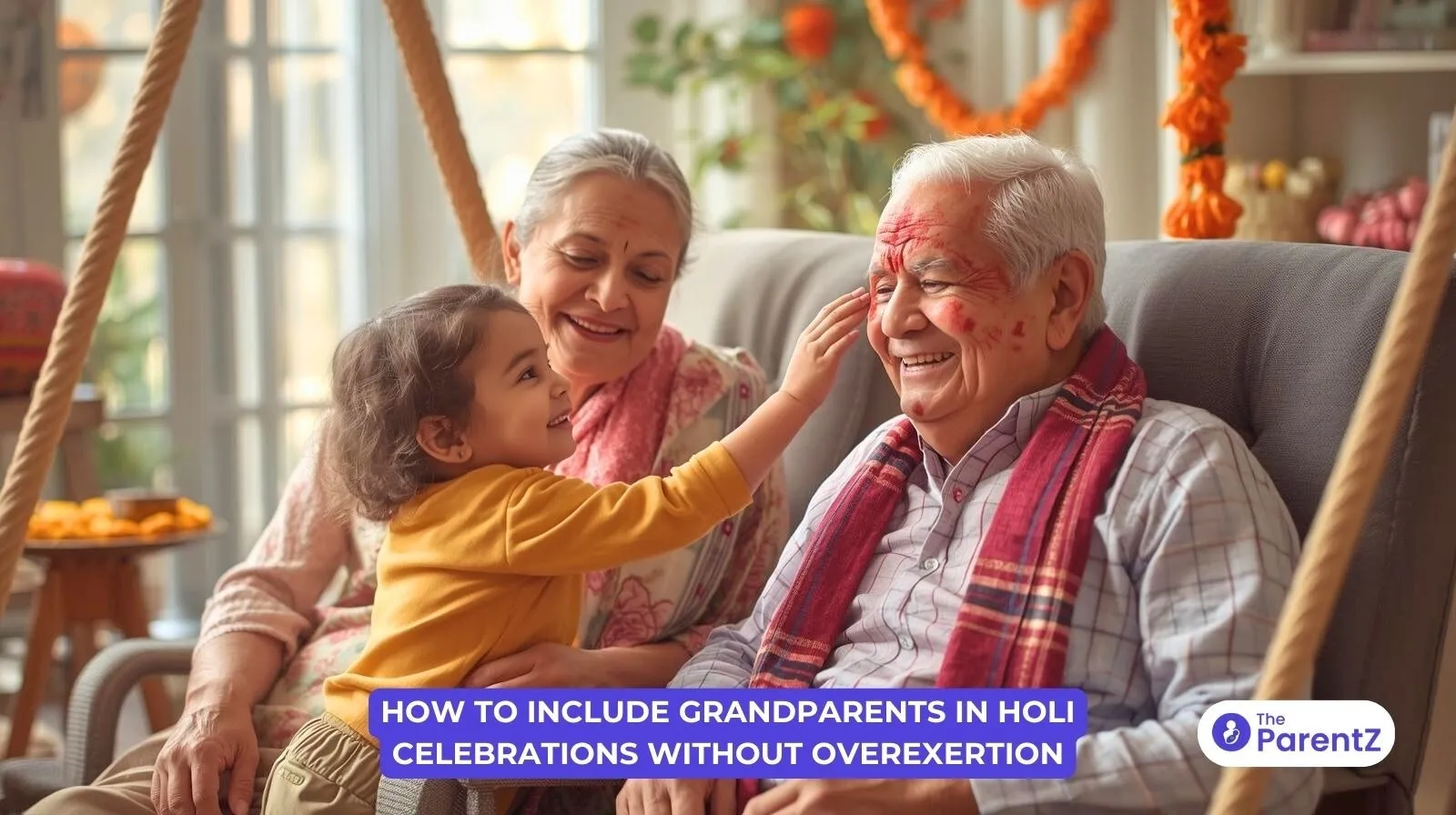
There's something adorable about watching your child smear colour on their dadi's cheeks while she laughs and pretends to be upset about it. Or seeing Nana sit in the verandah, clapping along to old Holi songs while the whole family plays around him. These are the moments that stick. These are the photographs that live on phones for years.
Grandparents and Holi go together in a way that's hard to explain unless you've grown up in an Indian household. For them, this festival carries decades of memories, like the Holi they played as children, the one they celebrated when they got married, the one where they first put colour on your face when you were a baby. Holi is emotional for them in a way it simply isn't yet for your seven-year-old, who just wants to win the water balloon fight.
But as much as dada-dadi and nana-nani love being part of the celebration, their bodies are not always on board. Crowded gatherings are exhausting. Standing for long periods hurts their knees. Loud music strains their hearing. The cold water from pichkaris, even on a warm Holi morning, can hit ageing joints hard. And many of them will not say a word about any of this, because they don't want to be a burden, and they don't want to miss out.
This is where families and kids, with a little gentle teaching, can make a real difference.
The first step is the most important one, and it has nothing to do with planning. It's about having a simple conversation with your elderly parent or in-law before Holi, not during.
Sit with them over chai, a few days before, and just ask: "This Holi, what would you enjoy? What should we keep in mind for you?"
That's it. You don't need to frame it as a health discussion. You don't need to make them feel like they're being handled. Just ask what they'd enjoy. Most grandparents, when given space to answer honestly, will tell you exactly what they want and what feels like too much. Listen to that. It saves everyone a stressful day.
One of the most common mistakes families make is setting up a chair "somewhere to the side" for the grandparent while everyone else plays. It comes from a good place, but it can feel isolating, like they've been placed on a bench while the game carries on without them.
Instead, think about where the energy of your celebration naturally gathers. Is it the balcony overlooking the courtyard? The main gate of the building? The verandah? Set up a proper, comfortable space there. A cushioned chair, a little shade, water, and nimbu paani within reach, and a clear view of everything happening.
When grandparents are positioned where things are happening around them, and not far from them, they feel included without needing to run around to prove it.
Kids take cues from what they see. If they see Dada just sitting quietly while the adults manage everything, they'll treat him like a spectator. But if Dada has a job, something real, kids engage with him differently.
Some ideas that actually work:
Children are actually enthusiastic, which is their best quality and also the one most likely to knock a grandparent off balance. A running child, a surprise splash of water, a sudden loud noise next to a hard-of-hearing elder, these things happen fast.
Before Holi, have a quiet word with your child: "Dadi's knees hurt a little, so no running near her. But you can put colour on her cheeks. She loves that. Ask her first though, okay?"
That's enough. You've given your child a specific, doable instruction. You've told them why. And you've handed them something to do with the grandparent rather than just a list of don'ts.
Most kids, when they understand what's going on, are actually incredibly gentle with grandparents they love. They just need the heads-up.
It's rarely one big thing that exhausts an elderly person during a festival. It's the accumulation of small things, like too many people talking at once, skipping a meal because the timing got disrupted, sitting on an uncomfortable chair for three hours, and getting up and down too many times. By late afternoon, they're wiped out and often won't admit it.
Keep an eye on a couple of practical things:
The effort you put in is mostly small. A good chair. A role to play. A conversation beforehand. A child who's been told to be gentle near them.
But what comes back from that small effort is huge. Your child grows up knowing that celebrations are for everyone. Your parent feels seen, not sidelined. And somewhere in the middle of the colour and the noise and the laughter, there will be one moment, like your child's hand on your parent's face, leaving a bright pink print, that everyone in the room will remember for years.
That moment doesn't happen by accident. It happens because someone thought about it ahead of time.
That someone is you. Happy Holi.
TheParentZ offers expert parenting tips & advice, along with tools for for tracking baby and child growth and development. Know more about Baby Growth and Development Tracker App.It serves as an online community for parents, providing valuable information on baby names, health, nutrition, activities, product reviews, childcare, child development and more
Disclaimer:
The views, thoughts, and opinions expressed in this article/blog are solely those of the author and do not necessarily reflect the views of The ParentZ. Any omissions, errors, or inaccuracies are the responsibility of the author. The ParentZ assumes no liability or responsibility for any content presented. Always consult a qualified professional for specific advice related to parenting, health, or child development.
Conversations (Comments) are opinions of our readers and are subject to our Community Guidelines.


Be the first one to comment on this story.