
Most Moms Report Slower Recovery After a Second Birth
Jul 19, 2026By Dr. Akanksha Priya
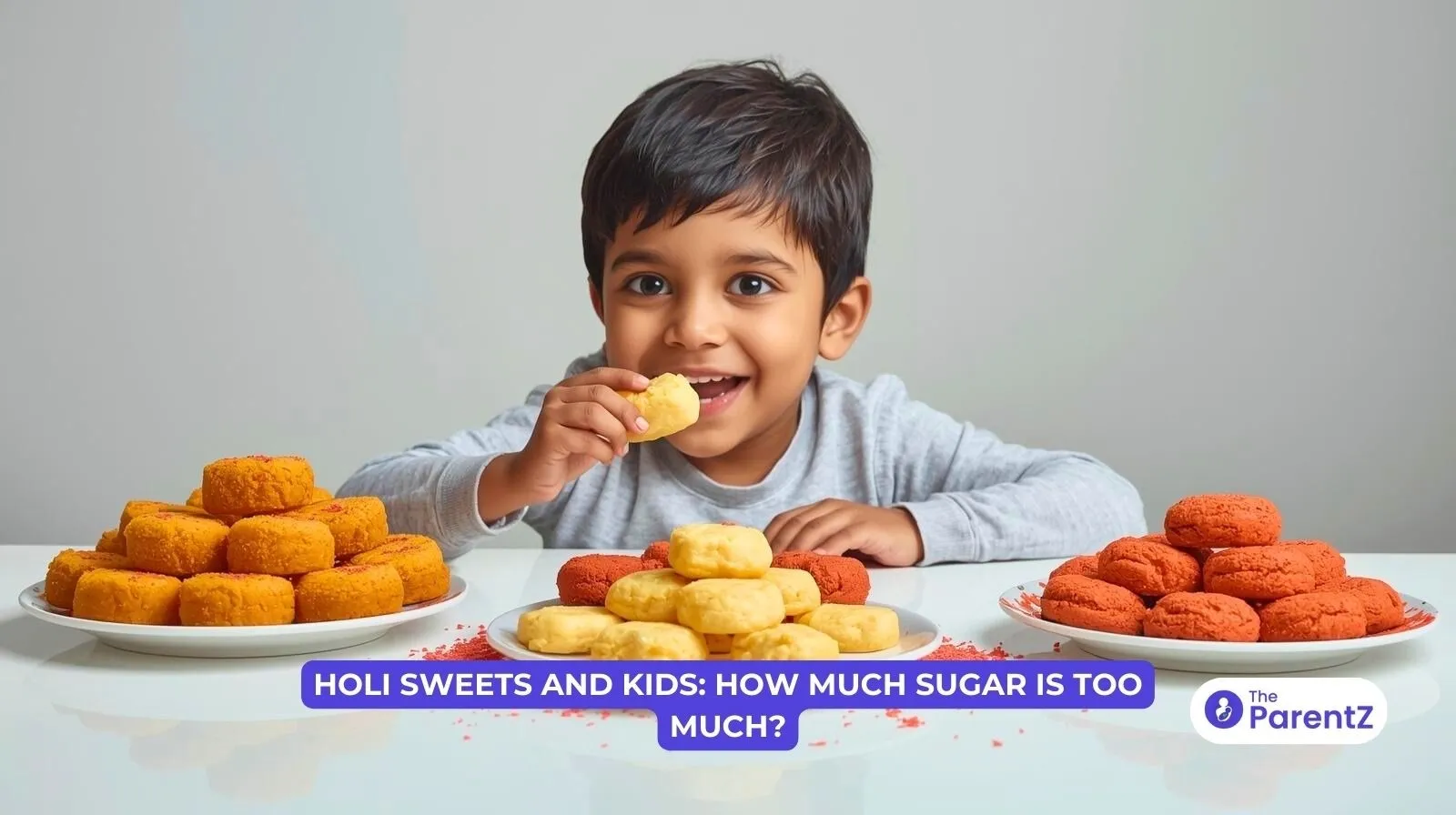
There is something about festivals that makes every surface in the house suddenly covered in mithai. The doorbell rings every hour. Relatives arrive with boxes. Neighbors send plates. And your child, who is already running on festival excitement and zero sleep, has been eyeing that tray of gujiyas since 8 AM.
This is the reality of Holi in an Indian household. And it is wonderful. But it also raises a completely legitimate question that every parent quietly asks themselves at some point during the day: how much is actually too much?
Before talking about limits, it helps to know what's actually in the sweets that show up on Holi. Because it's not just sugar you're dealing with.
The queen of Holi sweets. A deep-fried pastry filled with khoya, dry fruits, and sugar, and sometimes dipped in sugar syrup on top of that. A single medium-sized gujiya contains approximately 150 to 180 calories, a significant amount of saturated fat from the frying, and anywhere between 15 to 20 grams of sugar depending on the recipe. It is delicious. It is also very rich.
Thandai is milk-based and feels lighter than it is. The traditional version contains full-fat milk, sugar, and a blend of nuts and spices. A single glass can carry 20 to 30 grams of sugar when made in the traditional style. For children, the nut content is actually beneficial, but the sugar load in commercial or overly sweet versions is worth watching.
A deep-fried pancake soaked in sugar syrup. Malpua is one of those sweets that looks small but is extremely calorie-dense and high in refined sugar. Two pieces can easily cross 40 grams of sugar, which, for context, is already beyond the World Health Organization's recommended daily free sugar limit for children.
These are savory, not sweet, and actually the more manageable snack option on the Holi table. The concern here is sodium and refined flour, but in terms of sugar, they're a safe choice to redirect your child toward when they want to keep snacking.
This is the wild card. Homemade sweets vary enormously in their sugar content, and because they arrive in generous quantities from well-meaning family members, portion control becomes genuinely difficult. These are also the sweets most likely to be offered directly to your child by an elder, making it socially complicated to say no to.
The World Health Organization recommends that free sugars, meaning added sugars and those naturally present in syrups and juices, should make up less than 5% of a child's total daily energy intake. For most children between 5 and 12 years old, this translates to roughly 25 to 50 grams of added sugar per day as an upper limit.
To put that in Holi terms: two gujiyas and a glass of sweet thandai can get your child very close to, or over, that entire daily limit in a single sitting. And that's before the extra mithai from relatives, the sugary drinks, and the festive snacking that continues through the day.
This doesn't mean two gujiyas are going to cause lasting harm. One day of higher sugar intake is not a medical emergency. But it is a useful context for understanding why our children often feel cranky, hyperactive, and then suddenly exhausted on Holi. The classic sugar spike and crash cycle is very real and very visible in kids.
This is the most effective and manageable thing you can do. A filling, protein-rich breakfast before the sweets come out really reduces how much your child will eat out of hunger versus celebration. Eggs, poha, paratha with curd, or something substantial. A child who has eaten well is far less likely to binge on sweets simply because they're hungry.
Telling a child they cannot have any sweets on Holi is a battle you will not win, and it shouldn't be fought. Instead, set a gentle framework. For instance, two gujiyas, one glass of thandai, and then move on to other food. Frame it as "you get to pick your favorites" rather than "you are being restricted." Children respond far better to choice than to prohibition.
Timing matters. Sweets eaten on an empty stomach hit the bloodstream faster and cause sharper spikes. If your child eats a small meal or even a handful of nuts before the sweet course, the sugar absorption slows down and the crash is less severe. This is a genuinely simple and effective approach.
This is where parents often lose track entirely. Sugary drinks, like packaged juices, sweet lassi, bottled thandai, and sodas, add huge amounts of sugar invisibly because children don't register liquid calories the way they do food. Keep water and homemade nimbu pani (lightly salted, minimal sugar) as the primary drinks through the day and save the sweet thandai as a treat rather than a refill.
If you're making sweets at home, you control the sugar. Most traditional recipes can have their sugar reduced by 20 to 25% without any noticeable change in taste. Baked gujiyas instead of fried ones, thandai with jaggery instead of refined sugar, and dry fruit-heavy fillings all make a genuine difference in the overall load.
It is very important for you to remember that one day of eating more sugar than usual does not derail your child's health. What matters is the overall pattern. A child who eats balanced meals 364 days a year and has a joyful, indulgent Holi is completely fine.
The goal is not a perfect Holi diet. The goal is a happy child who doesn't feel sick by evening, sleeps well that night, and has memories of the festival that are about color and laughter, and not about being told no at every turn.
So, remember to choose balance over restriction and awareness over anxiety. That's the real recipe for a healthy Holi.
Happy Holi!
TheParentZ offers expert parenting tips & advice, along with tools for for tracking baby and child growth and development. Know more about Baby Growth and Development Tracker App.It serves as an online community for parents, providing valuable information on baby names, health, nutrition, activities, product reviews, childcare, child development and more
Disclaimer:
The views, thoughts, and opinions expressed in this article/blog are solely those of the author and do not necessarily reflect the views of The ParentZ. Any omissions, errors, or inaccuracies are the responsibility of the author. The ParentZ assumes no liability or responsibility for any content presented. Always consult a qualified professional for specific advice related to parenting, health, or child development.
Conversations (Comments) are opinions of our readers and are subject to our Community Guidelines.

Be the first one to comment on this story.