
Most Moms Report Slower Recovery After a Second Birth
Jul 19, 2026By Dr. Akanksha Priya
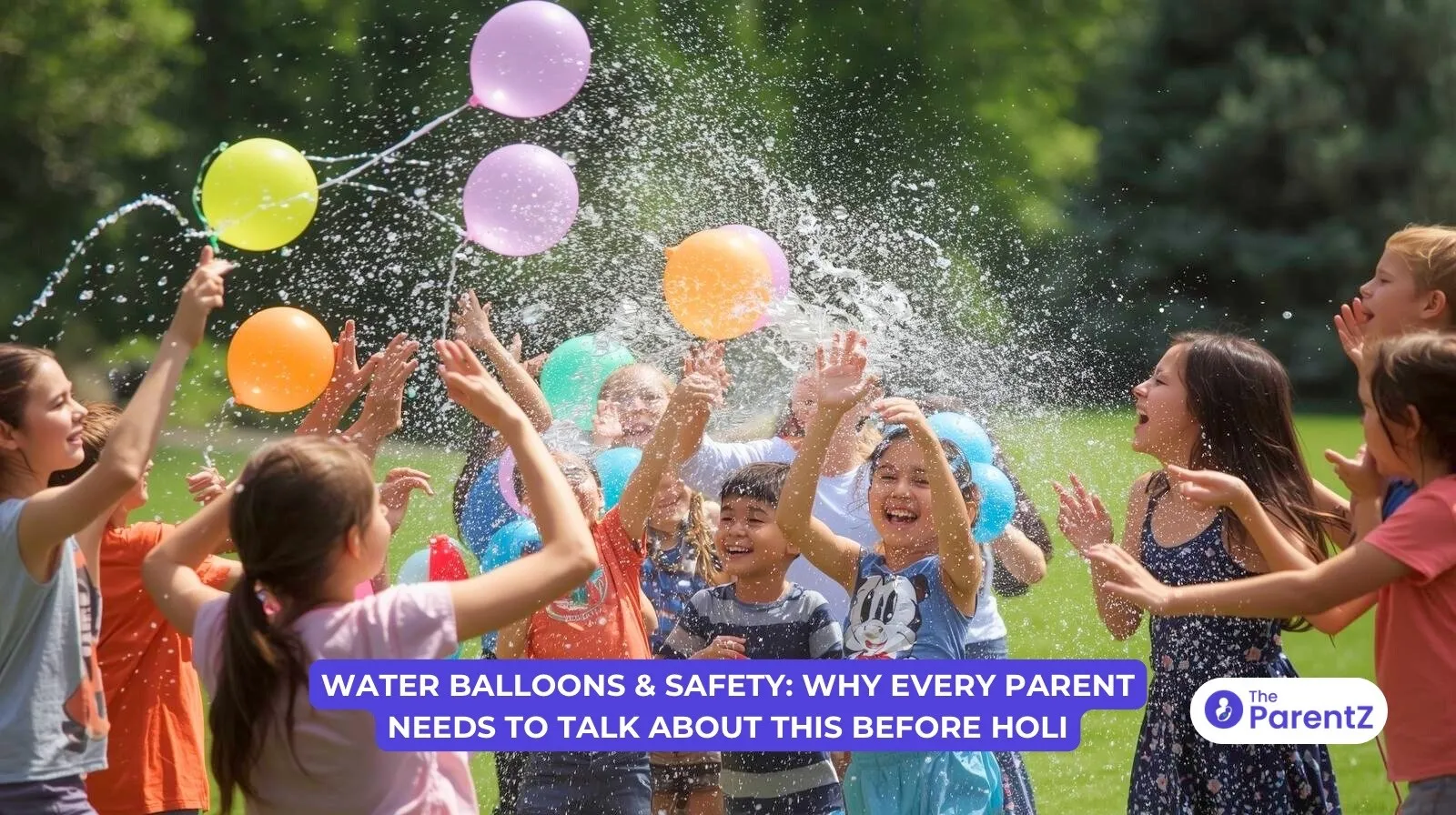
Every year without fail, the Holi headlines carry the same stories alongside the celebration ones.
A two-wheeler rider loses control after a water balloon hits them at speed. A vegetable vendor's day is ruined, and their goods destroyed by a balloon thrown from above. An office-going woman arrives at work soaked and humiliated. A schoolgirl gets hit in the face on her way to an exam. An elderly rickshaw puller gets drenched by children who thought it was funny.
These are not rare incidents. They happen every single Holi, in every city, in every neighbourhood. And in the overwhelming majority of cases, the children doing it had no idea they were causing real harm. They were just playing.
That gap, between "just playing" and "actually hurting someone," is exactly what this conversation is about. And it is a conversation every parent needs to have before the balloons come out.
To a child, a water balloon is a soft, colourful, funny thing. It bursts. People get wet. Everyone laughs. In their experience (probably in your garden or building compound with friends), that has always been the reaction.
They have not connected the balloon in their hand with the motorcyclist who fell down. They have not imagined the elderly vendor who cannot afford to lose a day's earnings because their goods are soaked. They have not thought about the woman walking alone who feels violated, not celebratory, when strangers drench her without consent.
Children are not cruel. They are just limited by what they have been shown. Your job is to expand that picture for them, and the way you do it matters enormously.
Concepts like "consent" and "safety" mean very little to a six-year-old. What works is making the consequence visible and personal.
Try this, "You know how you feel when someone does something to you that you didn't want and then they laugh? That's exactly how the uncle on the motorcycle feels when a balloon hits him while he's driving. Except he could also fall and get really hurt."
Or, "The aunty going to work didn't choose to play Holi today. She has somewhere important to be. Throwing a balloon at her is like someone throwing something at you on a normal school day. It doesn't feel fun. It feels scary and wrong."
Concrete. Personal. Relatable. This is the language that lands with young children
Children in this age group are old enough to understand cause and effect clearly. Tell them plainly what has actually happened, and not as a scare tactic, but as real information.
"Every Holi, people get into accidents because balloons are thrown at moving vehicles. Riders lose control. People get injured. In some cases, it has been very serious."
Also, address the legal reality, because children this age respond to concrete rules: throwing objects at moving vehicles is not just dangerous, it is illegal and can have serious consequences for the family. You do not need to frighten them; just inform them.
Older children need to hear the word and understand what it means in this context. Not everyone on the street has chosen to participate in Holi. A woman walking to work, a delivery person on their bike, a child going to a class, all these are people who have not consented to being part of your celebration. Throwing a balloon at them is not harmless fun. It is imposing your celebration on someone who did not ask for it.
Teenagers also respond well to being treated with respect in this conversation, and not lectured, but spoken to as someone capable of making the right call. "You're old enough to understand that fun stops being fun when it's one-sided. If the other person isn't laughing, it isn't a joke."
Throwing water balloons from balconies is in a completely different category of dangerous, and children often don't grasp why.
A balloon dropped or thrown from even a second-floor balcony gains powerful force on the way down. What feels like a light throw from above can hit someone below with enough impact to cause genuine injury, especially if it hits the face, the eyes, or knocks someone off a vehicle.
There is also the targeting problem. From a balcony, children throw at whoever happens to be passing. They have no idea whether that person is celebrating Holi, whether they are unwell, elderly, carrying something fragile, or riding a vehicle. It is completely indiscriminate.
Be direct with your child about this one: balconies are not a Holi play zone. Water balloon play happens at ground level, in a designated area, with people who are clearly participating and clearly okay with it.
Tell your child these clearly, before Holi begins:
Some parents hesitate to have this conversation because they don't want to dampen the excitement. But none of these rules take away any actual fun. They just redirect it.
A water balloon fight in the compound with friends who are all in on it? Pure joy. Balloons, pichkaris, colour, laughter, all of it, fully available, completely intact.
The only thing being taken away is the part that was never really fun in the first place, like the part where someone gets hurt, humiliated, or frightened without choosing any of it.
That is not Holi. And your child, when it is explained to them properly, will understand that.
Talk to them before the balloons come out. It takes ten minutes, and it matters more than you think.

TheParentZ offers expert parenting tips & advice, along with tools for for tracking baby and child growth and development. Know more about Baby Growth and Development Tracker App.It serves as an online community for parents, providing valuable information on baby names, health, nutrition, activities, product reviews, childcare, child development and more
Disclaimer:
The views, thoughts, and opinions expressed in this article/blog are solely those of the author and do not necessarily reflect the views of The ParentZ. Any omissions, errors, or inaccuracies are the responsibility of the author. The ParentZ assumes no liability or responsibility for any content presented. Always consult a qualified professional for specific advice related to parenting, health, or child development.
Conversations (Comments) are opinions of our readers and are subject to our Community Guidelines.



Be the first one to comment on this story.