
Most Moms Report Slower Recovery After a Second Birth
Jul 19, 2026By Dr. Akanksha Priya
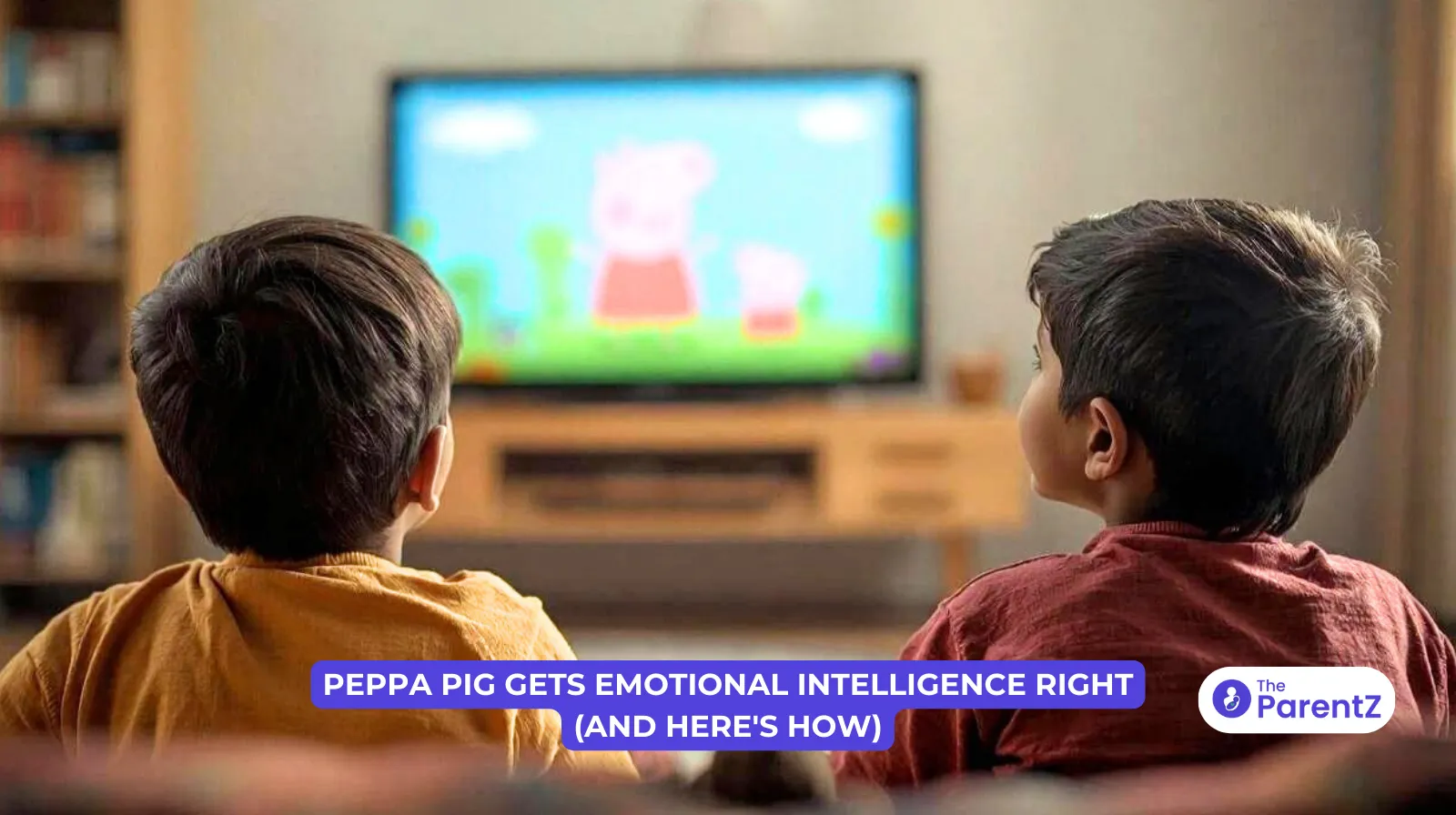
Your toddler snorts like a pig when they're happy. They insist on wearing their boots even when it's sunny. And they absolutely won't go anywhere near a muddy puddle without proper footwear. If this sounds familiar, you've got a Peppa Pig fan in the house.
On top of that, while watching that pink piggy jump around for the hundredth time, your kid isn't just being entertained. They're actually learning some pretty solid emotional skills without even knowing it.
Let's begin with the very first episode, "Muddy Puddles." Peppa's disappointed because it's raining and she can't go outside. Sound familiar? That's every kid ever when plans change. But watch what happens when the rain stops. Instead of dwelling on the wait, the whole family ends up jumping in puddles together. Even the parents get messy.
The episode ends with everyone covered head to toe in mud, and instead of anyone freaking out, Daddy Pig just laughs and says those now-famous words that have become a bit of a parenting mantra: "It's only mud!"
That simple phrase teaches kids (and honestly, reminds us parents too) that some things just aren't worth getting worked up about. Mistakes happen. Messes happen. And sometimes getting dirty is actually part of the fun.
In "Not Very Well," Peppa wakes up covered in red spots and feeling awful. Instead of being scared, the show walks kids through what happens when you're sick in a way that feels safe and manageable. Dr. Brown Bear comes to check on her, explains she has a rash, and gives her medicine that "doesn't taste very nice." Peppa pulls a face and says, "Yuck! Disgusting!" but takes it anyway.
This episode does something really smart, as it doesn't pretend that medicine tastes good or that being sick is fun. It's honest. Kids watching this learn that sometimes we have to do things we don't like (taking medicine) to feel better. And when Peppa's friends Suzy, Danny, and Rebecca come to visit her while she's sick, kids see what caring for someone looks like in action.
George, Peppa's little brother, doesn't talk much. Mostly, he just says "Dinosaur!" and occasionally cries when things don't go his way. And Peppa? She's not always the most patient big sister. She can be bossy. She sometimes excludes George from games. She gets annoyed with him.
And that's exactly why it works.
Kids watching see themselves in these moments. The show doesn't pretend that siblings always get along perfectly. But it also shows them working things out, sharing toys (eventually), and looking out for each other. When characters mess up emotionally, they face consequences that make sense to a preschooler's brain, like if someone gets upset, they talk about it, and they figure it out.
One of the smartest things Peppa Pig does is show characters actually experiencing and naming different emotions. When something doesn't go Peppa's way, she says "Oh dear" or "This is not good." When she's excited, she literally bounces up and down. When George is scared during a thunderstorm, the family acknowledges his fear and helps him through it.
These might seem like tiny moments, but for a three or four-year-old who's still figuring out what all these big feelings inside them actually are, seeing Peppa name her emotions gives them language for their own experiences. Our kids engage strongly with emotional recognition activities featuring these characters because they already know and trust them.
Mummy and Daddy Pig aren't perfect, but they're present. When Mummy Pig loses control while skiing and crashes into a house in the episode "Snowy Mountain", she doesn't get angry or embarrassed. The family laughs together.
That's emotional regulation in action. The show teaches kids that adults make mistakes too, and that it's okay to laugh at yourself. Mummy and Daddy Pig show patience when Peppa's being difficult, set boundaries when needed, and model problem-solving without losing their cool.
Peppa's best friend, Suzy Sheep, can be bossy. In one episode, "Chatterbox," she actually teases Peppa about not being able to stay quiet. In another, she chooses to camp with other friends instead of Peppa. These aren't feel-good moments, but they're real.
Kids need to see that friendships have rough patches. The show doesn't shy away from conflicts between friends; it shows kids working through disagreements, learning to share, taking turns, and sometimes just agreeing to disagree. When Peppa and Suzy argue, they don't immediately make up with a forced apology. They process their feelings first, which is actually how healthy conflict resolution works.
When Mandy Mouse arrives at playgroup in her wheelchair, the show handles it beautifully. There's no big dramatic moment or heavy-handed lesson. Peppa just learns about Mandy's wheelchair, figures out how to help when needed, and discovers everything they have in common. The focus stays on their friendship, not on Mandy's disability.
Similarly, when Emily Elephant shows up as a new student and feels shy, Peppa notices she needs support and helps her feel welcome. These episodes teach empathy not by lecturing about it, but by showing what it looks like to notice when someone needs kindness.
Your kid watching Peppa Pig isn't learning emotional intelligence from a curriculum or a textbook. They're learning it because they see themselves in a four-year-old pig who sometimes gets things wrong, who feels disappointed, who gets scared, who argues with her brother, and who figures things out with her family and friends.
The show uses simple dialogue that matches how actual four-year-olds talk. Episodes are only five to ten minutes long, perfect for a preschooler's attention span. And the situations are ones kids face every day, like going to school, visiting grandparents, feeling left out, being sick, and making mistakes.
Next time you're sitting through your fifteenth episode of the day and wondering if all this screen time is worth it, remember this: your kid is watching a show that tells them it's okay to feel disappointed, that adults make mistakes too, that friendships are complicated, that being different is normal, and that sometimes the best thing to do is just jump in the muddy puddles.
Is Peppa Pig going to solve all your parenting challenges? No. Should it be the only thing teaching your kid about emotions? Definitely not. But as far as kids' shows go, this little pink pig and her family are doing something right. They're showing kids a world where feelings matter, mistakes happen, and everything usually turns out okay in the end.

TheParentZ offers expert parenting tips & advice, along with tools for for tracking baby and child growth and development. Know more about Baby Growth and Development Tracker App.It serves as an online community for parents, providing valuable information on baby names, health, nutrition, activities, product reviews, childcare, child development and more
Disclaimer:
The views, thoughts, and opinions expressed in this article/blog are solely those of the author and do not necessarily reflect the views of The ParentZ. Any omissions, errors, or inaccuracies are the responsibility of the author. The ParentZ assumes no liability or responsibility for any content presented. Always consult a qualified professional for specific advice related to parenting, health, or child development.
Conversations (Comments) are opinions of our readers and are subject to our Community Guidelines.

Be the first one to comment on this story.