
Most Moms Report Slower Recovery After a Second Birth
Jul 19, 2026By Dr. Akanksha Priya
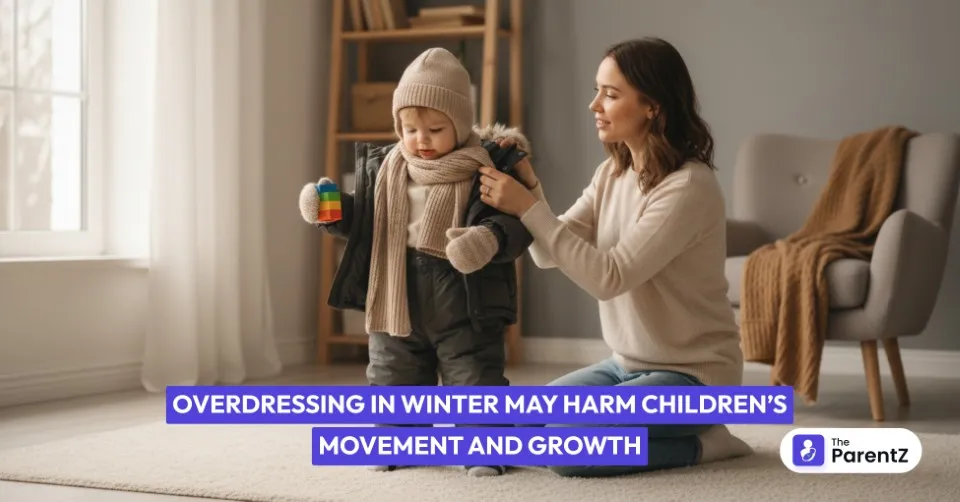
You know that feeling when winter arrives, and you immediately pull out all the sweaters, jackets, and layers for your kid? The moment that the temperature drops, our first instinct is to bundle up our kids like little walking blankets. But do you know that all that extra clothing could actually be doing more harm than good?
You step outside on a chilly morning and feel that cold breeze. Your first thought? "My child must be freezing!" So out comes the thermal wear, the full-sleeve shirt, the sweater, the jacket, the muffler, the woolen cap; basically everything in the wardrobe.
It comes from a place of love. We don't want our kids catching a cold. Plus, our kids aren't always great at telling us when they're uncomfortable, especially the younger ones.
In many households, there's also this belief that if WE feel cold, our kids must be absolutely freezing. So we keep adding layers, thinking we're being responsible parents.
Have you ever noticed your child becoming fussy, refusing to play outside, or just sitting in one place during winter? That might not be because of the cold. It might be because they're wrapped up so tight they can barely move.
Research from pediatric health experts shows that heavy, restrictive clothing makes it difficult for children to run, jump, climb, or even walk properly. And these movements are not just for fun. They're how kids build muscle strength, develop coordination, and grow properly.
Picture a 3-year-old trying to play in the park. They're wearing thick thermal pants, regular pants, a sweater, and a heavy jacket. Now they want to climb the slide or run after a ball. But the clothes are so bulky and stiff that bending their knees feels hard. Lifting their arms is an effort. So what do they do? They give up and just sit down instead.
You're getting your child ready for school. You've put on multiple layers because it's winter. But once your child reaches school and starts playing, what happens? They get hot. They start sweating. And here's where things get worse.
According to pediatricians, when kids sweat inside all those layers, their clothes become damp. And damp clothes in cold weather can actually make them COLDER than if they were wearing fewer, breathable layers. The moisture cools against their skin, which is exactly what we were trying to avoid in the first place.
This isn't just uncomfortable; it can lead to skin irritation, rashes, and your child feeling irritable and tired without knowing why.
Those early years, from birth to about 6 years old, are crucial for physical development. Kids learn to control their bodies through constant movement and play.
When a baby is learning to crawl, they need to move their arms and legs freely. When a toddler is learning to walk, they need to balance and catch themselves when they stumble. When a preschooler is running and playing, they're building the foundation for a lifetime of physical activity and coordination.
But restrictive winter clothing gets in the way of all this. Studies have found that children who can't move freely may spend more time sitting and less time playing actively. Over time, this can affect their motor skill development, muscle tone, and even their confidence in physical activities.
Think about it, if every time your child tries to play, their clothes make it uncomfortable or difficult, they'll start avoiding physical play altogether. And that's a habit we don't want to build.
Those puffy winter jackets are actually dangerous in car seats.
When you put your child in a car seat with a thick jacket on and tighten the straps, everything seems secure. But in an accident, that puffy jacket compresses instantly. Suddenly, there's slack in the harness, and your child can slip out of the seat.
Pediatric safety experts strongly recommend this instead: dress your child in thin layers, buckle them securely in the car seat, then place the jacket over them like a blanket. This keeps them warm AND safe.
So what's the right approach? The thumb rule that pediatricians recommend is simple: dress your child in one more layer than what YOU would wear to be comfortable.
If you're wearing a t-shirt and a light jacket, your child needs those, plus maybe one more thin layer underneath. That's it. Not five layers. Not the entire winter wardrobe at once.
Focus on:
Remember that kids are naturally more active than we are. When they're running around in school or playing in the park, their bodies generate heat. They don't need as much clothing as we think.
Check if your child:
If you notice any of these, remove a layer and let them cool down a bit.
Nobody's saying you should send your kids out in shorts and a t-shirt in January. Winter protection is important. But it's about smart layering, not endless layering.
Choose quality over quantity. One good breathable thermal layer does more than three tight, non-breathable layers. Invest in proper winter wear that's designed for movement; stretchy, comfortable, and moisture-wicking.
And most importantly, trust your child. If they say they're hot or uncomfortable, believe them. If they're actively playing and sweating, it's okay to remove a layer even if it feels cold to you standing still.
Your child's body is learning and growing every single day. Movement is how they build strength, coordination, and healthy habits that last a lifetime. Winter shouldn't be a season where we accidentally restrict all of that just because we're worried about the cold.
Dress them smartly, not excessively. Watch for signs of discomfort. Let them move freely. And remember that a child who's slightly cool but active is healthier than one who's wrapped up so much they can't play at all.
After all, we want them growing strong and healthy, not just staying warm. And sometimes, that means letting go of that extra sweater we're so tempted to add.

TheParentZ offers expert parenting tips & advice, along with tools for for tracking baby and child growth and development. Know more about Baby Growth and Development Tracker App.It serves as an online community for parents, providing valuable information on baby names, health, nutrition, activities, product reviews, childcare, child development and more
Disclaimer:
The views, thoughts, and opinions expressed in this article/blog are solely those of the author and do not necessarily reflect the views of The ParentZ. Any omissions, errors, or inaccuracies are the responsibility of the author. The ParentZ assumes no liability or responsibility for any content presented. Always consult a qualified professional for specific advice related to parenting, health, or child development.
Conversations (Comments) are opinions of our readers and are subject to our Community Guidelines.


Be the first one to comment on this story.