
Most Moms Report Slower Recovery After a Second Birth
Jul 19, 2026By Dr. Akanksha Priya
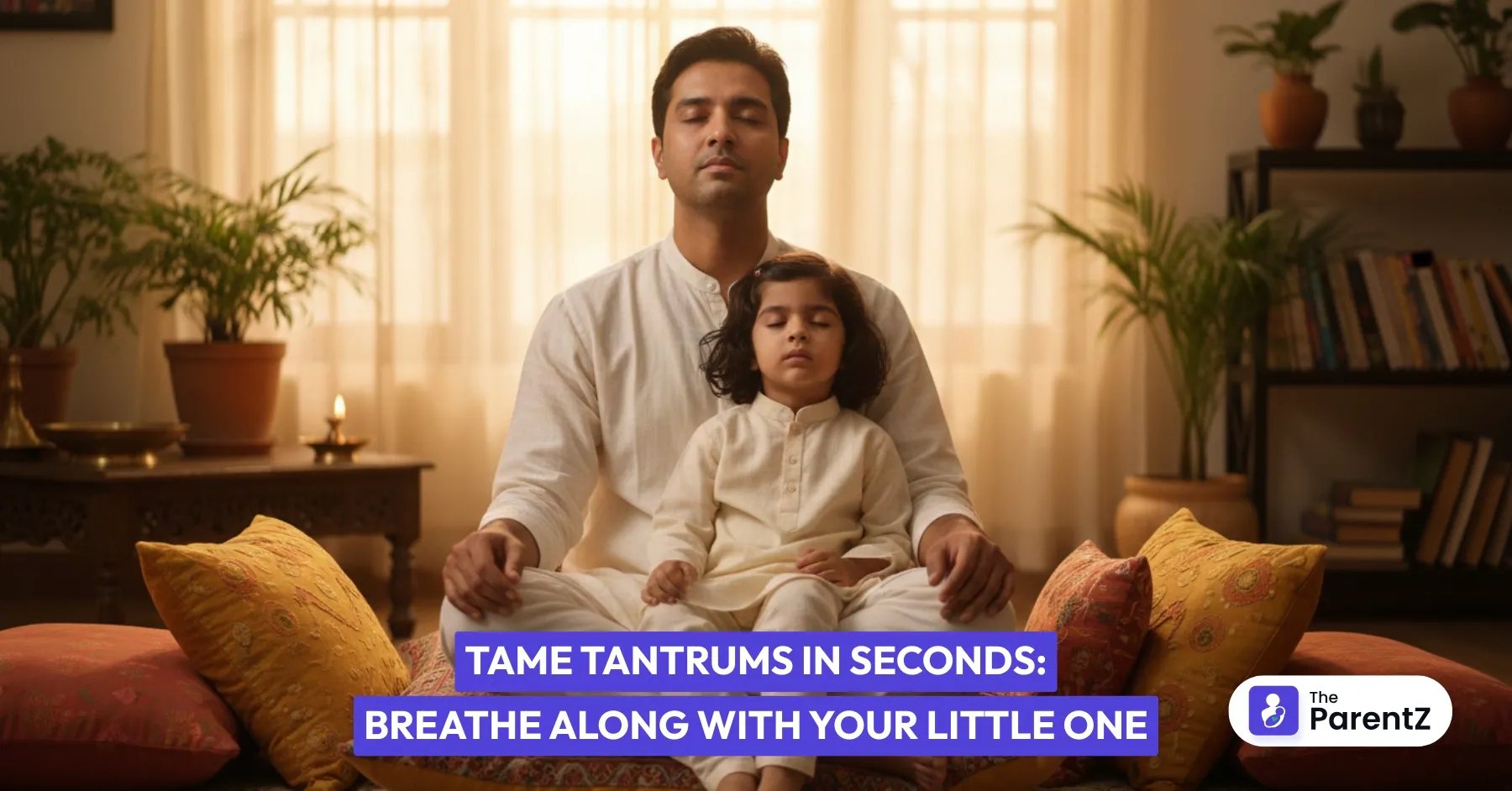
You're in the grocery store, or getting ready for school, or just trying to exist peacefully at home, and suddenly your child transforms into a tiny hurricane of emotions. The screaming starts. The tears flow. And you're standing there thinking, "Not again. Please, not here, not now."
We've all been there, feeling helpless and maybe a little embarrassed while other people stare or offer unhelpful advice. But you don't need another magic trick that promises to stop tantrums instantly. Because that's not realistic, and it's not even the goal.
What you need is a tool that actually works in the real world, something that helps your child learn to handle their big feelings, one meltdown at a time. Enter the co-breathing technique.
Co-breathing is simple: you breathe slowly and intentionally, and you invite your child to breathe with you. That's it. No complicated steps, no perfect timing required.
Now, let’s understand why it works. When children are mid-tantrum, their nervous system is in fight-or-flight mode. Their logical brain has gone offline. Telling them to "calm down" is like asking someone to speak French when they only know Hindi; it's just not happening. But breathing is something their body understands even when their brain is overwhelmed.
Your child won't magically stop crying the moment you start breathing. And that's okay. Here's how to actually do this:
Take three slow breaths yourself. Just three. You can't be their anchor if you're drowning too. Feel your feet on the ground. Breathe.
Sit or kneel so you're at eye level. If they don't want you close (sometimes they won't), stay nearby where they can see you.
Show them how it's done! Make your own breathing very obvious. Put a hand on your stomach or chest and tell your child, "I am going to take some big breaths now. You can join me when you're ready." Notice the "when you're ready" part? No pressure.
Young kids respond better to something concrete:
Your child might ignore you for two minutes or ten. They might cry harder first. This is normal. Keep breathing slowly yourself. Your calm presence is doing more than you think.
Your four-year-old wants chocolate at 7 AM. You say no. Cue the meltdown. You're already running late, you haven't had your chai yet, and patience is thin.
Instead of matching their energy, you sit down. You take three breaths while they're screaming. You say calmly, "This is really hard, isn't it? Let's breathe together when you're ready. Watch my belly."
Maybe they stop after thirty seconds. Maybe it takes five minutes. Maybe they eventually crawl into your lap, still hiccupping, and you breathe together.
The chocolate situation hasn't changed, but you've shown them there's a way through big feelings.
The first fifty times you try this, it might feel pointless. Your child might not cooperate. You might feel silly sitting on the kitchen floor making breathing sounds.
Do it anyway.
What you're really doing is teaching their nervous system a new pattern. You're showing them that someone can stay calm even when they're not. Over weeks and months, you'll notice tantrums getting shorter. Your child might start taking deep breaths on their own. They might say, "I need to do flower breaths."
The goal is not to stop tantrums instantly, but to teach emotional regulation gradually.
Some days, breathing together won't help. Your child might be too overwhelmed, too hungry, too tired. They might need to cry it out while you sit nearby.
That's okay too. This isn't about being perfect; it's about making the effort day in and day out.
If your child is hitting or throwing things, safety comes first. Set the boundary: "I can't let you hit. You're safe, I'm safe, let's breathe together when your body is calmer."
You don't need to be a perfect parent to use this technique. You don't need to have read all the parenting books or have endless patience. You just need to be willing to breathe slowly next to your child, even when it's the last thing you feel like doing.
Will it stop every tantrum? No. Will it make parenting easy? Absolutely not. But will it gradually build a connection with your child and teach them that feelings are manageable? Yes. And that's what we're really after.
Start small. Try it once this week. Maybe it helps, maybe it doesn't. Either way, you're showing your child something powerful: that you'll stay with them through the storm, breathing slowly, until the calm comes.
And sometimes, that's everything.
TheParentZ offers expert parenting tips & advice, along with tools for for tracking baby and child growth and development. Know more about Baby Growth and Development Tracker App.It serves as an online community for parents, providing valuable information on baby names, health, nutrition, activities, product reviews, childcare, child development and more
Disclaimer:
The views, thoughts, and opinions expressed in this article/blog are solely those of the author and do not necessarily reflect the views of The ParentZ. Any omissions, errors, or inaccuracies are the responsibility of the author. The ParentZ assumes no liability or responsibility for any content presented. Always consult a qualified professional for specific advice related to parenting, health, or child development.
Conversations (Comments) are opinions of our readers and are subject to our Community Guidelines.



Be the first one to comment on this story.