
Most Moms Report Slower Recovery After a Second Birth
Jul 19, 2026By Dr. Akanksha Priya
You're late for school. Again. Your child refuses to wear shoes. The lunch box is still empty. And somewhere between "Please hurry up" and "I'VE TOLD YOU TEN TIMES," you lose it. You yell.
Every parent has been there. That moment when your patience snaps and your voice rises before you can stop it. You're not a bad parent. You're human. Unfortunately, yelling isn't just ineffective; it's actively costing us the relationship we're trying to build with our kids.
Ready for the technique that can transform your mornings, your evenings, and your entire relationship with your child?
It's called the Pause-Breathe-Connect method, and it takes less than 5 minutes to implement.
The moment you feel that anger rising, your jaw clenches, your chest tightens, you want to scream, stop. Physically stop what you're doing.
Take five slow, deep breaths. Many parents say this small step helps them stay calm and avoid reacting in ways they regret.
Count backwards from 10 if you need to. Walk to another room. Splash cold water on your face. The goal is simple: create a gap between the trigger and your response.
This isn't about suppressing your feelings. It's about not letting those feelings drive the car.
Ask yourself, Am I loud? Am I angry? Do I have a raised voice? What does my body show? Am I tense? Are my arms crossed?
It is an important fact because looking angry or frustrated, or stressed, gives your child the sense that you're not in control, and they can ramp up how they respond to you. Kids mirror our energy. If you come in hot, they escalate.
Take three deep belly breaths. Inhale for four seconds, hold for four, exhale for six. This isn't some wellness nonsense; it actually signals your nervous system to calm down.
If you're still too worked up, it's okay to say out loud, "I'm feeling very frustrated right now. I need a minute to calm down." You're practicing emotional regulation. You're showing them that big feelings are normal, but we don't have to act on them immediately.
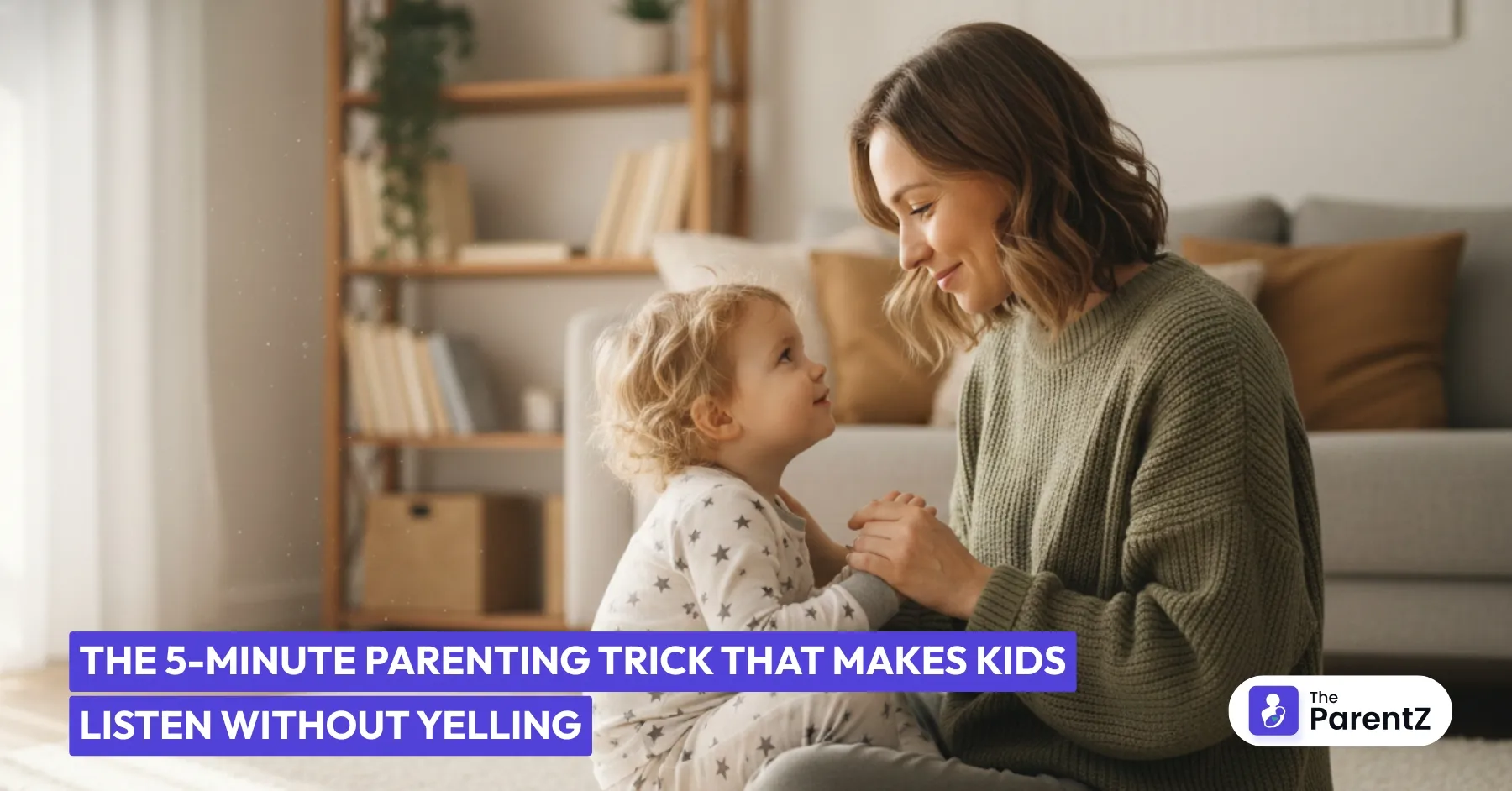
Get down to your child's eye level and approach the situation calmly. When you tower over them while angry, you're intimidating, not parenting.
Instead of: "HOW MANY TIMES DO I HAVE TO TELL YOU—"
Try, "Hey, I need you to look at me. I see you're having trouble with your shoes. Let's figure this out together."
Children are far more likely to listen when they feel connected to you. That connection gets severed when we yell. It gets strengthened when we approach them with calm curiosity instead of anger.
Your child's nervous system calms down because yours is calm. When helping your child deal with an emotion, you need to be calm yourself first. They can actually hear what you're saying because their brain isn't in fear mode. They learn from your example that emotions can be managed. And most importantly, they start to trust that you're safe, even when they mess up.
Reading about breathing techniques is one thing. Actually doing it when your pressure cooker is whistling, your phone is ringing, and your kid just colored on the wall is another.
You will yell again. You're not a robot. What matters is what you do next.
Apologize sincerely: "I'm sorry I yelled. That wasn't okay. I'm working on staying calm." Reflect on what triggered you. Then reconnect, with a hug, shared play, or reading together.
Your child doesn't need perfect parents. They need parents who acknowledge mistakes, repair the relationship, and keep trying.
Yelling might get immediate compliance out of fear. But it damages trust, increases anxiety, worsens behavior over time, and teaches kids that love comes with conditions.
The Pause-Breathe-Connect method isn't about being soft or permissive. You still set boundaries. You still have expectations. You still enforce consequences. You just do it without damaging your child's sense of safety and your relationship with them.
TheParentZ offers expert parenting tips & advice, along with tools for for tracking baby and child growth and development. Know more about Baby Growth and Development Tracker App.It serves as an online community for parents, providing valuable information on baby names, health, nutrition, activities, product reviews, childcare, child development and more
Disclaimer:
The views, thoughts, and opinions expressed in this article/blog are solely those of the author and do not necessarily reflect the views of The ParentZ. Any omissions, errors, or inaccuracies are the responsibility of the author. The ParentZ assumes no liability or responsibility for any content presented. Always consult a qualified professional for specific advice related to parenting, health, or child development.
Conversations (Comments) are opinions of our readers and are subject to our Community Guidelines.



Be the first one to comment on this story.