
Most Moms Report Slower Recovery After a Second Birth
Jul 19, 2026By Dr. Akanksha Priya
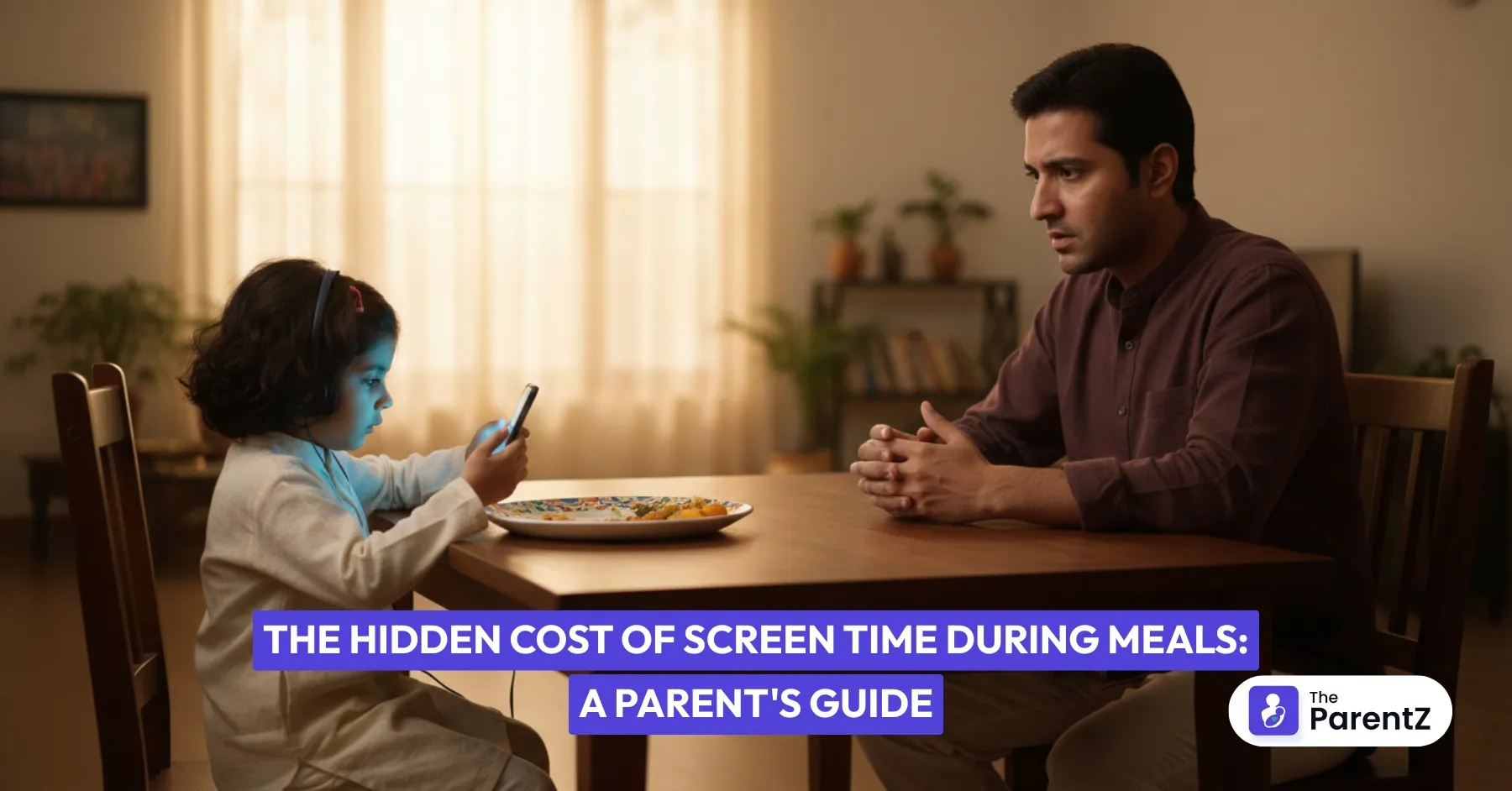
We've all been there. Your toddler refuses to eat. You're exhausted, and suddenly, handing over your phone with their favorite cartoon seems like the perfect solution. Three spoonfuls in, you're thinking, "This works!"
Fast forward six months, and now your child won't eat without Peppa Pig or Cocomelon playing. What started as an occasional helper has become a non-negotiable dinner guest. If this sounds familiar, you're not alone, and you're definitely not a bad parent.
Recent studies from northern India found that parents using screens during feeding had children with significantly higher screen time overall, some spending over 8 hours daily on devices. But this isn't just an Indian phenomenon. From Delhi to Dubai, New York to Nairobi, parents worldwide are discovering the iPad meal trap is real.
In our world, where both parents often work, and extended family support isn't always available, screens have become the third parent we never asked for. And nowhere is this more evident than at mealtimes.
When you hand your squirmy 18-month-old a tablet during lunch, magic happens. They sit still. They open their mouth. They swallow the food. For those precious 15 minutes, you're not battling or cleaning food off the walls.
Research shows parents often use screens during meals to feed children who don't eat well or refuse food. It's a survival strategy, not a parenting failure. You're trying to ensure your child gets nutrition. That's love, not laziness.
The problem is that your child's brain is learning something entirely different from what you intended.
Researchers discovered the following about mealtime screen use:
"I thought I was getting through a phase. Now my 4-year-old has a complete meltdown if I don't put on YouTube before meals. I don't know how to undo it."
In northern India, over 60% of children aged 2-5 spend 2-4 hours daily on screens, with screen use during feeding being a major factor. The pattern is clear: what starts as a feeding solution becomes digital dependency.
If you've fallen into this pattern, you're in good company. The Indian Academy of Pediatrics states screens shouldn't be used to facilitate feeding, yet countless parents do it because they're exhausted and trying to keep their kids healthy.
The good news is that change is possible. It won't be easy, and there will be tears, but it can be done.
Week 1-2: Reduce screen time during one meal only. Start with breakfast or snacks.
Week 3-4: Introduce "Screen-Free Sundays" or pick two screen-free meal days.
Week 5 onwards: Gradually increase screen-free meals until it becomes the norm.
Your child needs something to replace that stimulation:
The Indian Academy of Pediatrics recommends that children below 2 years have no screen time, and children 2-5 years have a maximum of 60 minutes daily (split into two 30-minute sessions). In joint families, leverage multiple adults. Grandparents' stories can be more engaging than any screen. In nuclear families, consider meal-time partnerships with neighbors.
If your child refuses to eat anything without screens after trying these strategies for several weeks, consult a pediatrician or feeding therapist.
Don't try fixing everything at once. Pick just one thing:
That's it. One small step.
If you're feeling guilty, stop. Guilt doesn't help. What helps is understanding what's happening and deciding to make changes, not because you're a bad parent, but because you're a learning parent.
The iPad meal trap is real, but not permanent. With patience and consistency, you can guide your child back to mindful eating. And you might reclaim something more valuable than a tantrum-free dinner: real, screen-free moments of connection with your little one.
TheParentZ offers expert parenting tips & advice, along with tools for for tracking baby and child growth and development. Know more about Baby Growth and Development Tracker App.It serves as an online community for parents, providing valuable information on baby names, health, nutrition, activities, product reviews, childcare, child development and more
Disclaimer:
The views, thoughts, and opinions expressed in this article/blog are solely those of the author and do not necessarily reflect the views of The ParentZ. Any omissions, errors, or inaccuracies are the responsibility of the author. The ParentZ assumes no liability or responsibility for any content presented. Always consult a qualified professional for specific advice related to parenting, health, or child development.
Conversations (Comments) are opinions of our readers and are subject to our Community Guidelines.



Be the first one to comment on this story.