
Most Moms Report Slower Recovery After a Second Birth
Jul 19, 2026By Dr. Akanksha Priya
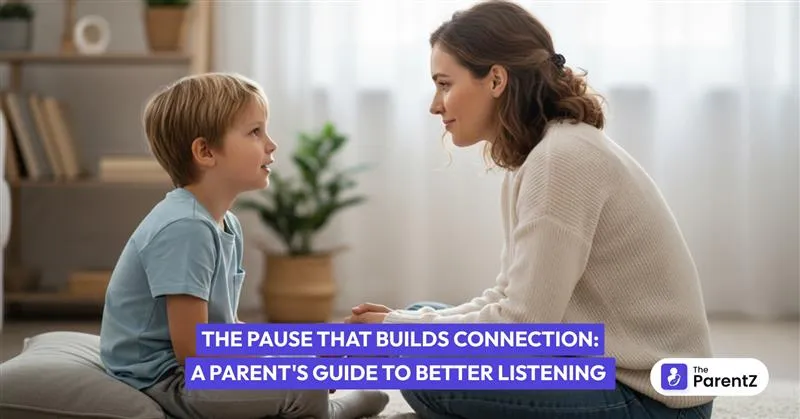
You know that moment when your child starts to say something, pauses for a second, and before they can continue, you've already jumped in with your thoughts, solutions, or the end of their sentence? We've all done it. And we're probably doing it more than we realize.
Unfortunately, that tiny pause, that brief moment of silence, is not empty space. It's actually where the magic happens. But we keep filling it up because silence feels uncomfortable, especially when we're used to the constant noise of notifications, TV in the background, and the mental to-do list running on loop in our heads.
We interrupt our kids for all sorts of "good" reasons:
But every time we fill that gap, we're basically telling our kids, "I don't actually need to hear what you have to say because I already know." Even if that's not what we mean at all.
Research shows that children's brains need processing time. When your 7-year-old pauses mid-sentence, they're not done talking. They're organizing their thoughts, searching for the right word, or deciding how much they want to share.
When your teenager gives you a one-word answer and then goes silent, they're often testing the waters. They're figuring out if you're really listening or just waiting for your turn to talk. That pause is them deciding whether this conversation is safe enough to go deeper.
Think about it, when you're trying to explain something complicated to a friend, and they keep interrupting with "Oh, I know exactly what you mean!" don't you feel a bit unheard? Kids feel the same way. Only for them, the stakes are higher because they're still learning that their voice matters.
When we give children space to complete their thoughts, several powerful things happen:
You're going to forget. You're going to interrupt. You're going to jump in with solutions before they finish. We all do.
When you catch yourself, just acknowledge it, "Oh, sorry, I interrupted you. What were you saying?" This teaches them that even adults make mistakes and how to handle them gracefully.
Sometimes you'll interrupt and realize your child has shut down. That's okay. Try, "I can see I jumped in too quickly. Can we start over? I really want to hear what you were saying."
Tonight, ask your child one question about their day. Then zip it. Wait. Let the silence sit there. Count to three if you need to. See what happens.
You might be surprised at what comes out when you stop filling the space.
And remember that the goal isn't to never speak. It's to speak after they do. To let their voice come first, to be heard fully, without your words crowding theirs out.
That's the silent space rule. Your kids are trying to tell you things. All you have to do is pause long enough to hear them.
TheParentZ offers expert parenting tips & advice, along with tools for for tracking baby and child growth and development. Know more about Baby Growth and Development Tracker App.It serves as an online community for parents, providing valuable information on baby names, health, nutrition, activities, product reviews, childcare, child development and more
Disclaimer:
The views, thoughts, and opinions expressed in this article/blog are solely those of the author and do not necessarily reflect the views of The ParentZ. Any omissions, errors, or inaccuracies are the responsibility of the author. The ParentZ assumes no liability or responsibility for any content presented. Always consult a qualified professional for specific advice related to parenting, health, or child development.
Conversations (Comments) are opinions of our readers and are subject to our Community Guidelines.


Be the first one to comment on this story.