
Most Moms Report Slower Recovery After a Second Birth
Jul 19, 2026By Dr. Akanksha Priya
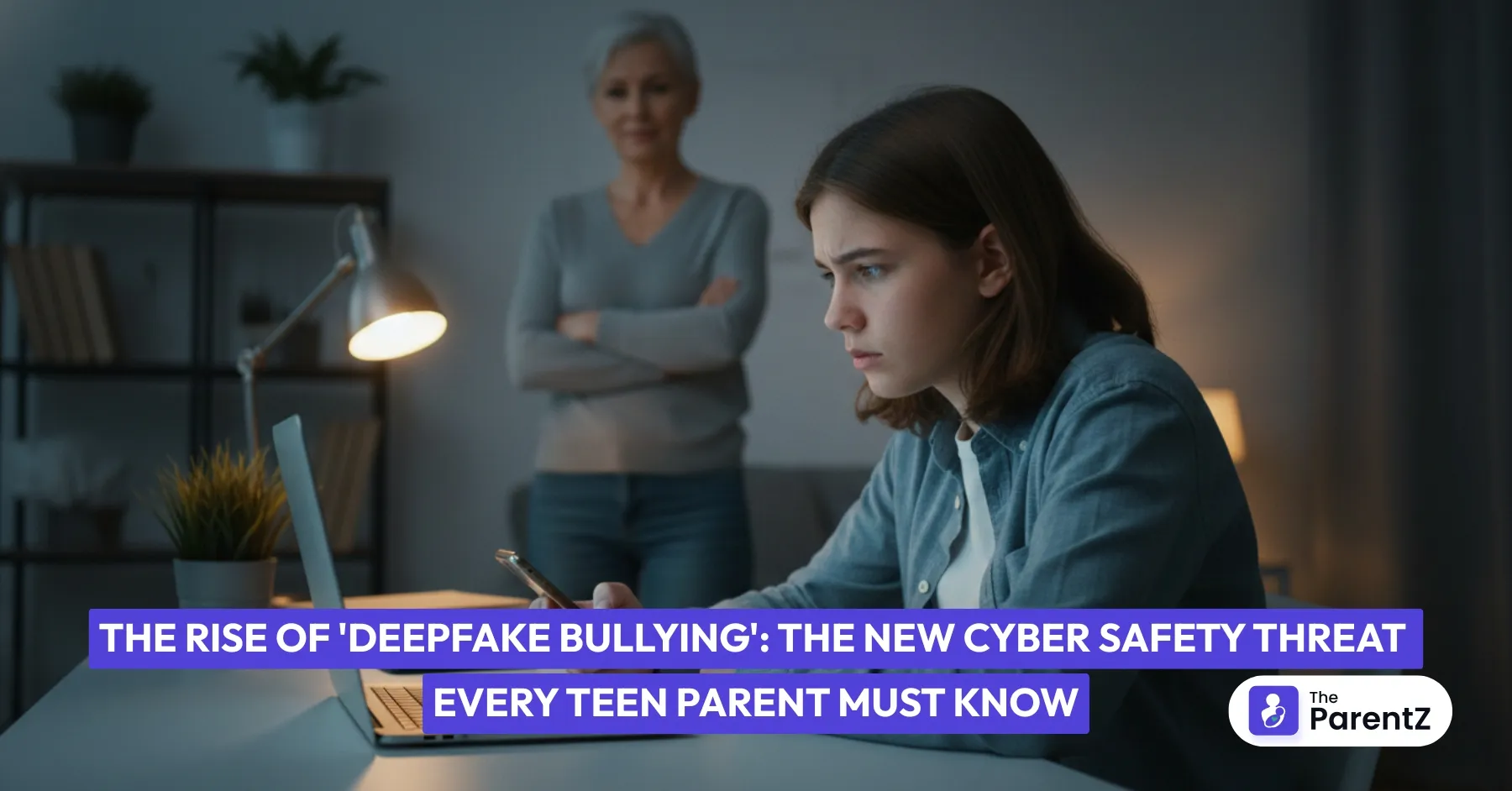
Your daughter comes home from school unusually quiet. She locks herself in her room, refuses dinner, and won't talk to anyone. Later that night, you discover that her classmates have been sharing explicit images of her on WhatsApp groups; images that look shockingly real but were never taken. She never posed for them. She never sent them. Yet there they are, spreading like wildfire across her school, destroying her reputation in minutes.
Welcome to the disturbing reality of deepfake bullying.
Deepfakes are fake images, videos, or audio clips created using artificial intelligence that look incredibly real. The technology takes someone's face or voice and puts it into situations they were never actually in. Think of it like Photoshop, but a thousand times more powerful and convincing.
The term comes from combining "deep learning" (a type of AI) with "fake." What makes them particularly dangerous is how authentic they appear. A recent survey found that 67 percent of school staff believed their students had been misled by deepfakes. Even teachers and administrators, adults who should know better, are being fooled.
What's truly frightening is that creating a deepfake no longer requires technical skills or expensive equipment. Any teenager with a smartphone can download free apps and create convincing fake content in minutes.
Girls are the primary targets. The vast majority of deepfake bullying involves creating fake nude or sexually explicit images of female students. In fact, over 90 percent of deepfakes globally are pornographic, and this trend mirrors what's happening in Indian schools.
A survey by Incogni and the National Organization for Women revealed that one in four American women has experienced online abuse, with deepfakes being a growing component.
Consider the case of Francesca Mani, a student in the United States. Boys in her class used AI to create explicit images of her and other female classmates, then shared them on Snapchat. These weren't real photos; they were entirely fabricated, but the damage was absolutely real. The humiliation, the violation of privacy, the loss of control over her own image; all of it was real.
This isn't limited to girls. In Maryland, an athletic director created a deepfake audio recording to make it sound like his principal was making racist comments. The principal's reputation was destroyed before the truth came out. Anyone can become a target.
The difference is huge. Traditional cyberbullying, as painful as it is, involves real incidents; an actual embarrassing moment, a real photo someone chose to share. Victims could at least point to what actually happened and defend themselves based on reality.
Deepfake bullying eliminates that possibility. The content shows something that never occurred. Your child might have followed every rule; never taken inappropriate photos, never shared personal images, always been careful online, and still become a victim. The very nature of deepfakes means innocence provides no protection.
The psychological damage from deepfake bullying goes far beyond typical embarrassment. When someone creates and shares a fake, explicit image of your teen, several devastating things happen simultaneously:
Teens already face immense pressure regarding body image, social acceptance, and identity formation. Deepfake bullying attacks them at their most vulnerable developmental stage, when peer perception feels like everything.
Forget generic advice about monitoring phones. Here's what actually works:
Despite your best efforts, your teen might still fall victim to deepfake bullying. Here's what to do:
This is harder to face, but it happens. If you discover your child created or shared deepfake content:
Deepfake bullying represents a new frontier in the challenges of parenting in the digital age. The technology isn't going away; in fact, it's only going to become more sophisticated and accessible. But that doesn't mean we're helpless.
So, start today. After reading this blog, find your teen and have a conversation. Not a lecture, not an interrogation, a real conversation. Ask what they know about deepfakes. Share what you've learned. Listen to their concerns. Create that foundation of trust that will see you both through whatever challenges lie ahead.

TheParentZ offers expert parenting tips & advice, along with tools for for tracking baby and child growth and development. Know more about Baby Growth and Development Tracker App.It serves as an online community for parents, providing valuable information on baby names, health, nutrition, activities, product reviews, childcare, child development and more
Disclaimer:
The views, thoughts, and opinions expressed in this article/blog are solely those of the author and do not necessarily reflect the views of The ParentZ. Any omissions, errors, or inaccuracies are the responsibility of the author. The ParentZ assumes no liability or responsibility for any content presented. Always consult a qualified professional for specific advice related to parenting, health, or child development.
Conversations (Comments) are opinions of our readers and are subject to our Community Guidelines.



Be the first one to comment on this story.